In Qatar, parents are using online abacus training to build mental-arithmetic fluency that complements school maths, typically alongside English and Arabic-medium curriculum work.
A quick search for “abacus classes for kids” brings up dozens of options claiming to be the best. The marketing all sounds the same, pricing is often opaque, and everyone promises world-class instructors with guaranteed results.
After seven years of teaching abacus, we have learned that most of these marketing claims don't matter. Only a handful of factors actually predict whether your child will get real value from a program.
This guide provides the framework we wish parents had before jumping into their first class. It is the exact advice we give when asked what to look for.
What actually matters
There are five key things to look for when choosing a class:
- Class size. Smaller batches mean more attention per child. This is the single biggest predictor of progress.
- Instructor experience and certification. You want someone with years of experience teaching abacus specifically, rather than just general teaching experience.
- Curriculum structure. Does the program have clear levels with assessments, or is it improvised?
- Online vs offline. Either format can work, but the requirements are different.
- The free demo class. A trial lesson is far more useful than reviews or testimonials. Watch one before you decide.
Things like pricing, flashy websites, mascots, and most testimonials rarely correlate with actual learning outcomes.
1. Class size
Choosing a large class of 20 or 25 students just for a lower price per session is a common mistake. At that size, the instructor simply cannot watch every child's hands or correct technique errors in real time. Mistakes quickly turn into bad habits.
We recommend a maximum of 10 students per batch. Fewer than 10 is ideal, while anything over 12 should be a warning sign. We have tutored students who came to us after years in large academies only to find they had been moving beads incorrectly the entire time. They had to relearn basic fundamentals before they could progress.
Ask directly about their maximum batch size. A clear and specific answer is a good sign.
2. Instructor experience and certification
Teaching abacus is a specialized skill that takes years to master. While a new instructor might be excellent, you should generally look for formal certification from a recognized abacus training body or several years of supervised teaching experience.
Good questions to ask include:
- How many years have you been teaching abacus specifically?
- How many students have you taken from Level 1 to Level 10?
- Are you certified by an abacus federation? (Most major certifications like UCMAS or Aloha-style qualify, though specifics vary by region.)
- Will my child have the same instructor across levels?
Continuity is important. A child who knows their instructor learns much faster than one who has to restart the relationship every level.
3. Curriculum structure
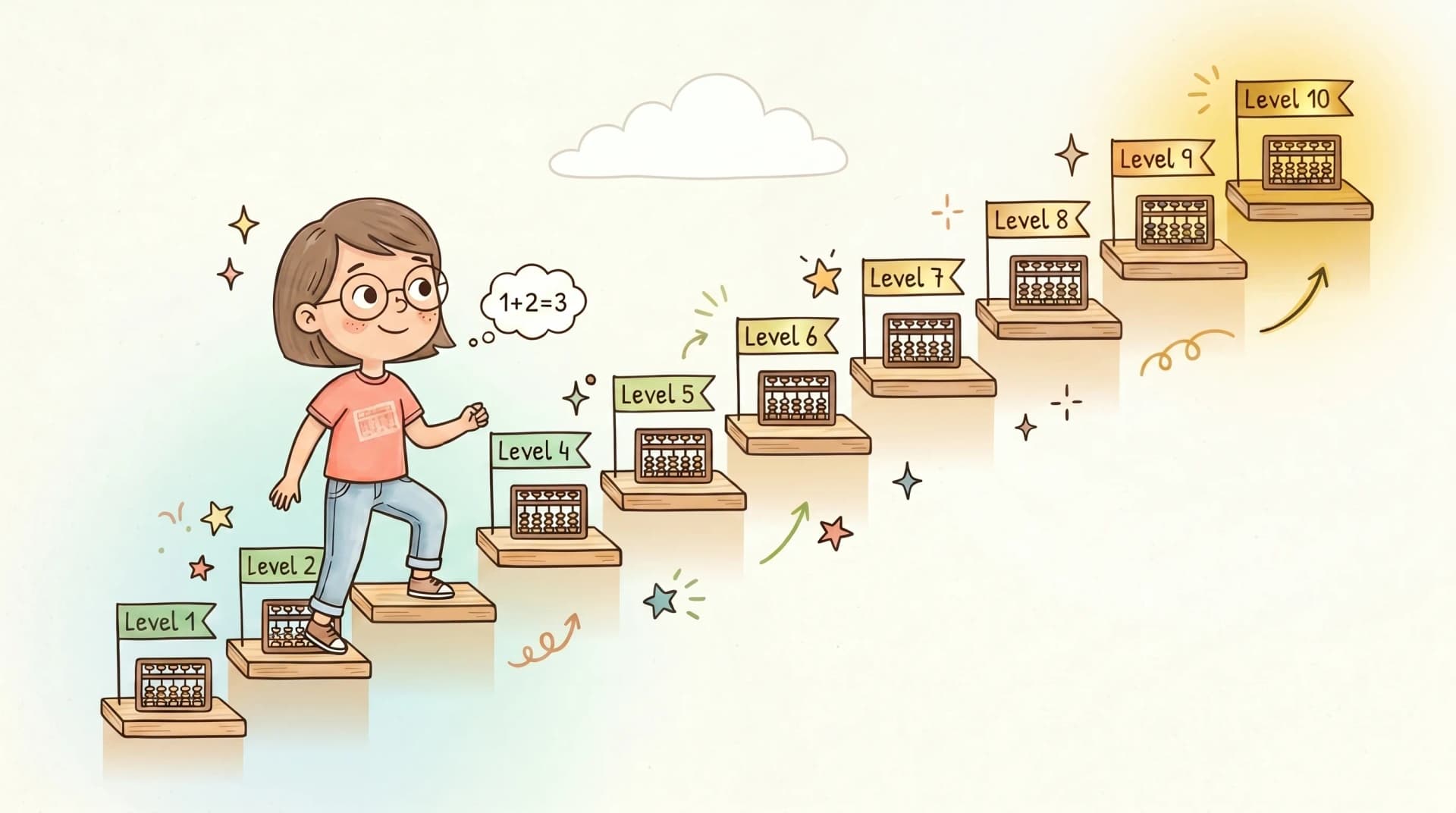
Reputable academies follow a structured progression of 10 or 12 levels with written assessments in between. We have written a separate guide covering the 10 levels of abacus training that walks through what each stage covers.
Look for the following:
- A clear and published level structure.
- Written assessments between every level rather than just instructor judgement.
- A defined approach to mental math (anzan) alongside regular abacus calculation.
- Homework or practice material between classes.
- Periodic parent updates.
Programs without a published level structure or those that promote students based on time rather than mastery are usually best avoided.
4. Online vs offline
Both formats are effective. The decision usually comes down to your schedule, your child's independence, and your local options.
Online works well when:
- The class size is small (10 or fewer).
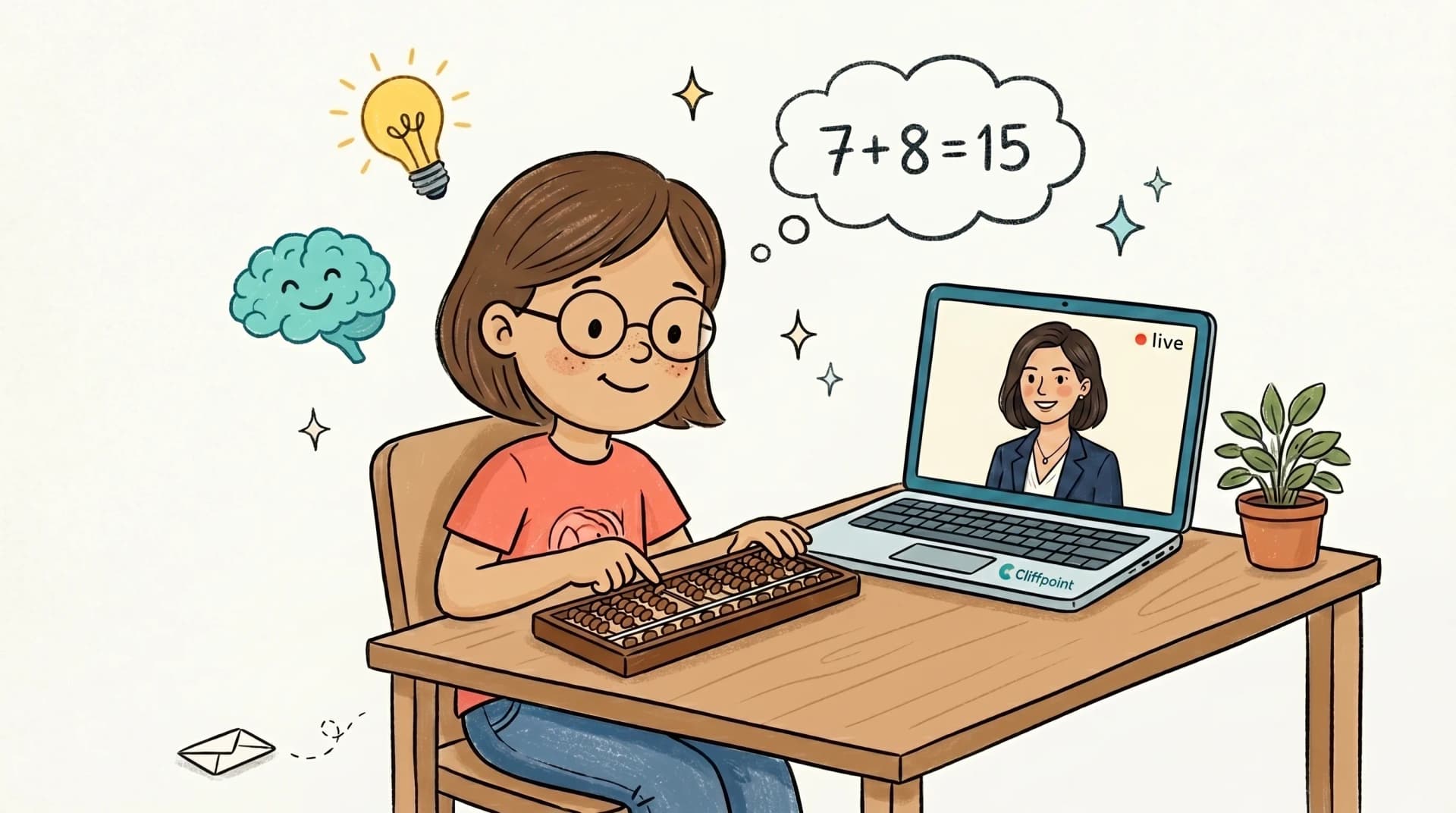
- The instructor uses a screen-shared abacus they manipulate live.
- Your child is comfortable on a video call.
- You can help them with the technical setup for the first few sessions.
Offline works better when:
- Your child struggles with screen attention.
- A reputable academy is within an easy commute.
- You want the added benefit of in-person social interaction.
The idea that online classes cannot teach abacus properly is simply untrue. The mechanics of bead movement are perfectly visible on camera, and a small online batch with a great instructor will always outperform a large offline class.
5. The free demo class
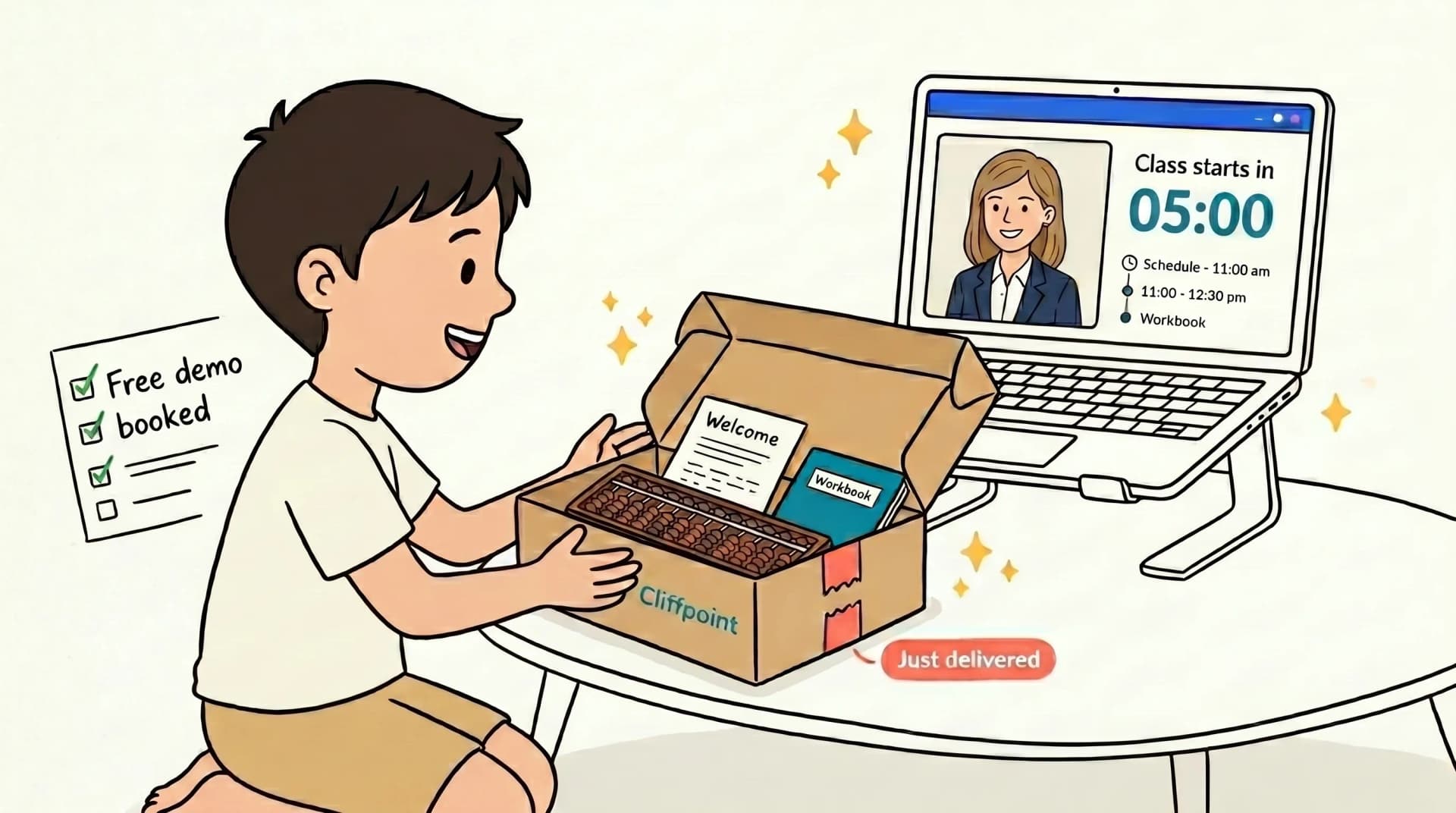
Most reputable abacus academies offer a free trial class. You should absolutely take advantage of this. A demo will tell you more in 30 minutes than a week of reading reviews.
During the demo, pay attention to the following:
- Does the instructor make eye contact and use your child's name?
- How does the instructor respond when your child makes a mistake? Patience is key here.
- Does your child finish the demo asking when the next class is? Children are great judges of teachers, so trust their reaction.
- Did you actually see calculation happen, or was it mostly just an introduction and a sales pitch?
A demo that ends with a hard sales pitch or a limited-time discount offer is usually a bad sign. Confident academies let the teaching speak for itself.
Red flags to walk away from
Here are a few things that should make you reconsider an academy:
- Batch sizes of 15 or more. As mentioned earlier, this is detrimental to learning.
- No published level structure. This often indicates improvised teaching.
- Promises of guaranteed results. Learning outcomes depend heavily on the individual child. Anyone guaranteeing specific results in a fixed timeframe is likely misleading you.
- Refusal to let parents observe a class. Reputable academies welcome observation.
- Heavy upfront payment for the entire course. Two to three years is a long commitment. It is much better to pay per level or per term.
- Aggressive sales tactics. High-pressure sales pitches often mask a low-quality program.
- Constant instructor changes.Continuity is crucial for a child's progress.
Common questions
At what age should kids start?
Six is generally the best age to start. Younger children can learn basic bead manipulation but rarely have the working memory required for full level progression. Older children can absolutely start, though the early levels might feel a bit slow as motor skills develop faster than cognitive habits.
How much should I expect to pay?
Pricing varies widely by region. In the US, expect to pay between $80 and $200 per month. In the UK, it ranges from £60 to £140, and in India, it can be anywhere from ₹600 to ₹4,000. Keep in mind that a higher price does not always mean better quality. You should be paying for small class sizes and experienced instructors, not just branding.
How do I know if the class is working?
There are a few key milestones to watch for:
- Weeks 4–6: You should notice better focus during homework and improved fine-motor coordination.
- Months 3–4: Your child will show visible speed improvements on the abacus and may start solving problems unprompted.
- Months 6–8: This is usually when the first mental-math breakthrough happens. Your child will solve something in their head and be genuinely surprised.
If you haven't seen any of these signs by month six, have a chat with the instructor. If they cannot explain the delay, it might be time to look for a different academy.
What if my child does not want to continue?
If they have completed a few levels and genuinely find it boring, it might just not be the right fit for them. Forcing it past the six-month mark rarely works. However, if they have just started and are finding it difficult, try to push through for another month. The frustration of the early weeks is a normal phase that usually resolves into confidence pretty quickly.
Can older kids (10–13) start abacus?
Yes, but progress through the early levels might feel slower because older children have already developed their own arithmetic habits. The jump to mental math works just as well, but the initial bead-manipulation stages can feel a bit tedious. By the intermediate levels, age stops being a factor.
Making the decision
To condense this framework:
- Shortlist a few academies with small batch sizes and a clear level structure.
- Take the free demo at each one.
- Ask your child what they thought before sharing your own opinion.
- Base your final choice on the demo rather than the brochure.
If you would like to see what a demo looks like, we offer a free 30-minute session. Your child will meet a certified instructor, walk through their first bead movements, and you can both decide if it is the right fit.
For more details on what your child will learn, check out our articles on the 10 benefits of abacus training and the 10 levels of the program. You can also try our free virtual abacus tool to get a feel for how it works before booking.
We teach families in Doha and across Qatar in Arabia Standard Time, scheduled around the local school day and weekend timings. Every new family in Qatar starts with a free 30-minute demo with our certified instructor. No card details required.