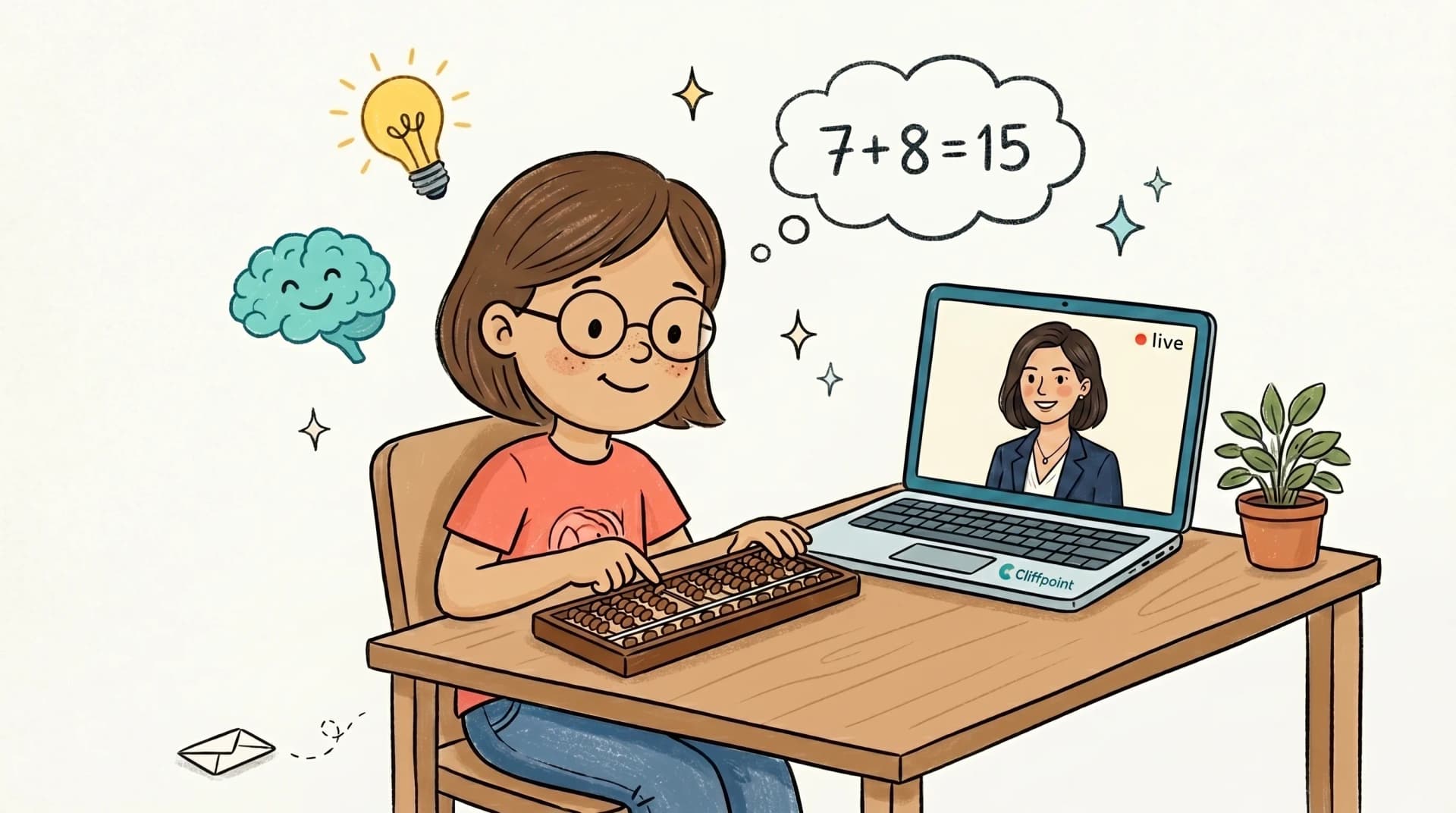
Plenty of after-school programs claim to make children smarter. The abacus is one of the few with published research attached to it: brain-imaging work on trained children, a multi-year classroom trial in India, and studies of expert abacus users going back to the 1970s. Here are the ten benefits that hold up when you actually look at the research, not the marketing.
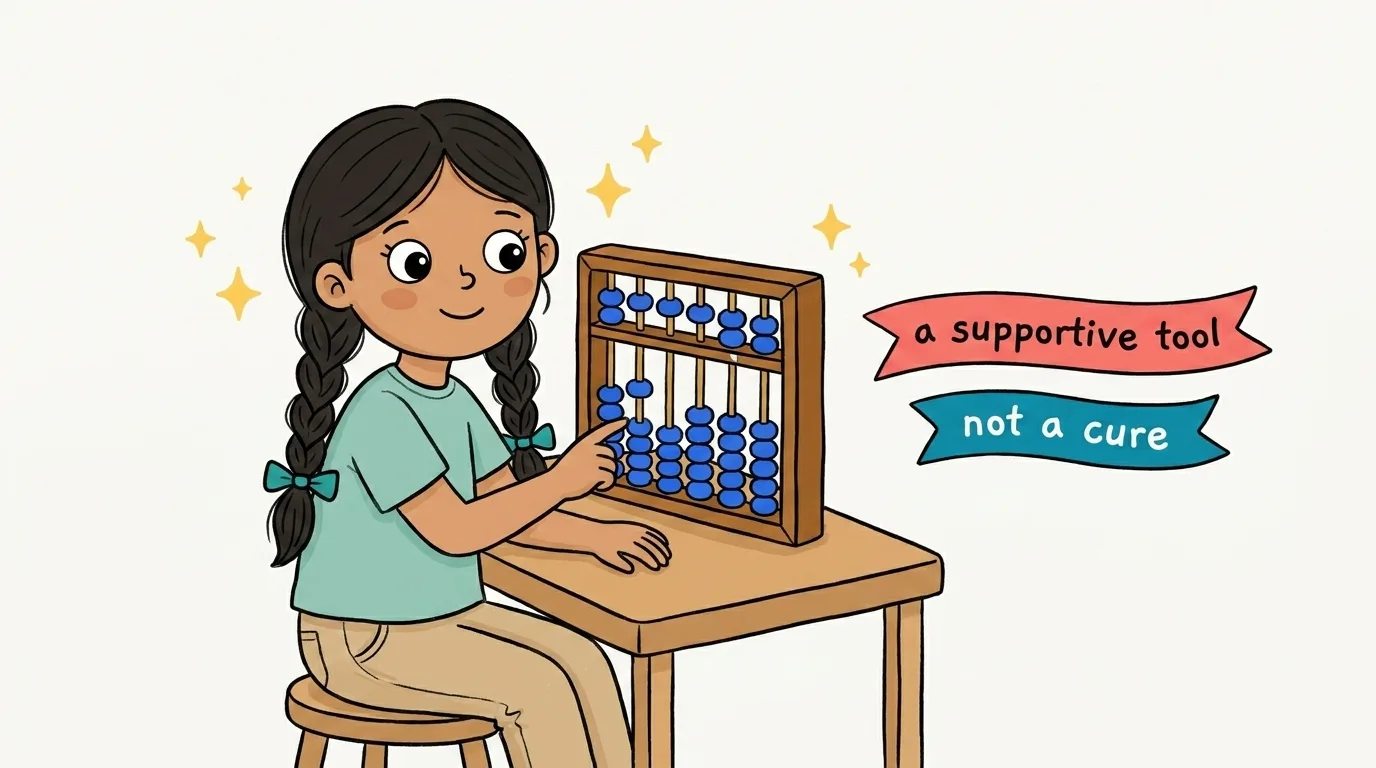
Watching a child practice the abacus is a unique experience. They become deeply focused, their hands move with surprising precision, and within a few months, they can solve complex equations entirely in their heads.
This is not just a neat trick. Research on abacus users going back to the 1970s points the same way: learning the abacus changes the way children represent numbers in their heads.
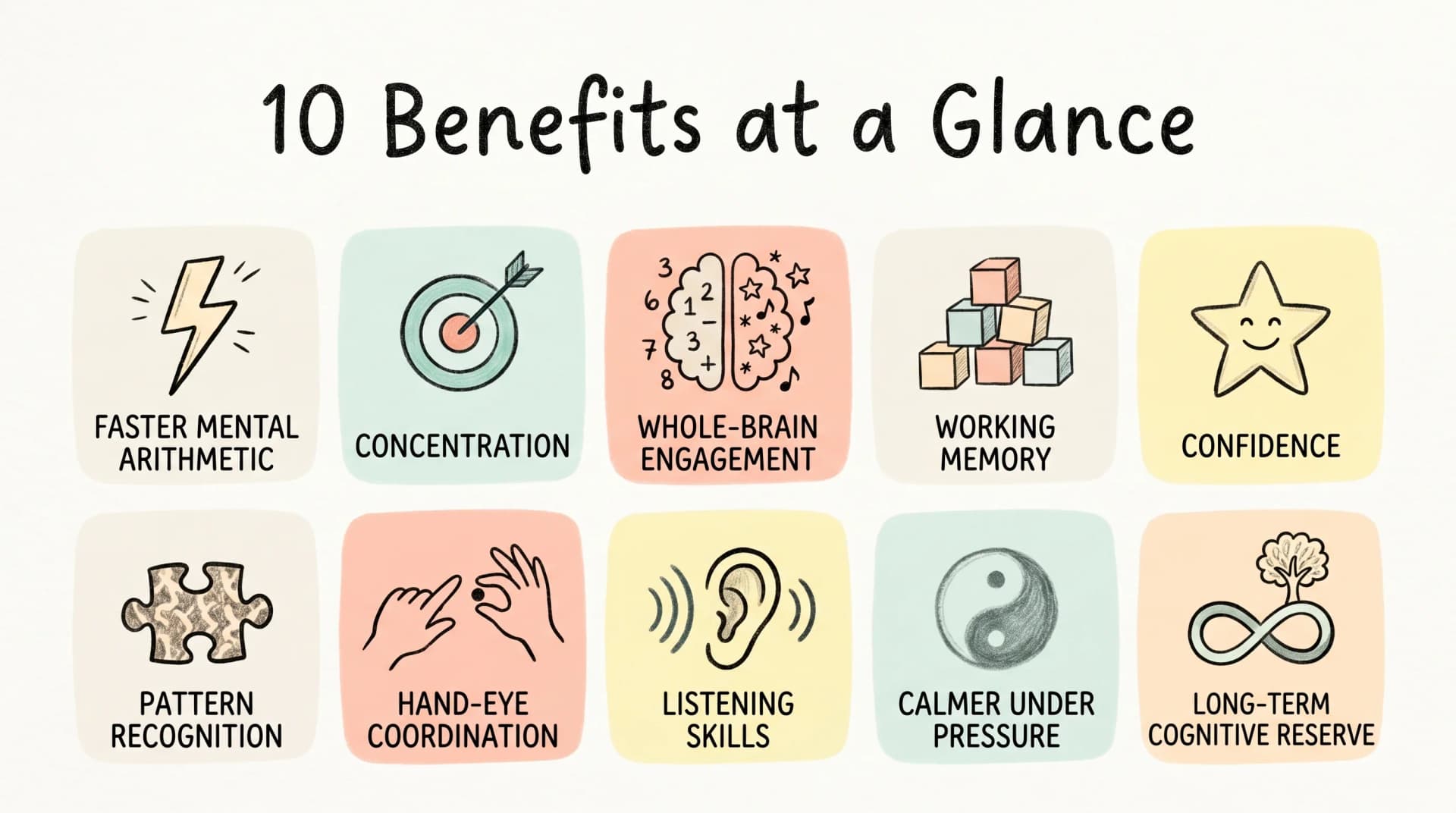
In an age of calculators and digital tutors, teaching a traditional wooden tool might seem outdated. However, the benefits extend far beyond basic arithmetic. Here are ten evidence-backed ways abacus training supports childhood development.
Why the abacus still matters
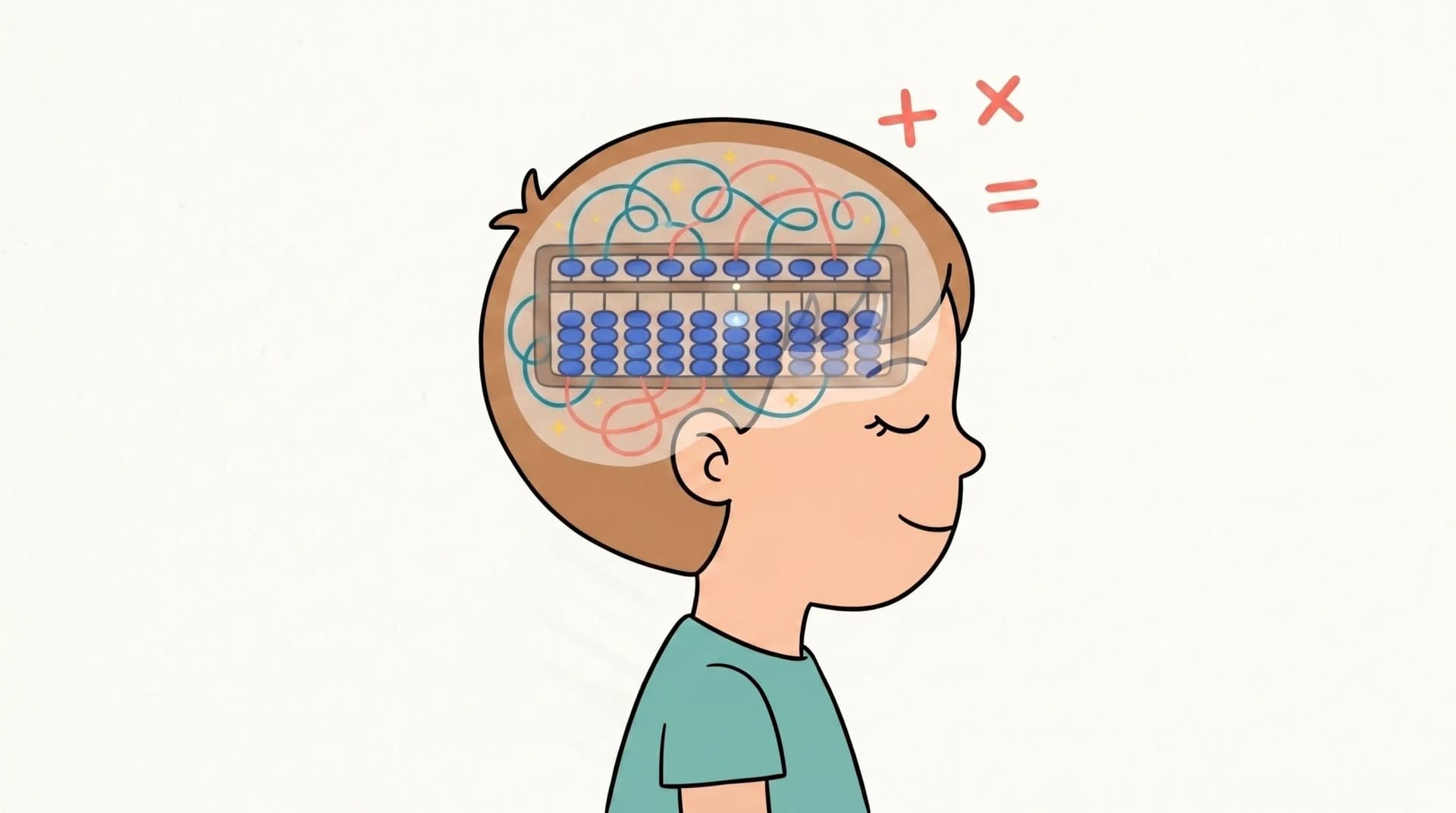
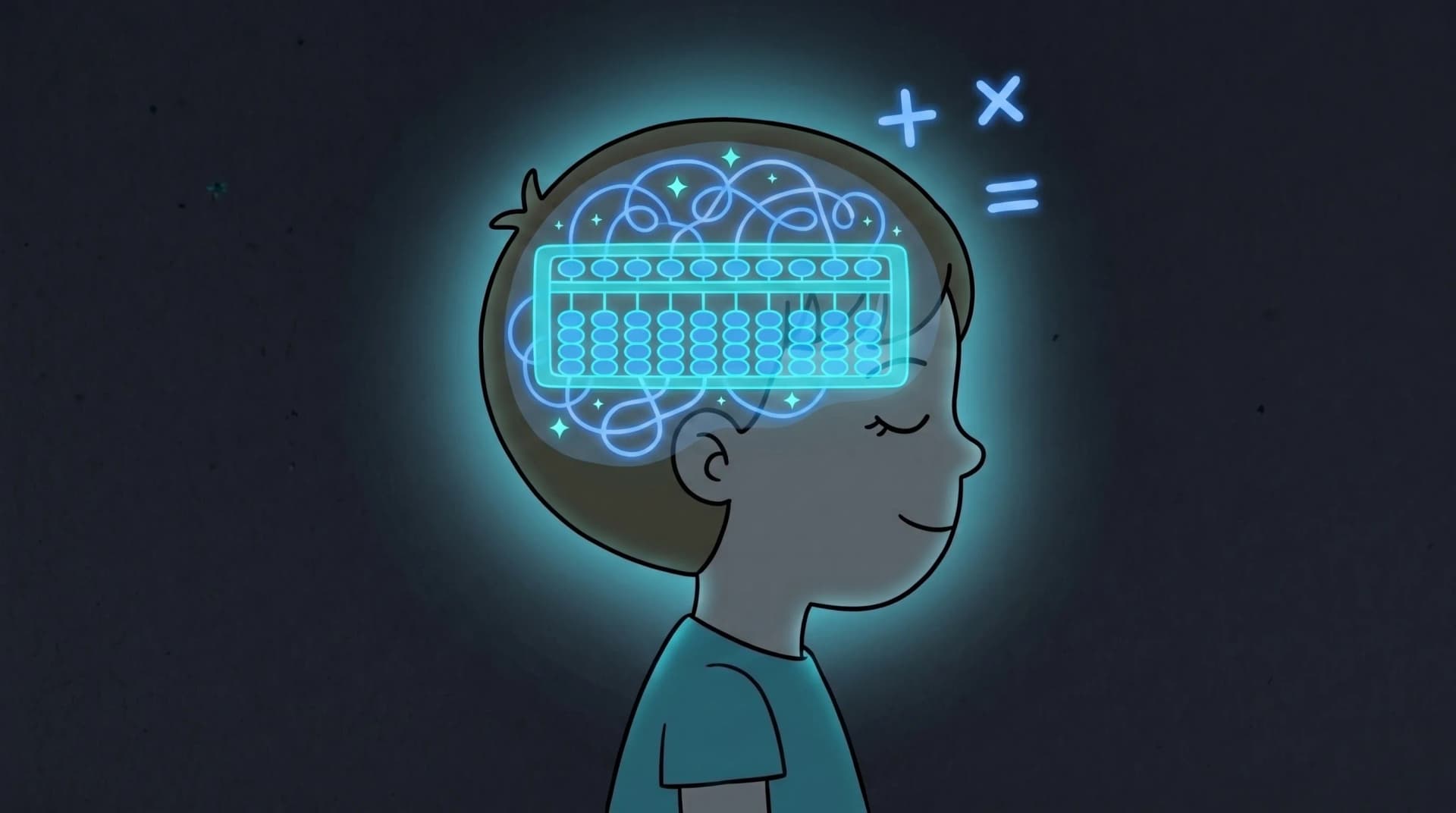
When a child uses an abacus, they are building a visual and spatial representation of numbers. Over time, this mental image becomes so strong that they can visualize the beads and calculate without the physical tool. Researchers refer to this as the “mental abacus.”
Frank and Barner (2012), working with children in India, found that abacus-trained children hold exact numbers as a visual bead image rather than as words. That alternative route to the answer is what the rest of this list rests on.
1. Faster mental arithmetic
Children who complete a year or two of training can easily solve multi-digit equations in their heads. By visualizing the beads, mental addition becomes a matter of manipulating shapes rather than performing traditional arithmetic.
2. Better concentration
Using an abacus requires sustained attention. Children have to focus on the beads, their finger movements, and the numbers being calculated. Parents frequently report that after a few months of classes, their children are able to sit still and focus on their regular homework much more effectively.
3. Visual-spatial brain engagement
A 2013 brain-imaging study found that abacus-trained children process calculations using the visuospatial regions of their brains. By shifting the workload from verbal processing to visual imagery, they can arrive at answers much faster.
4. Stronger working memory
Working memory is crucial for academic success. Abacus training is excellent practice for this, as children must hold multiple numbers in their minds while simultaneously manipulating them. Hatano and Osawa (1983), studying highly trained abacus experts, found digit spans far above the usual range for numbers, though the same advantage did not carry over to remembering letters. The effect is specific to the material the training uses, which is worth knowing before anyone promises a better memory in general.
5. Increased confidence with numbers
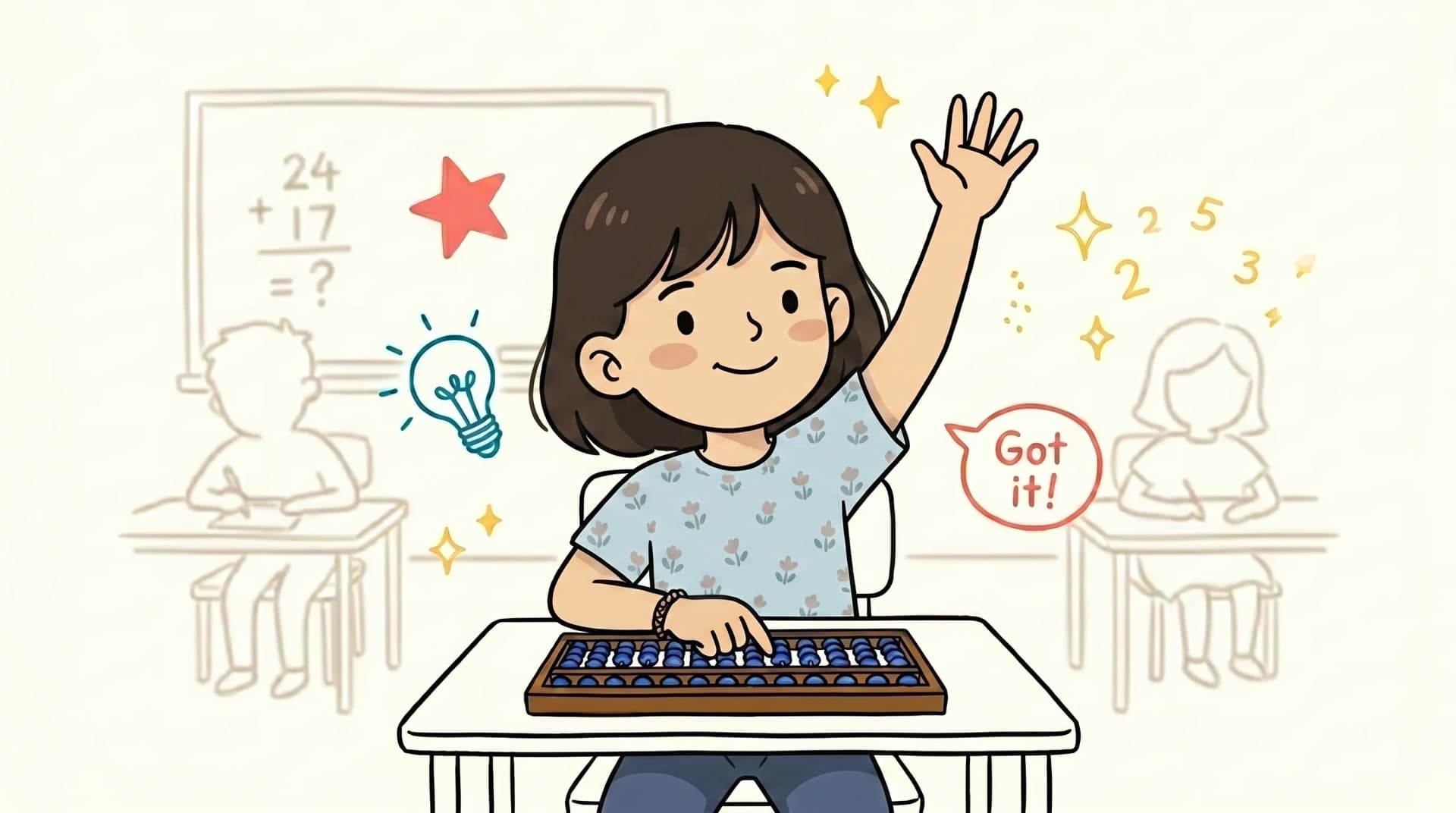
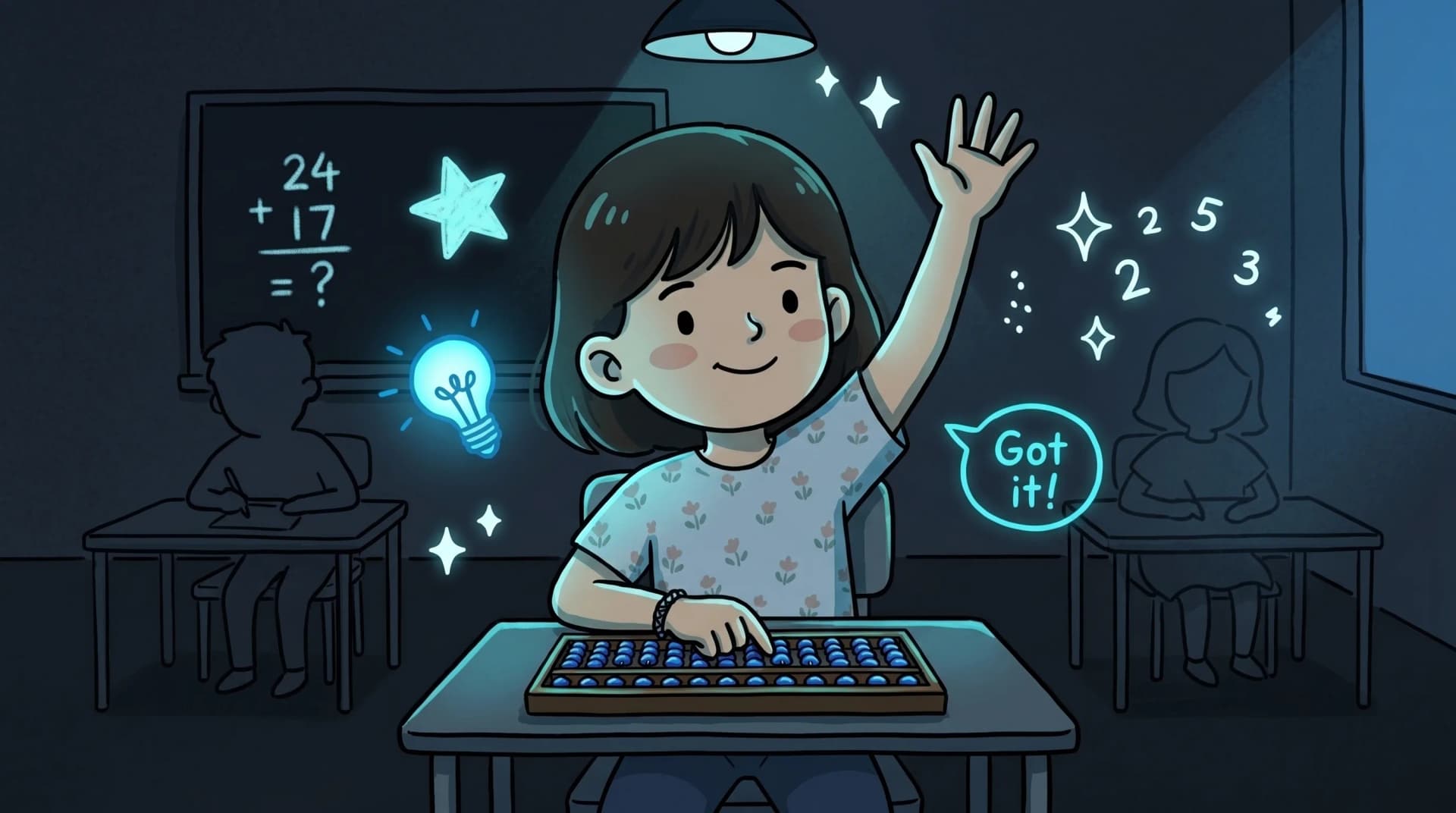
Children who can perform rapid mental math naturally feel more confident. They stop feeling anxious about math problems and start volunteering answers. This positive shift in their identity encourages them to tackle harder challenges at school.
6. Pattern recognition
The abacus teaches children to recognize patterns, apply rules, and check their results. This structured way of thinking translates well to other disciplines, including music and computer programming.
7. Improved hand-eye coordination
Moving the beads requires exact fine-motor control. Over time, this precise physical activity helps children develop better dexterity and bilateral coordination.
8. Sharper listening skills
In advanced classes, instructors read problems aloud. Children have to process auditory information quickly and translate it into physical or mental bead movements. This practice directly improves their ability to follow multi-step instructions in school.
9. Calmer under pressure
Because abacus tests and competitions are timed, children learn how to handle pressure early on. They practice thinking clearly while the clock is ticking, a skill that serves them well during school exams and later in life.
10. A habit of hard mental work
The last benefit is the least measurable and possibly the most useful. Abacus practice asks a child to concentrate hard on something difficult, every session, and to keep going when the answer does not come immediately. Children who get used to that tend to approach unfamiliar work at school the same way. We make no claim about what any of this does decades from now, and nobody has the evidence to.
Common questions
At what age can kids start?
Six is generally the ideal starting age. While younger children can play with the beads, they usually lack the working memory needed for the structured curriculum. Older children can also start and benefit greatly, though their initial progress might feel slightly different.
How long until I see results?
Improved focus is often visible within the first month or two. Noticeable increases in calculation speed usually appear around the three-month mark, and true mental math capabilities begin to show after about six months.
Is online training effective?
Yes, provided the class size is kept small and the instructor is experienced. The quality of the teaching and consistent practice are far more important than whether the class is held in person or online.
Taking the next step
The best way to see if abacus training is right for your child is to let them try it. We offer free demo classes where your child can experience the basics firsthand. If they enjoy it, it is likely a great fit.
You can also explore our free virtual abacus tool to get a feel for the mechanics, or read our complete guide to how it works.
We teach these skills in small live batches: online abacus classes in the USA, plus classes for families in the UK, Canada, Australia, and Dubai and the UAE. The first demo class is free.