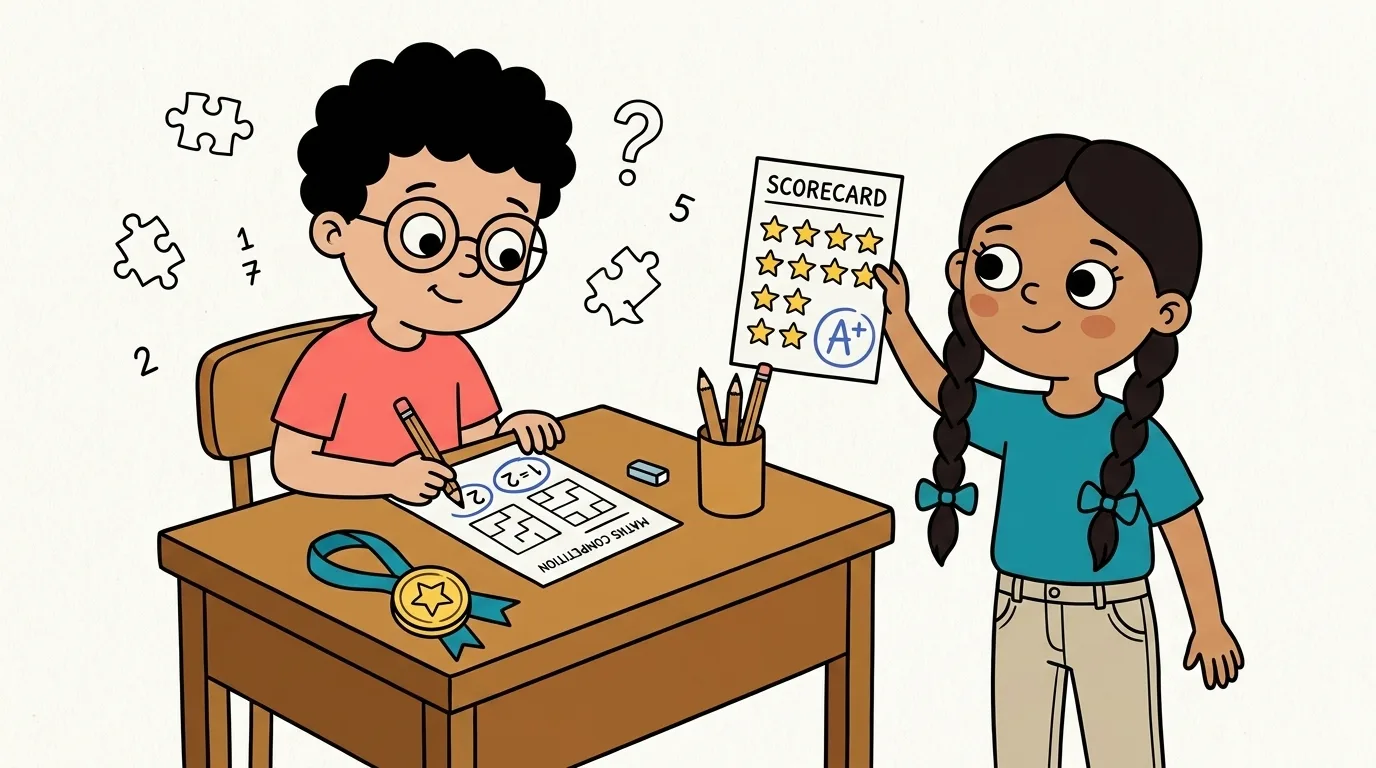
Maths olympiad is a phrase that gets thrown around loosely. In the UK it covers a specific ladder of competitions, the earliest of which opens to children in Year 3. This guide maps the ladder for primary-age kids and shows how to prepare without turning maths into a pressure sport.
Somewhere between a school newsletter and a chat at the school gate, most UK parents eventually meet the phrase maths olympiad. It sounds intense, slightly elite, and very unclear: what actually exists, who can enter, and is it something a normal 8 year old should be doing? Here is the honest map.
What counts as a maths olympiad in the UK?
In the UK, the word olympiad covers two related things: a handful of well-established national competitions run by charitable maths organisations, and, more loosely, any timed maths contest for children. The established ladder for school-age children looks like this:
- First Maths Challenge: run by the Mathematical Association for Years 3 and 4 (P4 and P5 in Scotland, Years 4 and 5 in Northern Ireland). A gentle, school-based paper designed to feel like puzzles, not a test.
- Primary Maths Challenge: the main event for primary children, aimed at Years 5 and 6 (P6 and P7 in Scotland, Years 6 and 7 in Northern Ireland). The Mathematical Association writes it for roughly the top 60 percent of pupils. Schools sit a main round each autumn term, and high scorers are invited to a follow-up round in February.
- Junior Mathematical Challenge: run by the UK Mathematics Trust for Year 8 and below. Strong performers are invited onward to the Junior Kangaroo and the Junior Mathematical Olympiad, which is where the word olympiad formally enters the ladder.
- Beyond that: the Intermediate Challenge leads to the Intermediate Mathematical Olympiad, and the Senior Challenge leads to the British Mathematical Olympiad, the route to the international team. That is secondary-school territory, years away for a primary-age child, and nothing you need to plan for now.
Entry normally goes through the school rather than the family. If your child's school does not take part, ask the maths coordinator; papers are inexpensive and schools can usually register without much fuss.
What olympiad questions actually reward
Olympiad questions are deliberately different from classroom questions. A typical school exercise checks whether a child can carry out a taught method. A challenge question hides a simple idea inside an unfamiliar setup and rewards the child who can find it. Three underlying skills carry most of the weight:
- Reading slowly, then reasoning. Many questions are logic puzzles wearing a maths costume. Children who rush to calculate before understanding the setup lose marks they could easily have won.
- Fast, accurate mental arithmetic. The actual numbers involved are rarely large, but a child who burns a minute on a two-digit sum has stolen that minute from the thinking the question was really about. Fluency buys time, and time is the scarcest resource in any timed paper.
- Staying calm when stuck. Every child meets a question they cannot immediately do. The competitors who do well are the ones who shrug, move on, and come back, a skill that is trainable and that transfers to every test they will ever sit.
Is it worth entering a primary-age child?
Honestly: yes for most children, with one condition. The challenges up to Year 6 are designed to be enjoyable, the stakes are genuinely low, and certificates are spread generously. For a child who likes puzzles, they are a lovely early experience of maths as a game rather than a worksheet. The condition is the framing at home. A child entered so they can win will learn anxiety. A child entered to have a go at some brilliant puzzles will usually ask when the next one is.
One thing you do not need is a gifted child. The First Maths Challenge is written for ordinary classrooms, and even on the Primary Maths Challenge the early questions are accessible to any child comfortable with their number work. It is a stretch paper, not a filter.
How to prepare without pressure
- Use past papers as puzzle books. The organisers publish past questions. One or two questions over breakfast, discussed rather than marked, does more than a mock exam every weekend.
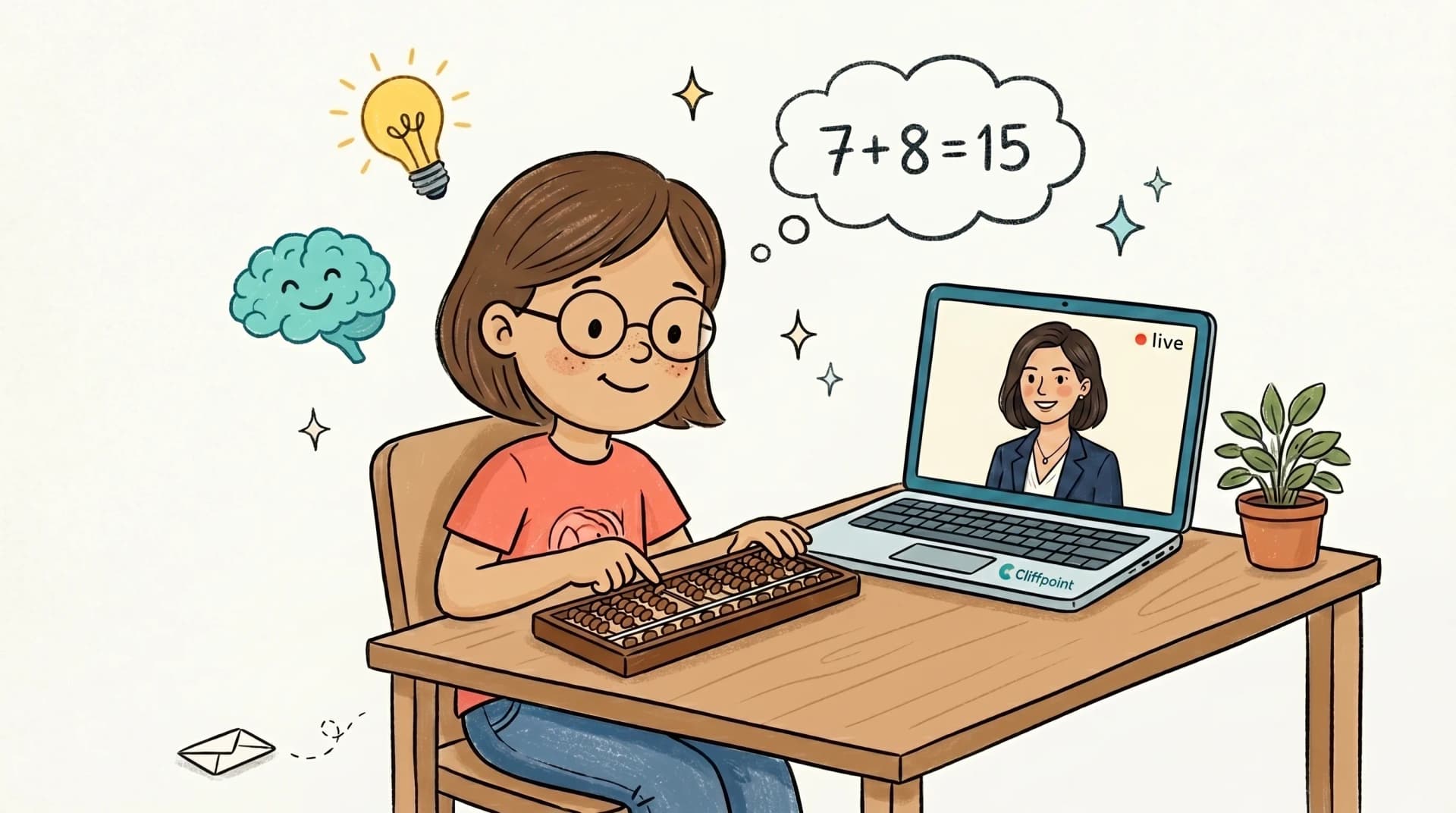
- Build the arithmetic engine daily.Five minutes of mental maths a day, whether that is times tables, quick sums, or bead work, compounds into the fluency that buys thinking time on the paper. Our times tables charts and the free virtual abacus are both built for exactly this kind of short daily session.
- Practise being stuck. Give your child one genuinely hard puzzle a week and sit on your hands while they wrestle with it. Praise the wrestling, not the answer.
- Keep the timer out of it at first.Speed grows out of comfort. Introduce timed practice only once your child solves untimed questions with pleasure.
Where abacus training fits, and where it does not
We should be precise here, because this is our field and the temptation to overclaim is real. Abacus training will not teach your child the clever insight that unlocks an olympiad puzzle; that comes from exposure to puzzles themselves. What structured abacus training reliably builds is the arithmetic engine underneath: fast, accurate mental calculation and the working memory habits that go with it. On a timed paper, that fluency converts directly into extra thinking time, and children who trust their arithmetic attack unfamiliar questions with visibly more confidence.
If that engine is the piece your child is missing, our online abacus classes for UK families train it two evenings a week in batches of ten. And if your child is younger and the Year 4 multiplication tables check is the nearer milestone, start with our calm MTC preparation guide, which covers the same fluency foundations.
Common questions
What age can my child start maths olympiads in the UK?
The First Maths Challenge accepts Years 3 and 4, so children from about seven can take part in a school-based round. The Primary Maths Challenge covers Years 5 and 6, which is the sweet spot for most families.
Does my child need to be top of the class?
No. The First Maths Challenge is written for regular classrooms. The Primary Maths Challenge is pitched at roughly the top 60 percent of a year group, so it is a stretch paper rather than an open one. Enjoying puzzles still matters more than class ranking.
How is an olympiad different from school tests or SATs?
School assessments check taught methods. Challenge papers reward reasoning with unfamiliar problems, so they feel more like puzzles and less like a curriculum checklist. Both, however, reward fluent mental arithmetic.
How should we prepare for a first Primary Maths Challenge?
Work through a few past papers casually, one or two questions at a time, and keep daily mental arithmetic short and playful. Avoid mock-exam conditions for a first attempt; the goal of round one is wanting a round two.