
Every June, Year 4 children across England sit the Multiplication Tables Check: twenty five questions, six seconds each. This guide explains what the check really measures and how to prepare a child who stays calm when the timer starts.
If your child is in Year 3 or Year 4 in England, the Multiplication Tables Check is probably already on your radar, and possibly on your list of quiet worries. The good news: it is a short, low-stakes check, and the skill it measures is one you can build at home, calmly, in a few months.
What the MTC actually is
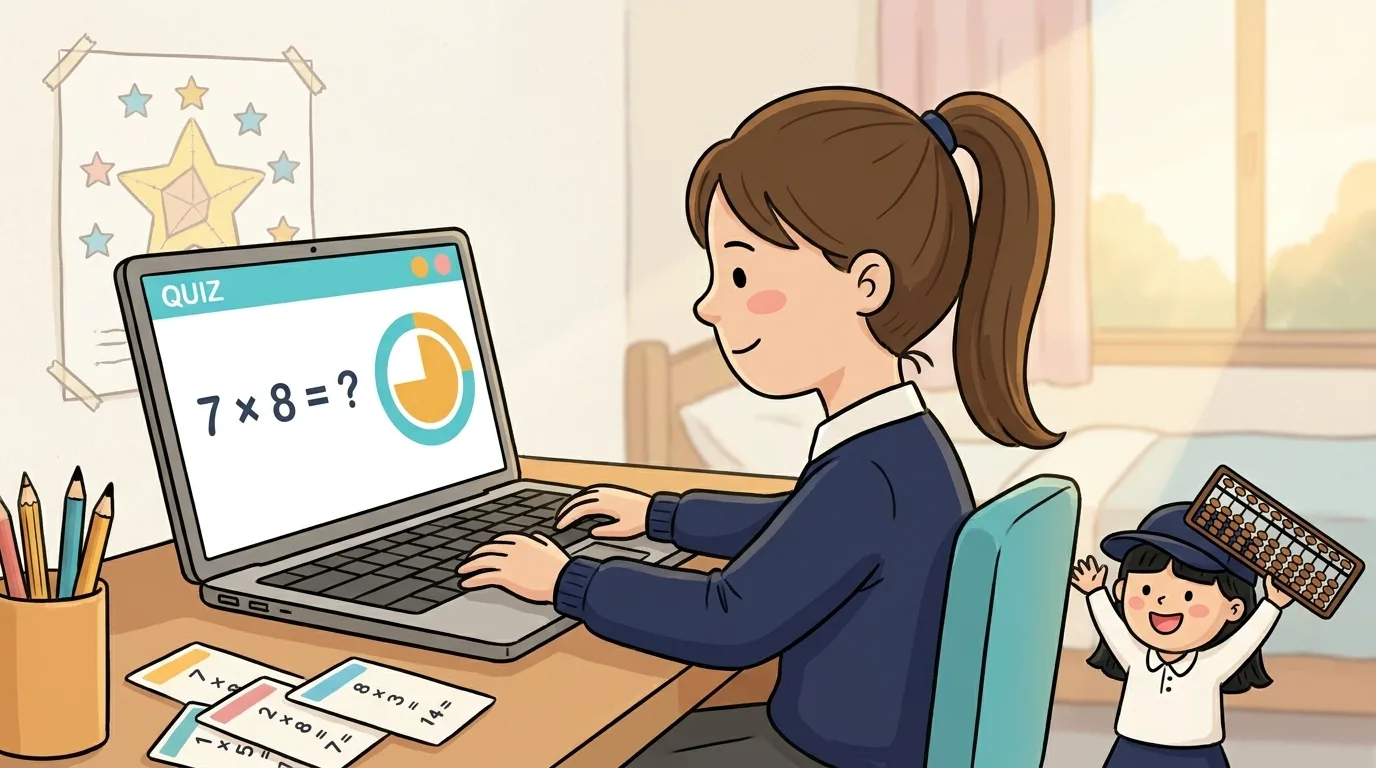
The Multiplication Tables Check is a statutory on-screen check for Year 4 pupils in England, taken every June since 2022. The format is simple and completely predictable:
- 25 questions, all multiplication, up to 12 × 12.
- 6 seconds to type each answer, with a 3 second pause between questions.
- The 6, 7, 8, 9, and 12 times tables come up most, because they are the ones children find hardest.
- Scored out of 25. There is no official pass mark, and children do not fail the MTC; schools use it to see who needs more support.
That last point is worth repeating to your child: nobody fails the MTC. It is a snapshot, not a verdict.
Why the 6 second timer is the real test
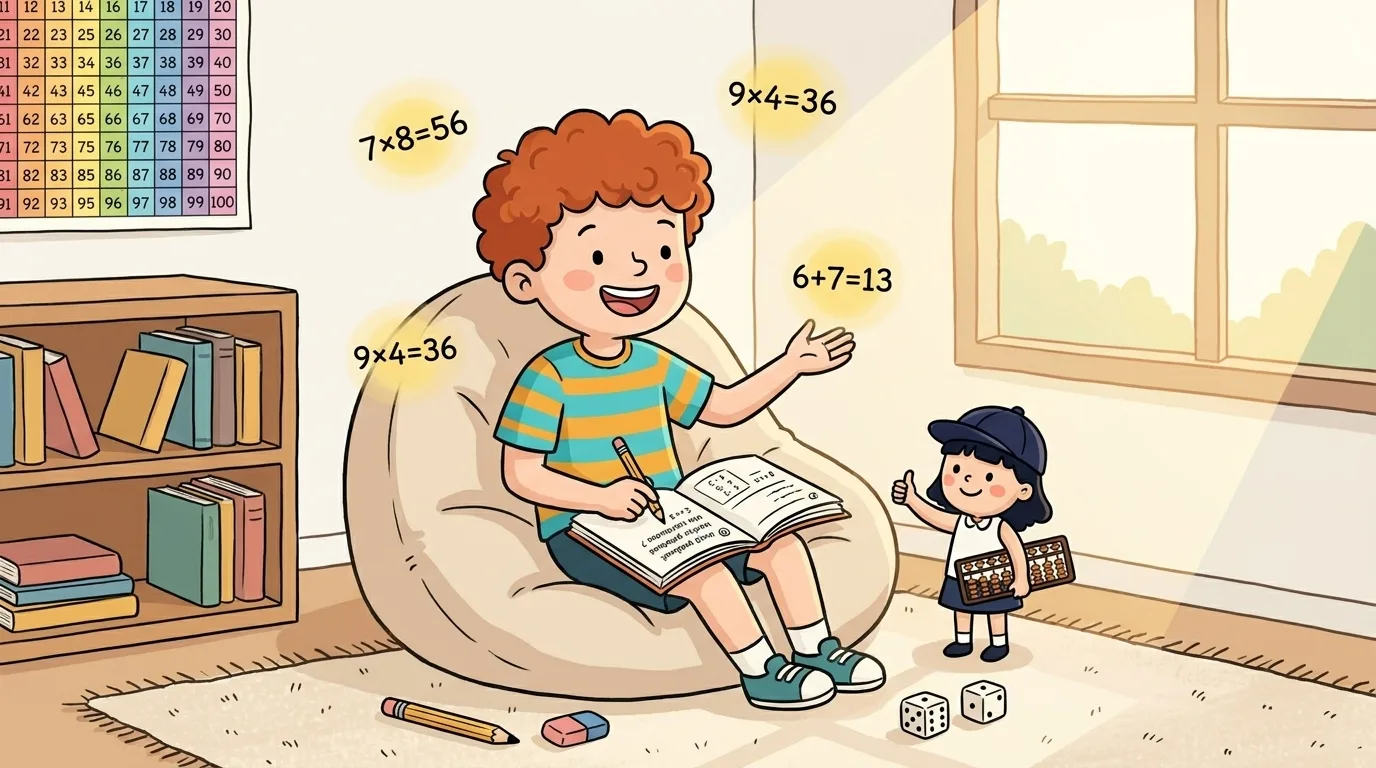
Most Year 4 children know their tables in the way most adults know a phone number they have to look up: they can get there, given time. Ask "seven eights?" and a child who is not yet fluent will skip-count in their head: seven, fourteen, twenty one... That works on paper. It does not work in six seconds, and the child knows it is not working, which is where the panic starts.
The MTC is really a test of retrieval: does the answer arrive on its own, or does it have to be computed? Fluent recall means 7 × 8 = 56 surfaces in under a second, leaving five seconds to type two digits at a nine year old's typing speed. Computed recall means racing the clock every single question for two and a half minutes. Same knowledge, completely different experience.
A calm 12 week preparation plan
Fluency is built little and often, not in weekend cram sessions. A plan that works for most families:
- Weeks 1 to 2: find the gaps. Go table by table, untimed, and write down which facts are slow. Our times tables charts make this easy to do at the kitchen table. It is usually a short list: most children are shaky on parts of the 6s, 7s, 8s, and 12s, not on everything.
- Weeks 3 to 8: five minutes a day on the gap facts. Mix the shaky facts into questions your child already knows so practice feels like winning. Our Year 4 maths worksheets give you a printed page for that daily five minutes. Keep sessions short enough that they end before attention does.
- Weeks 9 to 12: add the clock, gently.Only once the facts are solid, practise in the real format. The Department for Education's own "Try it out" area lets your child feel the 6 second rhythm before the real thing, and schools usually run practice checks too.
The order matters. Adding a timer to facts a child has not yet secured teaches them to fear the timer. Securing the facts first, then adding the timer, teaches them the timer is easy.
Where abacus training fits
Abacus students tend to find the MTC unremarkable, and the reason is instructive. Training on the Japanese soroban builds exactly the two things the check rewards: number facts that surface instantly rather than being computed, and calm, practised speed under a clock. By the middle levels of a structured programme, children are doing multi-digit mental arithmetic at a pace that makes 25 single-fact questions feel like a warm up.
To be clear about what abacus training is not: it is not an MTC cram course, and a child starting in Year 4 spring will not transform by June. It is the long way of building the fluency the MTC samples, along with concentration and confidence that outlast any single check. If that foundation is what you are after, our online abacus classes for UK families start with a free demo class. And for the broader picture of building a confident young mathematician, see our guide on how to help your child get better at maths.
One more thought for after the check: children who cruise through the MTC often enjoy a bigger challenge, and the UK has a friendly ladder of them starting from Year 3. Our parent's guide to UK maths olympiads maps which competitions exist and how to try one without pressure.
Frequently asked questions
What is a good score on the Multiplication Tables Check?
There is no official pass mark. Many children score full marks and many schools treat 20 or more out of 25 as secure, but the score's real job is to show teachers who needs more support. Treat anything your child improves on as a win.
How long should my child practise each day?
Five to ten minutes daily beats an hour on Sunday. Retrieval strengthens with frequent, short, spaced practice, and short sessions keep it from becoming a battle.
Can my child fail the MTC?
No. The check has no pass or fail. Results go to the school, not onto some permanent record, and are used to plan support in Year 5.
What if my child panics under timers?
Separate the two skills. Secure the facts untimed first, then introduce the clock in tiny, playful doses at home where the stakes are zero. Panic usually means the timer arrived before the fluency did, and the fix is order, not more pressure.