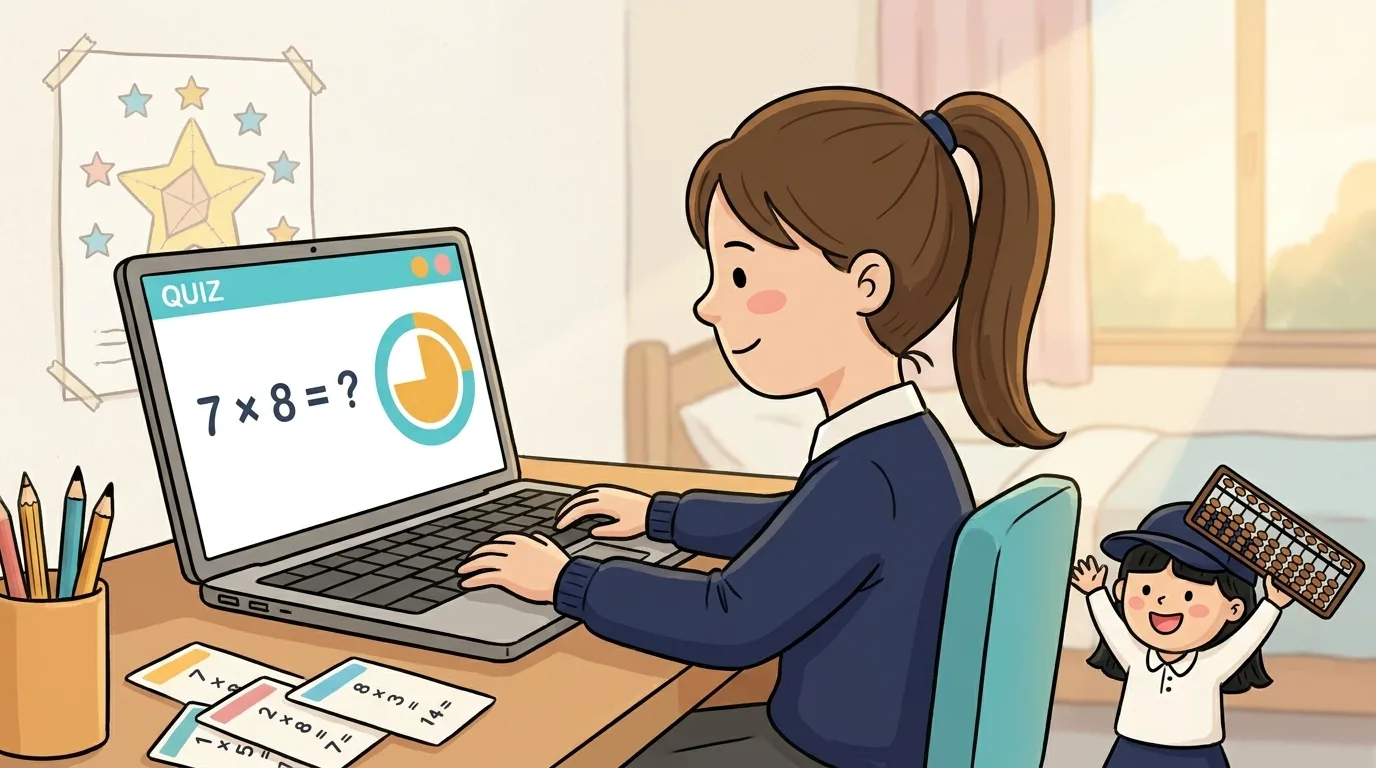

Every March, Australian children in Years 3, 5, 7, and 9 sit NAPLAN. This guide looks at what the numeracy assessment really rewards for primary-age kids, and how to build the mental maths underneath it without turning your kitchen into a cram school.
NAPLAN week has a way of making calm households less calm. If your child is heading into Year 3 or Year 5, here is the reassuring truth: the numeracy assessment is not a trick, it does not need months of tutoring, and the single most useful thing underneath it, comfortable mental arithmetic, is something you can build steadily at home.
What NAPLAN numeracy actually looks like
NAPLAN runs each March for Years 3, 5, 7, and 9. The numeracy assessment for primary years covers number and algebra, measurement and geometry, and statistics, and it is taken online with questions that adapt to how your child is going. Two things matter for preparation:
- No calculator in the primary years. Year 3 and Year 5 children do every calculation themselves, in their heads or on scrap paper.
- The clock is gentle but real. Children who compute slowly spend their attention on arithmetic and run short of it for the actual reasoning.
The quiet advantage: arithmetic that costs nothing
Most NAPLAN numeracy questions are reasoning questions wearing a thin coat of arithmetic. A Year 5 item might ask about the change from $50, the perimeter of a garden bed, or how many 45-seat buses 138 students need. The reasoning is the point, but a child who has to labour through 138 divided by 45 has little left for the thinking.
Children with fluent mental maths read the same question and the arithmetic simply happens, the way you read a word without sounding out letters. That freed-up attention is the quiet advantage, and it shows up not just in NAPLAN but in every maths lesson between now and Year 12.
A no-drama preparation rhythm
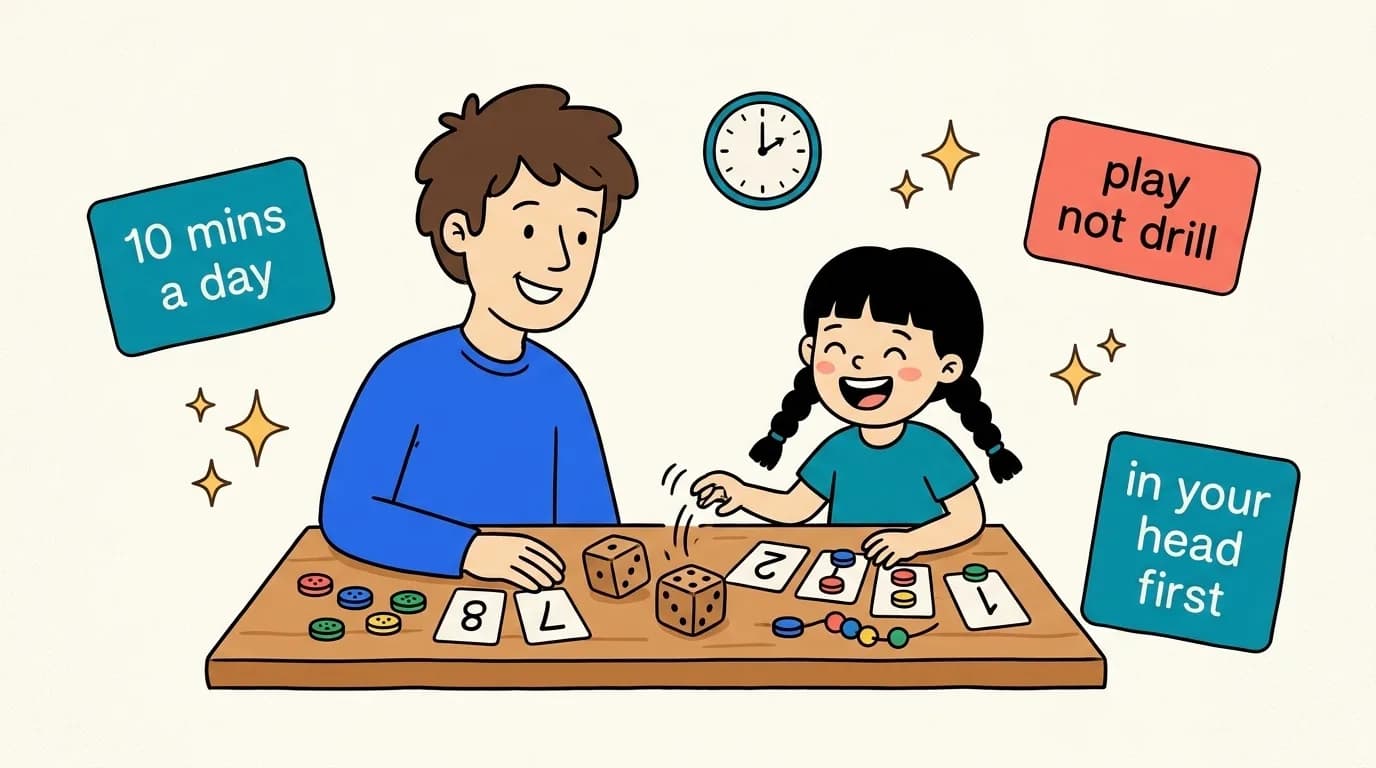
- Months out: build fluency, not test stamina. Five to ten minutes a day of mental maths, times tables, number bonds, halving and doubling, adding money, beats weekend practice-test marathons. Our Year 5 maths worksheets are one page a day of exactly that. Little and often is how recall becomes automatic.
- Weeks out: make the format familiar. A few of the official practice questions so the screen and question styles feel normal. Familiar beats drilled.
- The whole time: keep the temperature down. NAPLAN measures how the school is going as much as how your child is going. Children borrow their anxiety levels from us, so a parent who treats it as a normal week gives their child a real edge.
Where abacus training fits
Abacus students tend to treat the arithmetic inside NAPLAN numeracy as the easy part, and that is the honest pitch. Training on the Japanese soroban builds automatic number facts and calm speed under time pressure, exactly the fluency described above. It is not a NAPLAN cram course, and a child starting in February will not transform by March. It is the long way of building the foundation, along with the concentration and confidence that outlast any single test week.
If that foundation is what you are after, our online abacus classes for Australian families run in true after-school AEST and AEDT slots and start with a free 30 minute demo. For the bigger picture, our guide on helping your child get better at maths covers the foundations that matter before any test does.
Frequently asked questions
How long before NAPLAN should we start preparing?
For fluency, months, in five to ten minute daily doses. For format familiarity, a couple of weeks is plenty. Starting a long cram the week before mostly teaches stress.
Does my Year 3 child need a tutor for NAPLAN?
Usually not. NAPLAN is a snapshot, not an entrance exam. A tutor makes sense if your child is genuinely struggling in class, not because the assessment is coming.
Can my child use a calculator in NAPLAN numeracy?
Not in the primary years. Year 3 and Year 5 numeracy is calculator-free, which is why mental arithmetic matters so much at this stage.
Is NAPLAN something my child can fail?
No. There is no pass or fail. Results describe where your child sits against national proficiency standards and help schools plan support.