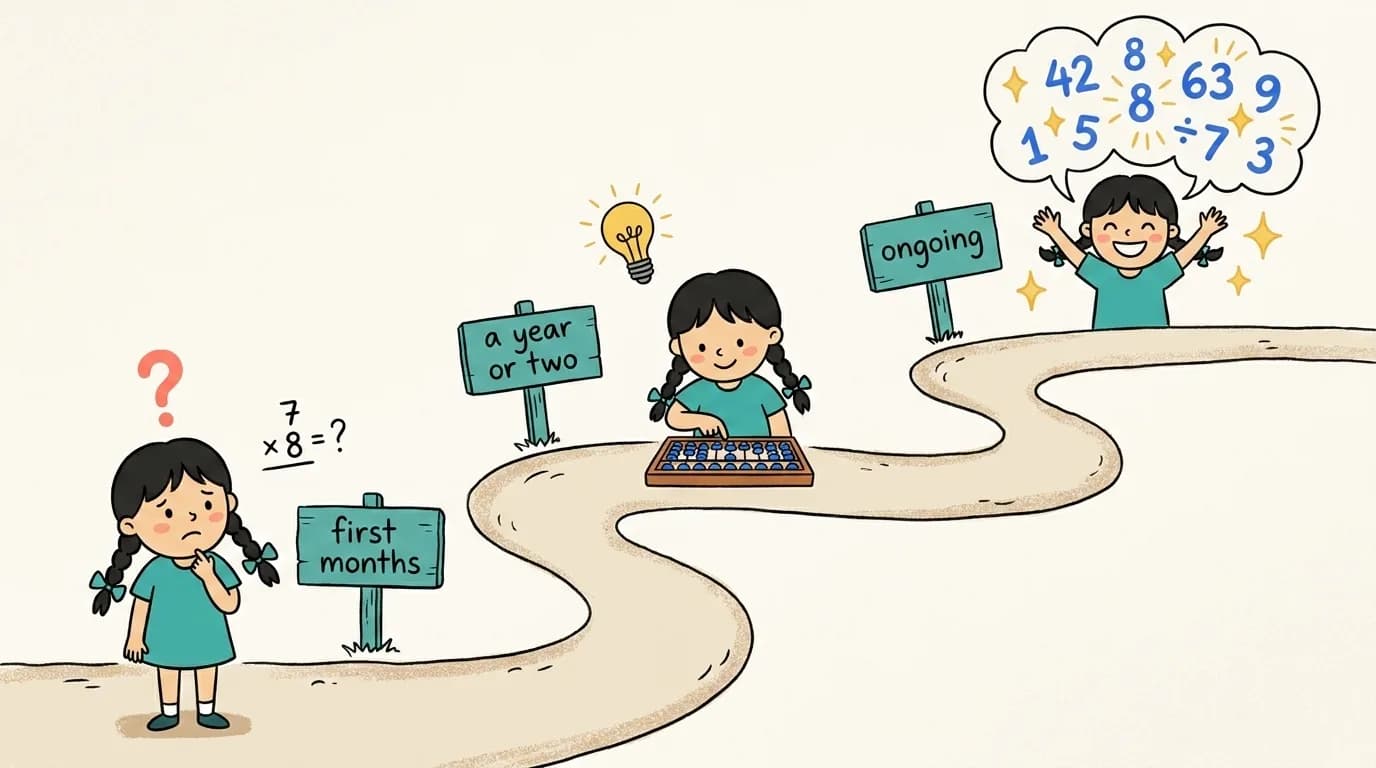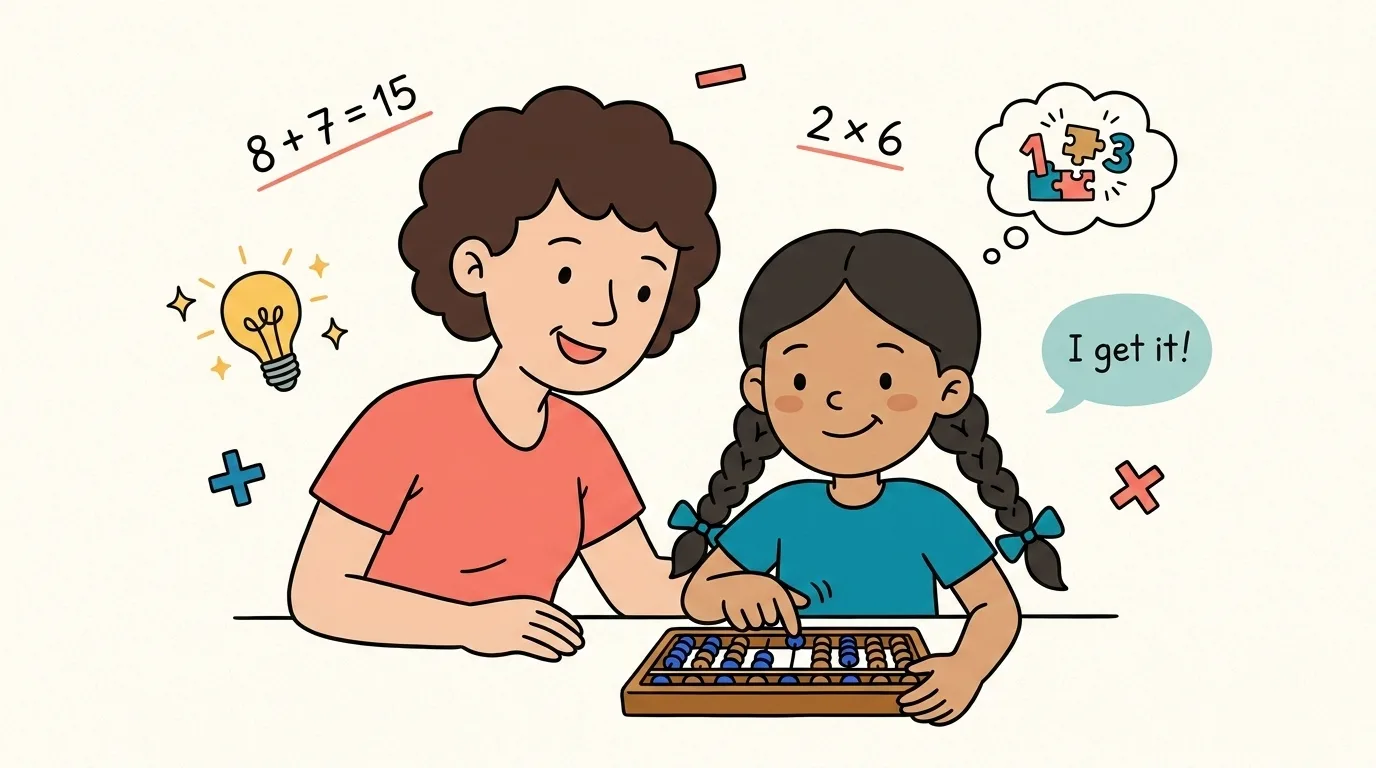
Almost every parent worries about their child and maths at some point. Maybe homework ends in tears, maybe the school report says “needs to build confidence,” or maybe your child is doing fine but you want to give them a real head start. Whatever brought you here, it helps to know one thing up front: very few children are actually “bad at maths.” Far more often, a few specific foundations are missing, and those foundations can be built.
Here is what genuinely makes a child stronger at maths, what you can do at home starting today, and where a structured method like the abacus fits in.
Why children struggle with maths
When a child falls behind in maths, it is rarely about intelligence. It is almost always one or more of these, quietly stacking up:
- Weak number sense. The child does not yet have a feel for how numbers work, so a sum like 8 plus 7 is something to be memorised rather than understood.
- No mental calculation. Every calculation is slow and effortful, done on fingers or paper, which makes longer problems exhausting before they even reach the hard part.
- Maths anxiety. A few bad experiences turn into fear, fear turns into avoidance, and avoidance means less practice, which makes things worse.
- Leaning on crutches. Fingers and calculators get a child through the moment but stop them building the mental skill underneath.
- Rote without understanding. Facts learned by memorising, with no feel for why they are true, fall apart the moment a problem looks slightly different.
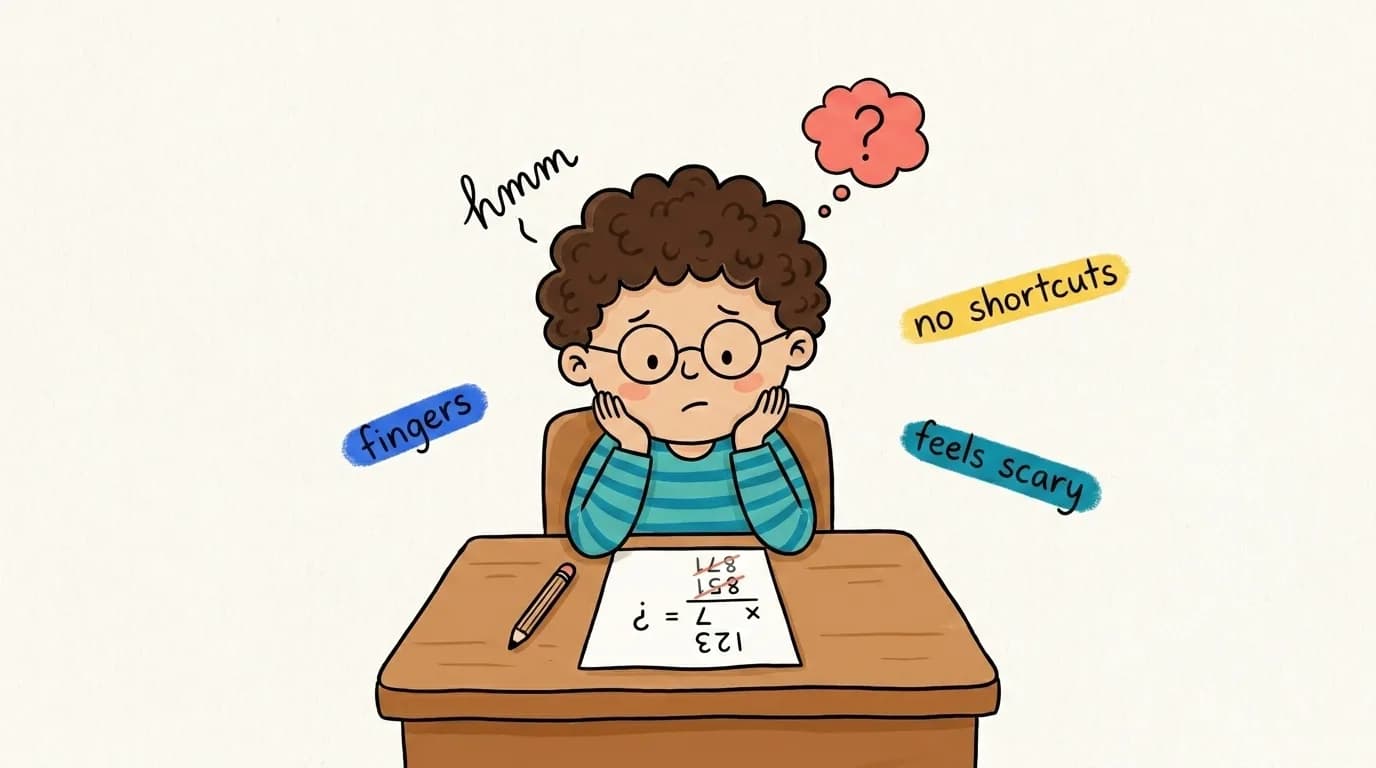
The encouraging part is that every one of these is fixable. And the fix almost always traces back to two foundations.
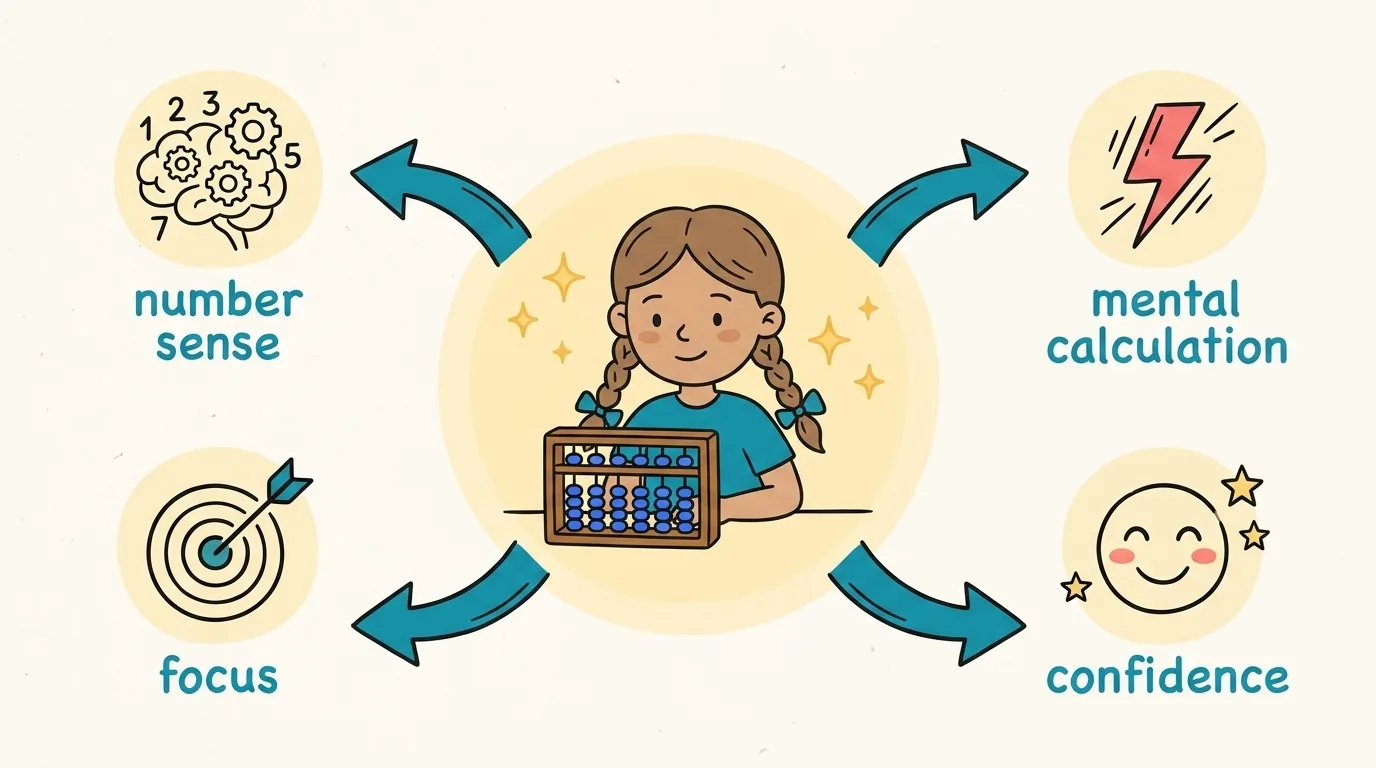
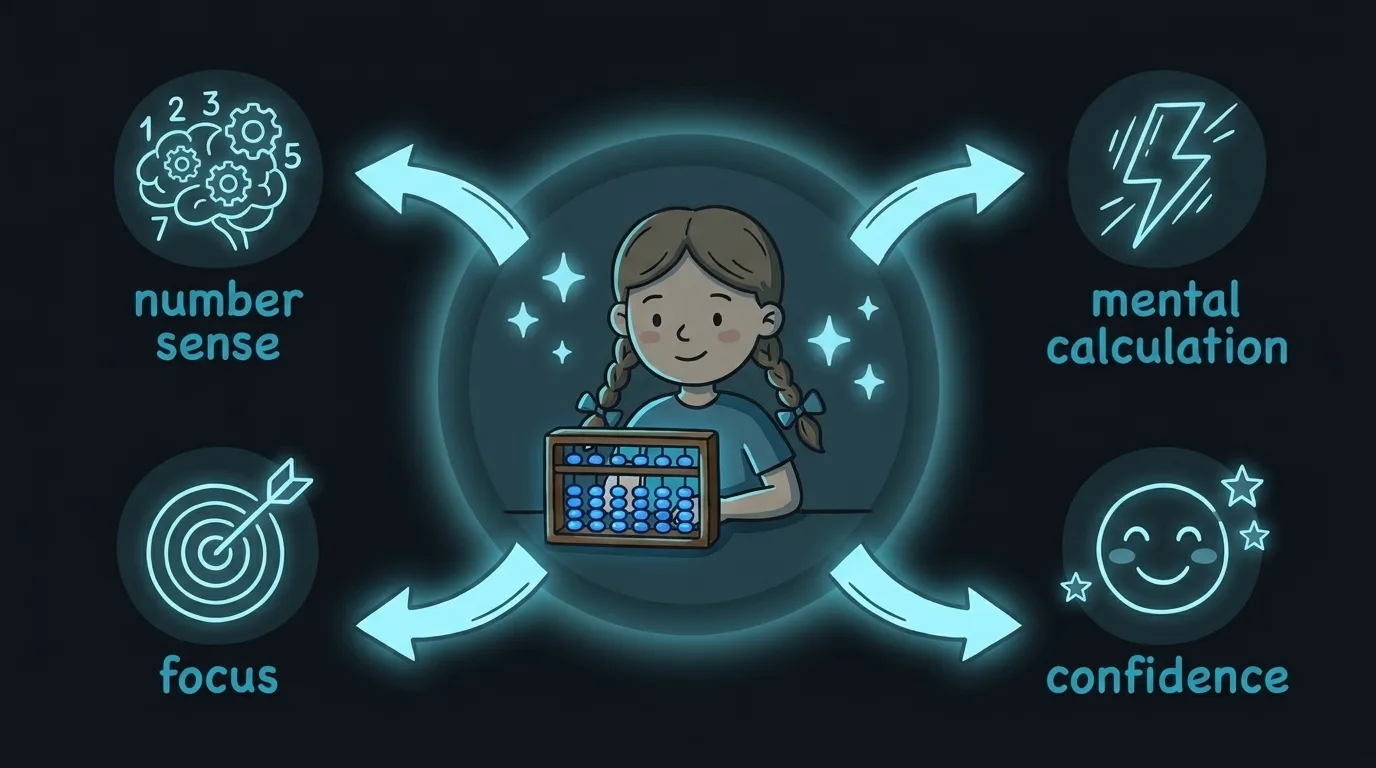
The foundation strong maths students share: number sense
Number sense is an intuitive feel for how numbers behave: knowing that 7 is a little less than 10, that 8 plus 7 is the same as 8 plus 2 plus 5, that 200 is far bigger than 20. Children with strong number sense are not memorising more facts than everyone else. They simply understand how numbers come apart and fit back together, so they can reason their way to answers instead of grasping for a remembered rule.
This is the single biggest predictor of who finds maths easy. It is also the thing worksheets struggle to teach, because number sense is built by handling numbers in a concrete, visual way, over and over, until the feel becomes automatic.
Mental calculation: the engine underneath
The second foundation is being able to calculate in your head, quickly and accurately. This matters for a reason most parents do not expect. The brain can only hold so much at once. When a child has to grind out every small sum, their mental energy is spent on the arithmetic and there is nothing left for the actual problem, the word problem, the multi-step question, the reasoning. When the arithmetic is fast and automatic, that energy is freed up for the thinking that maths is really about.
Fast mental calculation also does something quieter but just as important: it makes a child feel capable. A child who can answer quickly stops dreading maths, and a child who does not dread maths practises more. Confidence and skill build each other.
How to help your child at home
You do not need to be a maths person yourself. A few simple habits move the needle more than any expensive resource:
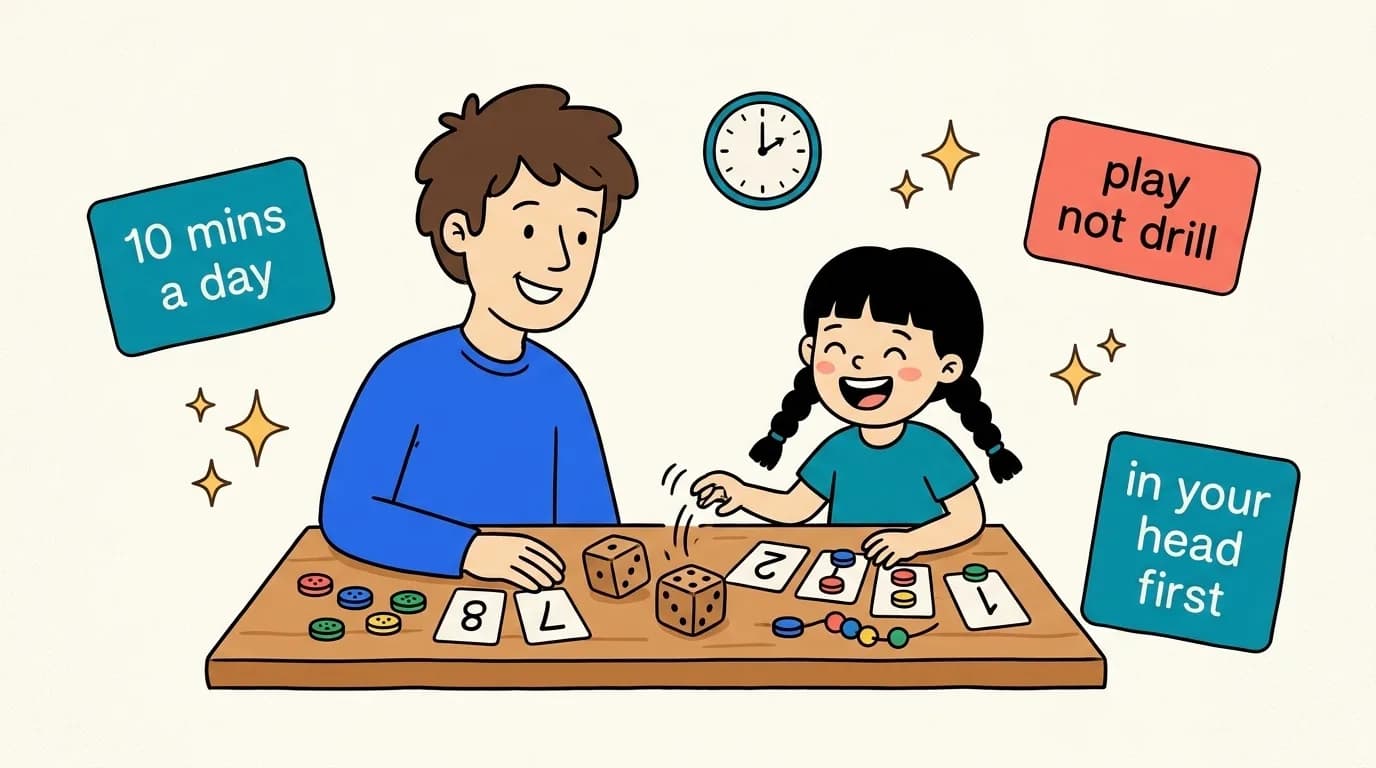
- Short and daily beats long and occasional. Ten focused minutes most days builds far more than an hour once a week. Consistency is what turns effort into instinct.
- Make numbers physical and visual. Use objects, fingers at first, drawings, anything a child can see and move. Number sense grows from the concrete before it lives in the head.
- Play, do not drill. Card games, dice, dominoes, and quick mental sums in the car all build skill without the pressure of a worksheet.
- Build mental maths a step at a time. Encourage your child to try a sum in their head before reaching for paper, starting with easy ones so they win early and often. When you do want something on paper, our printable maths worksheets for their year group keep the practice pitched at the right level.
- Take the fear out of it. Praise effort and strategy, not just right answers, and never make speed a source of stress at home. A calm child learns; an anxious one freezes.
- Resist the calculator. It is fine for checking, but if it does the thinking, your child never builds the muscle.