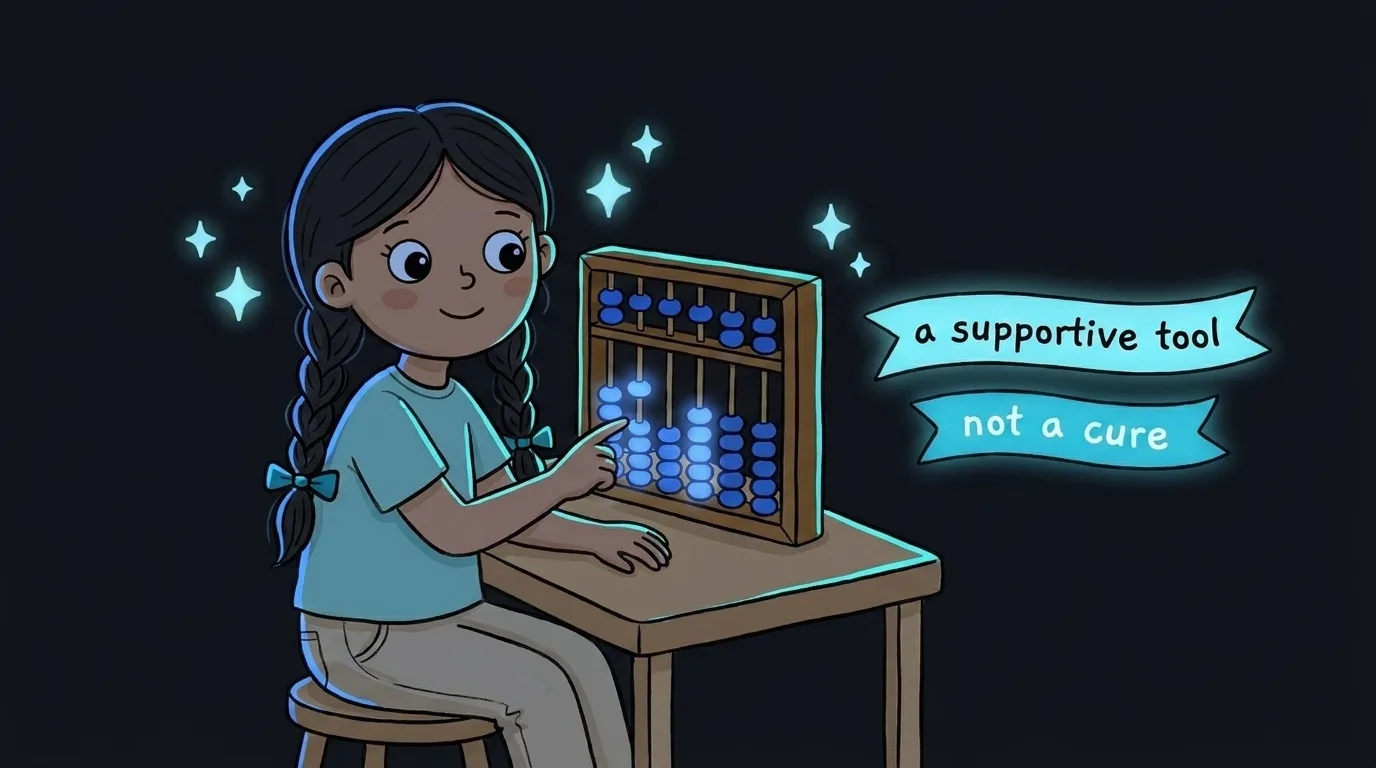
Parents of children who find focus hard, or who struggle specifically with numbers, often ask the same hopeful question: could the abacus help? It is a fair question, and the honest answer is encouraging but careful. Abacus is not a treatment or a cure. What it does do is build the exact skills these children find hardest, in a way that suits how they learn.
Parents of children who find it hard to sit still, or who struggle specifically with numbers, often ask the same hopeful question. Could the abacus help my child?
A note before we start. This article is written by an abacus academy, not by clinicians, and it is not medical advice. Nothing here is a diagnosis, a treatment plan, or a substitute for your doctor, your school, or an educational psychologist. If you have concerns about your child, those are the people to talk to first.
It is a fair question, and it deserves an honest answer. The abacus is not a treatment for ADHD or dyscalculia, and it is not a cure. What it is, is a hands-on, step-by-step way to build focus, working memory, and number sense, which happen to be the exact skills these children find hardest. Used alongside the right support, it can genuinely help.
The short answer
Yes, many children with ADHD or dyscalculia benefit from abacus, as long as the expectations are right. Think of it as targeted practice for attention and number sense, not as therapy. It works best in a calm, small class with a patient teacher, and it complements, rather than replaces, any professional support your child already has.
How abacus can help a child with ADHD
Children with ADHD often find still, abstract tasks draining. The abacus is the opposite of abstract. It gives the hands something to do, the eyes something to watch, and the brain a clear, immediate result with every move. That combination tends to hold attention far better than a worksheet.
- It is multisensory. Moving beads engages touch and sight, not just abstract thinking.
- It works in small steps. Each problem is short, with a clear start and finish, which suits a shorter attention span.
- The feedback is instant. The beads either show the right answer or they do not, so there is no waiting and no ambiguity.
- It builds working memory. Holding numbers in mind while moving beads is a gentle, repeated workout for the exact memory ADHD makes harder.
How abacus can help a child with dyscalculia
Dyscalculia makes numbers feel slippery and abstract. Place value, in particular, can be very hard to picture. The abacus turns those invisible ideas into something physical your child can see and touch.
Each rod is a place value, and each bead is a real, countable amount. A child who cannot yet picture what 234 means can build it on the beads and see it. Because every step is concrete and the pace is set by mastery rather than the clock, abacus rebuilds number confidence slowly and without pressure, which is often exactly what a child with dyscalculia needs.
What the abacus is not
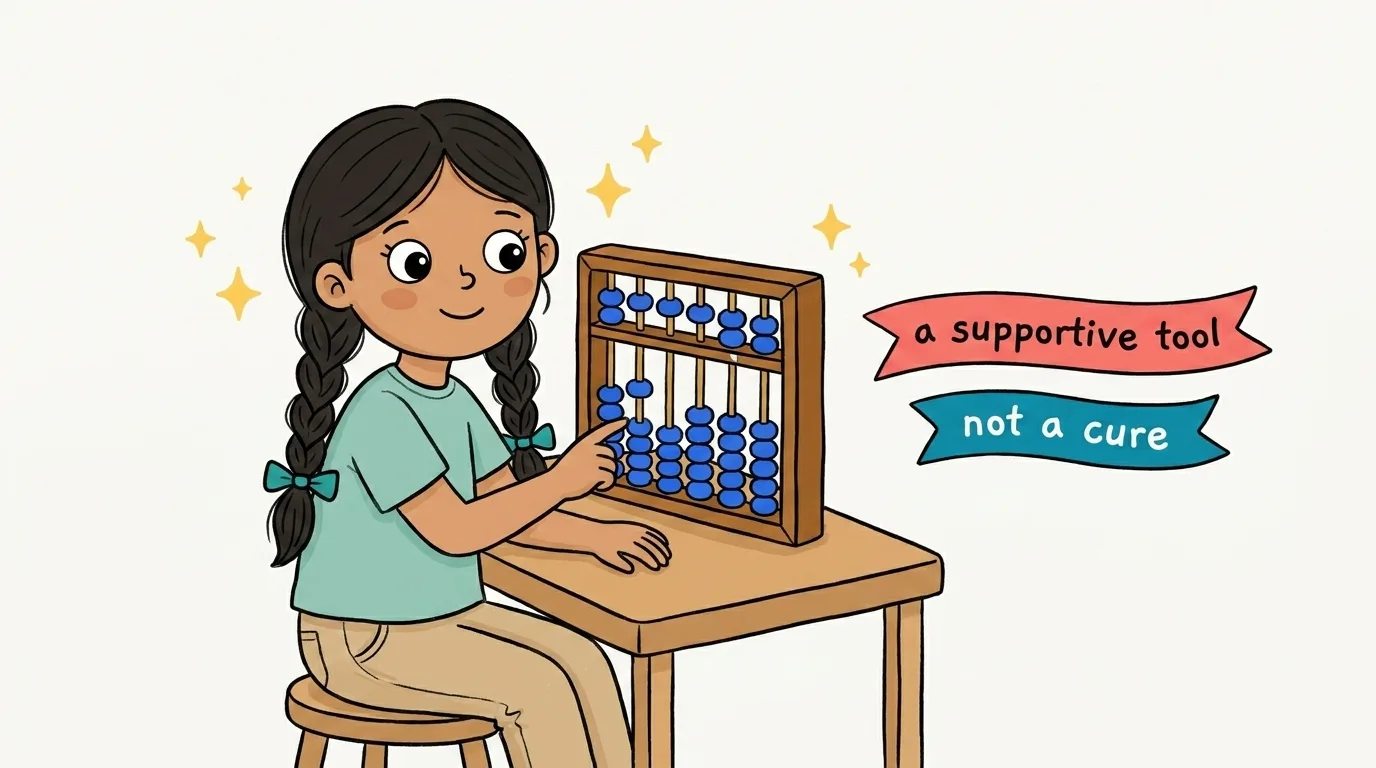
It is important to be clear. The abacus does not treat or cure ADHD or dyscalculia, and it is not a substitute for assessment, therapy, or the support a school or specialist provides. Think of it as one helpful tool in a bigger picture. If you have concerns about your child, speak to your doctor, school, or an educational psychologist as well.
It is also worth knowing what the research actually found. A three-year randomised controlled trial of abacus instruction in ordinary classrooms (Barner and colleagues, 2016, Child Development) reported clear gains in arithmetic, and no measurable change in general cognitive ability. None of that work studied ADHD or dyscalculia specifically. What follows is reasoning from how the method works and from what we see in class, not from clinical evidence.
What to look for in a class
For a child with ADHD or dyscalculia, the class matters as much as the method. Look for:
- Small groups so the teacher can give real attention to each child.
- A live teacher, not a pre-recorded video, who can adjust on the spot.
- A mastery pace with no pressure to be fast in the early stages.
- Plenty of encouragement, because confidence is half the battle for these children.
The best way to know if it suits your child is to watch one lesson. You can apply for a free demo class and see how your child responds, with no commitment. Families who want to see those four things written down before they book can read how the batches, the pace and the live teaching are set up in our online abacus classes in Singapore. You can also try our free virtual abacus together at home first.
Frequently asked questions
Can a child with ADHD learn abacus?
Yes. Many children with ADHD do well with abacus because it is hands-on, broken into short steps, and gives instant feedback, which helps hold attention better than abstract worksheets.
Does abacus help with dyscalculia?
It can. The abacus makes place value and number amounts physical and visible, which helps children who find numbers abstract build confidence at their own pace. It supports learning but does not cure dyscalculia.
Is abacus a treatment for ADHD?
No. Abacus is skill-building practice, not a medical treatment. It can support focus and working memory, but it does not replace professional assessment or care.
Will abacus improve my child’s focus?
Abacus practice asks for sustained attention, and many parents say their child settles into it well and grows more confident with numbers. Be a little cautious with big promises though: the research shows the clearest gains are in calculation and visual memory, not a guaranteed jump in general focus everywhere else.