Online Abacus Maths Classes for Kids in Ireland🇮🇪

Your child learns to do three-digit sums entirely in their head, with no calculator and no finger counting. A ten-level curriculum taught live by a certified instructor, in batches we cap at ten.

Trusted by families across the United States 🇺🇸, the United Kingdom 🇬🇧, and the Gulf 🇦🇪.

500+ studentsover 7+ yearsCertifiedinstructorLivenever recorded

Where your child is now

Tonight the homework takes an hour, and the concentration runs out long before the sums do.

Counting on fingers under the table. Reaching for the calculator for eight plus seven. Deciding, quietly, that they are just not a numbers person.

Most children are never shown how to hold numbers in their head. They memorise steps, lean on tools, and confidence goes first, long before the marks do.

It can go another way.
Where most children are

Numbers with nothing to hold on to

Loose facts, memorised steps, and a calculator within reach. Nothing to picture, so nothing to fall back on when the numbers get bigger.

What the soroban does

Every number gets a shape they can see

On a soroban the beads snap into place and a number becomes a position, not a symbol. Your child moves them by hand, live with an instructor, until the shape is automatic.

Where it ends up

The mental abacus: a soroban they carry in their head

The beads go away. The picture stays. Your child works the sum on a mental abacus nobody else can see, and the answer arrives before you have finished reading the question.

Chapter one

Faster than you can type the question

7 + 8 + 6 = 21

Flash anzan. Our senior students add these in their head, faster than you can type them. This is the skill your child builds over ten levels.

Chapter two

Before anything else: is this right for your child?

Your child is between six and twelve.

Younger than six and the finger control is not there yet. Much older and the habit of reaching for a calculator is usually already set. Every child starts at Level 1 whatever they arrive knowing, including children who are already good at math.

You can protect two hours a week, and fifteen minutes a day.

Two live classes of an hour, and a short set at home. The daily fifteen minutes is what decides how quickly a child moves, and it is the one part of this we cannot do for you.

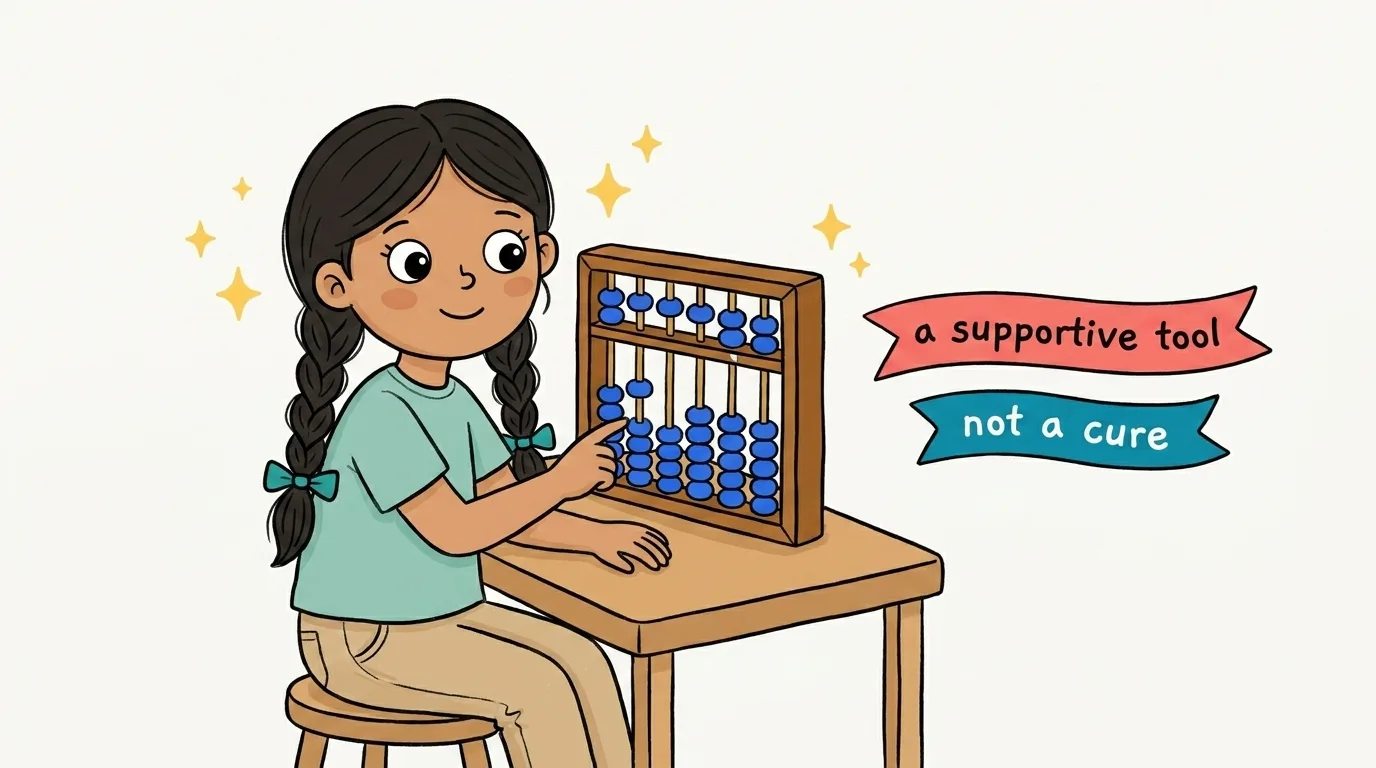
You are not looking for a quick fix.

The first graded test is about three months away, and the levels after it take about as long each. Nothing here is built to impress you by next week.

If any of those three is a no today, the honest answer is to come back when it is a yes. We would rather lose the enrolment than lose your child in month two.

Chapter three

What you will actually see by the first test

Level 1 is bead values, finger technique, and single-digit addition and subtraction on a real soroban. It takes about three months and it ends with a graded test, which a child either passes or sits again. Nobody moves up because a term ended.

What parents tell us they notice first is not the arithmetic. It is that a child will stay with one problem for a full minute without drifting, and that tends to show up in homework for every subject before it shows up in math.

First graded test
About month 3
Classes
2 a week, 1 hour each
Practice at home
About 15 minutes a day
Children in a batch
10 at most

The road

Level by level: what your child can do at each abacus stage

From first bead to mental math mastery, here is what your child will achieve.

1

Foundation

Month 1–3

Adds & subtracts on the abacus confidently. Concentration in school noticeably improves.

2

Speed Builder

Month 4–6

Solves 2-digit problems mentally without the abacus. Teachers notice faster classwork.

3

Mental Math

Month 7–12

Multiplies and divides mentally. Faster than most adults with a calculator.

4

Mastery

Year 2+

Solves complex multi-digit calculations purely mentally. Competition-ready.

Chapter four

Two years from now, the benefits of abacus show up without the beads.

500+

students trained over 7+ years

10

levels from beads to mental maths

10

children at most in any batch

Parents answer the question you came here with: is abacus good for kids?

My son's math skills improved dramatically after just three months of classes. His concentration has improved in all subjects too.
Sarah Fernandes·Parent of 8-year-old

Excited about math for the first time

Yes! He is enjoying the classes. I have never seen him so excited about math.
Pravin·Parent of 7-year-old

Now enjoys math challenges

After six months of classes, my daughter's confidence in mathematics has soared. She now enjoys math challenges!
Lisa Rodriguez·Parent of 7-year-old

Significant improvement in just months

Thank you so much, teacher. It is due to your patience and dedication that my child has shown significant improvement. We truly appreciate your efforts.
Hanisha Ali·Parent of 8-year-old

Completed level with full marks

We are delighted to share that our daughter has completed her level today with full marks! This achievement wouldn't have been possible without your constant support.
Mahesh·Parent of 9-year-old

What a month costs, and contains

Abacus class fees, compared honestly, month by month

Live classes with your instructor
8 a month, never recorded
Children in the batch
10 at most
Teaching experience
7+ years, certified
The curriculum
10 structured levels
Demo class before you decide
Free

Other programmes

€100–200

Cliffpoint tuition

One fixed fee

Abacus and maths programmes across Europe charge €100–200/month, often for one or two sessions a week. Ours is a single figure, the same for every family in your region, with no regional discounting and no negotiation. We share it on your demo call, once you have seen a class and know what you would be paying for.

Asked and answered

What the abacus course fee actually pays for

A certified instructor, teaching live, twice a week, in a batch of no more than ten children, plus the soroban and the workbook that arrive at your door. Nothing else.

You teach from India. Why is it not cheaper?

Because you are not buying a recording or a franchise script. You are buying a certified instructor with over seven years of teaching experience, live, in a class small enough that your child is spoken to by name. That costs what it costs wherever the teacher happens to live.

Could you fit one more child into the batch?

No. Ten is the cap in every market we serve, and it is the reason the classes work at all. A larger batch would be a cheaper class to run and a worse one to sit in.

Is there a discount for my country?

There is no separate regional discount, and the fee is not negotiable. It is set in your local currency to sit fairly in your market, and it is the same figure for every family in that market. What we can do is spread it: flexible payment plans are always available, and you only ever discuss money after the free demo class.

Watch one class before you decide anything

Thirty minutes, live, with the instructor who would teach your child. No payment and no commitment attached to it.

The invitation

Ten seats per batch.
One of them could be your child's.

We cap every batch at ten children, so every child is heard in every class. The demo class is open to everyone who applies. Seats are offered by invitation after the class, and an invitation stays valid for 14 days.

Is Cliffpoint right for your family?

  • Your child is between 6 and 12
  • They can attend two live classes a week
  • You can support 15 minutes of practice a day

Apply for a Demo Class

The 30-minute free demo class is a real lesson: your child works on a soroban with our instructor while you watch how it is taught. Tuition is quoted in your local currency on the call. Applying takes about two minutes.

Seats open in the current batch
  • Certified instructor, 7+ yrs
  • 500+ students trained
  • Live, never recorded
I was skeptical at first, but the results speak for themselves. My daughter can now calculate faster than I can with a calculator!
Priya Patel · Parent of 10-year-old

How admission works

  1. 1Apply for a demo class. Takes about 2 minutes
  2. 2A live 30-minute lesson with your instructor
  3. 3An invitation to take a seat, valid 14 days

The demo class is open to everyone who applies. Seats are offered by invitation after the class. We respond within 24 hours.

Prefer email? Write to us directly

Ireland

Online abacus classes for Kids

Our live online programme is open to families worldwide, including parents across the United States, the United Kingdom, Australia and India, as well as the wider Europe and Asia Pacific regions. Batches are led by a certified instructor with 7+ years of teaching experience and groups are capped at ten students per session. Schedules adapt to American, European, Gulf, Indian, and Asia Pacific time zones, with after-school weekday slots and weekend mornings as the most popular options. Tuition is shown in your local currency and billed monthly, and the toolkit ships separately. The 10-level structure suits children aged 6 to 12.

Common questions from families for Kids

  • What time zones do you teach in?

    We currently run live batches across American, European, Gulf, Indian, and Asia Pacific time zones. Once you apply for a demo class we will confirm the specific slot options that fit your child's local schedule.

  • How are fees billed?

    Tuition is shown and billed in your local currency on the call. The one-time physical toolkit (abacus and workbooks) is a separate one-time purchase and shipping is invoiced based on your delivery address.

  • How does the abacus fit alongside school maths curricula?

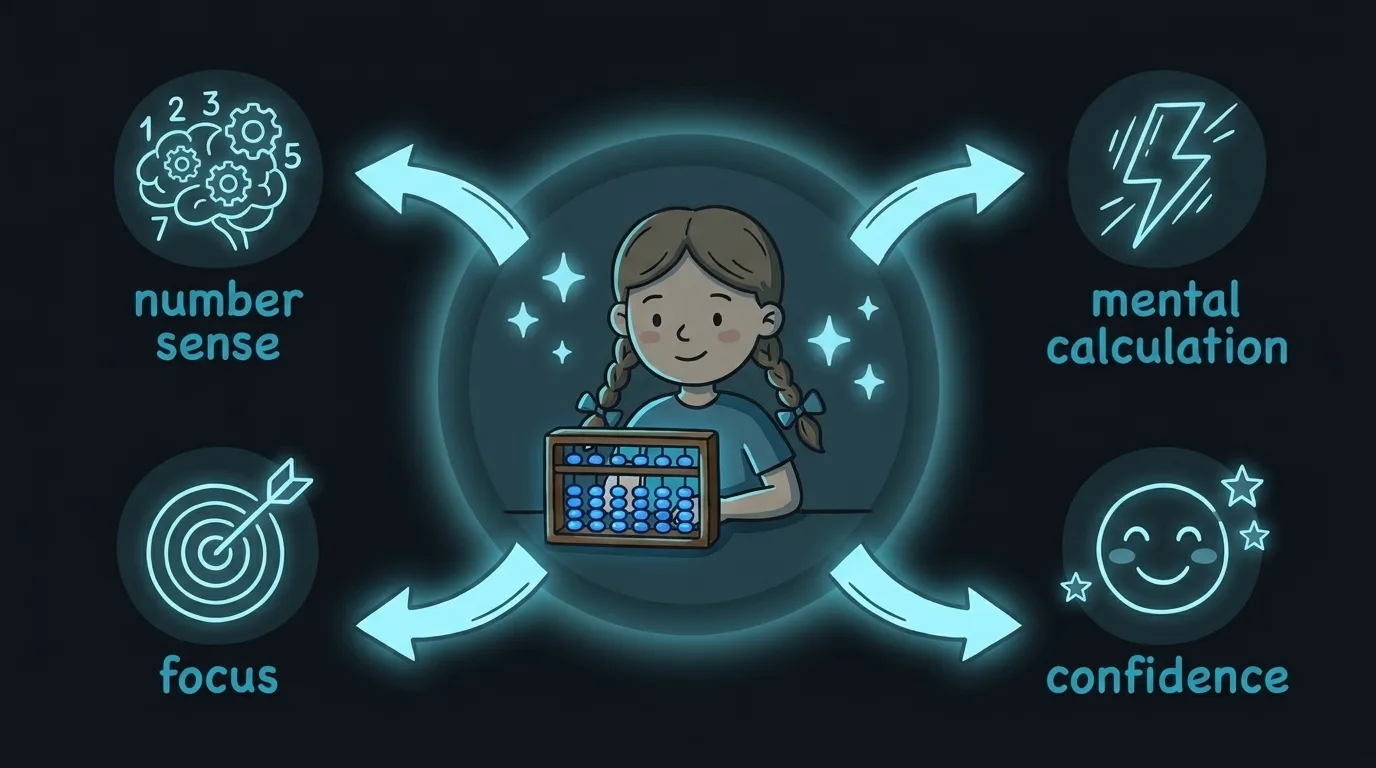
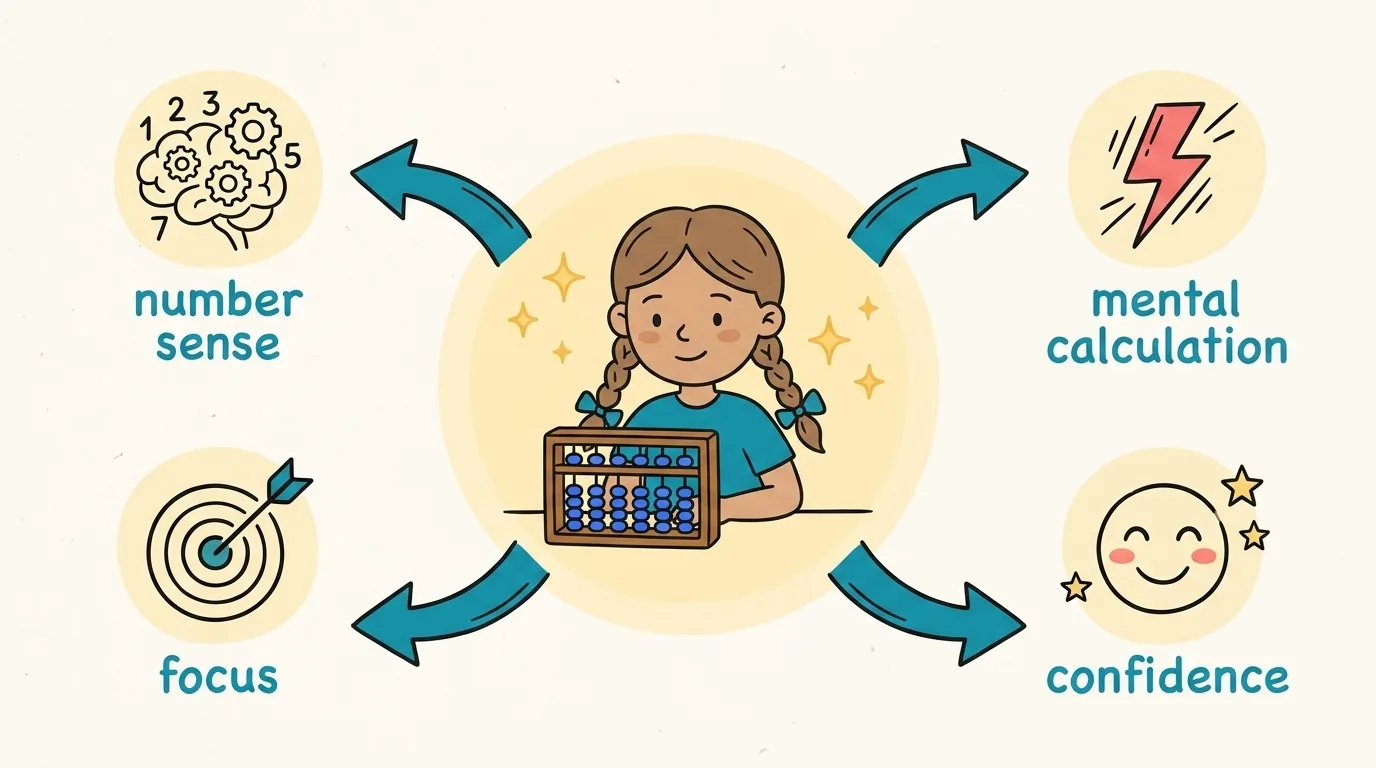
    Abacus training builds the mental math, number sense, focus, and visualisation skills that every school maths curriculum relies on. Best results come from starting your child aged 6 to 10, although the programme adapts to older children too.

  • What does the free demo class look like?

    A real 30-minute live class with our certified instructor over video, not a recorded promo. Your child tries the abacus, the instructor walks you through the programme, and you can ask about timings, fees in your currency, and progression. No card required to book.

See all frequently asked questions →

Online abacus classes and mental math training for kids for Kids

Cliffpoint Abacus Academy teaches children aged 6 to 12 for Kids, live from Goa, India. Families in New York, Dubai, Mumbai, Singapore, Sydney, Toronto, Riyadhjoin the same small online batches, so searching for "abacus classes near me" in Ireland ends here: the class comes to your home, capped at ten children, taught by a certified instructor across a structured ten-level curriculum from Grade 1 through Grade 5 and beyond.

Abacus for Grade 1 (ages 6 to 7): mental math foundation

Grade 1 students begin with physical abacus manipulation, learning to add and subtract single-digit numbers on the soroban. Mental math for Grade 1 focuses on number recognition, counting fluency, and the finger dexterity needed for speed math. Our Level 1 course is built for Grade 1 beginners with no prior experience.

Abacus for Grade 2 (ages 7 to 8): building mental arithmetic speed

Grade 2 students progress to two-digit addition and subtraction on the abacus. Mental math for Grade 2 develops mental arithmetic speed and introduces carrying and borrowing using bead movements. Students begin transitioning from physical to mental calculation through visualisation practice.

Abacus for Grade 3 (ages 8 to 9): intermediate mental calculation

Grade 3 students tackle three-digit operations and begin multiplication on the abacus. Mental math for Grade 3 strengthens mental arithmetic with increasingly complex problems and builds the speed math edge that pays off in school exams and competitive assessments.

Abacus for Grade 4 (ages 9 to 10): advanced speed math

Grade 4 students master multiplication, division, and multi-digit mental arithmetic. Mental math for Grade 4 builds toward complete mental calculation without any physical abacus. Students at this stage often calculate faster than peers using calculators.

Abacus for Grade 5 (ages 10 to 12): mental math mastery

Grade 5 and above students achieve full mental arithmetic mastery, performing complex multi-digit calculations entirely in their heads. Mental math at this level develops lightning-fast computation, preparing students for competitive math olympiads, mental math competitions, and academic excellence.

Read what an abacus is, follow the step-by-step learning guide, try the free virtual abacus, see the ten-level programme, or browse the blog for parents. Every new family starts with a free 30-minute online demo class.