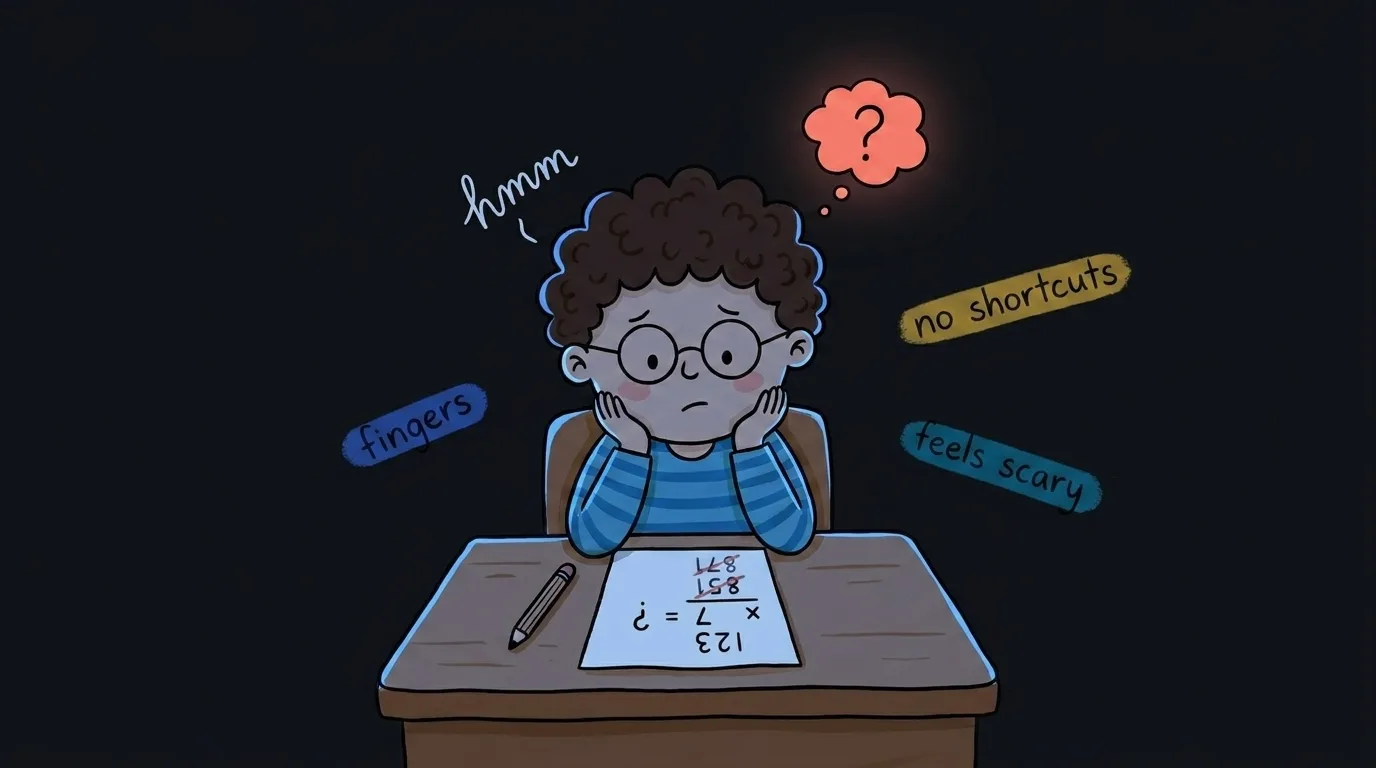
A child who freezes at a sum is rarely a child who cannot do maths. More often, worry is using up the very attention the sum needs. The good news is that maths anxiety responds to the right kind of help, and much of that help happens at home.
What maths anxiety looks like
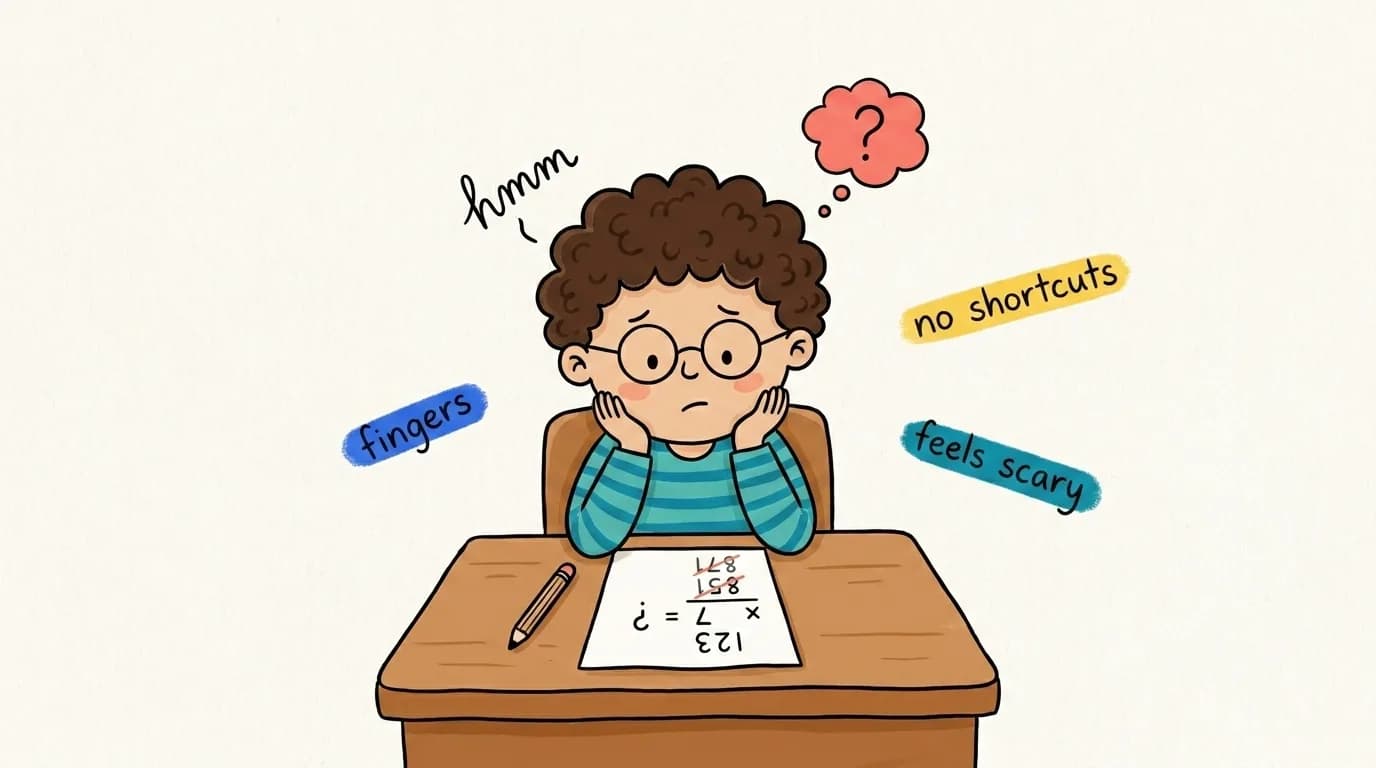
- Tears, stomach aches or sudden tiredness when maths homework comes out.
- Guessing quickly to get it over with, or refusing to try at all.
- “I’m just bad at maths,” said as if it were a fact about them.
- Doing far better in a relaxed moment than in a test or under a timer.
- Counting on fingers under the table, hoping nobody notices.
Why worry makes sums harder
Mental arithmetic runs on working memory: the space where a child holds numbers while working on them. Research on maths anxiety (Ashcraft and Kirk, 2001) found that worry takes up part of that same space. An anxious child has less room left for the sum, makes more mistakes, and the mistakes then feed the worry. That loop, not a lack of ability, is what parents usually see.
Anxiety can also be passed on without anyone meaning to. Studies have found that when adults who help children with maths are anxious about it themselves, the children tend to learn less and become more anxious (Beilock and colleagues, 2010; Maloney and colleagues, 2015).
What helps at home
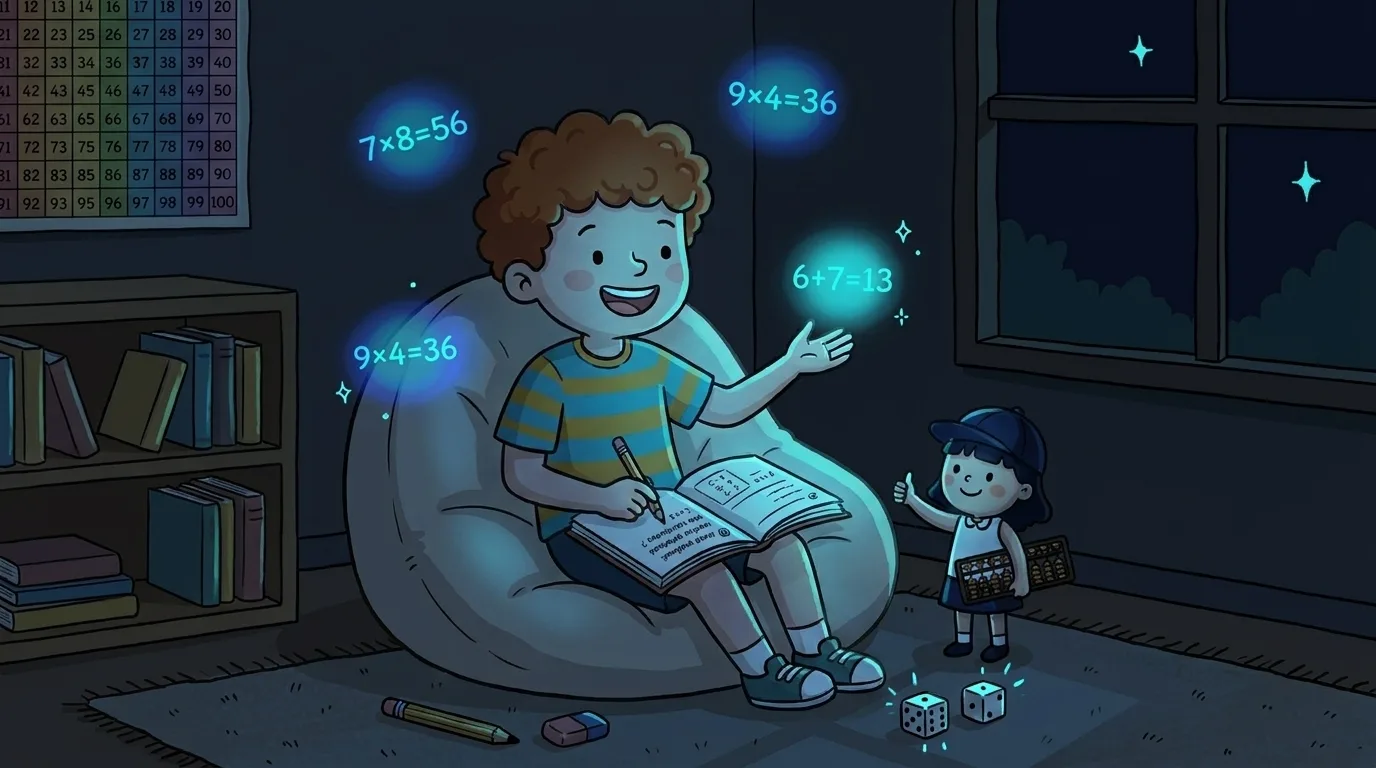
- Make maths visible and touchable. Objects, coins, dice and an abacus turn numbers into things a child can see and move. Abstract symbols are often where the fear starts.
- Short and often beats long and rare. Five calm minutes a day does more than an hour of struggle at the weekend.
- Praise the method, not the speed.“You worked that out in two steps” teaches more than “You’re so clever.”
- Let mistakes be ordinary. Fix them together, without red ink or a sigh. A mistake is information about what to practise next.
- Watch what you say about yourself.“I was never good at maths” tells a child that maths ability is something you either have or do not.
- Take the clock away at first. Speed comes after confidence, not before it.
What tends to make it worse
- Comparing a child with a sibling or a classmate.
- Rushing to give the answer, which tells the child they could not have found it.
- Timed drills before the child feels secure.
- Long sessions that end in tears; stop while it is still going well.
Where hands-on learning fits
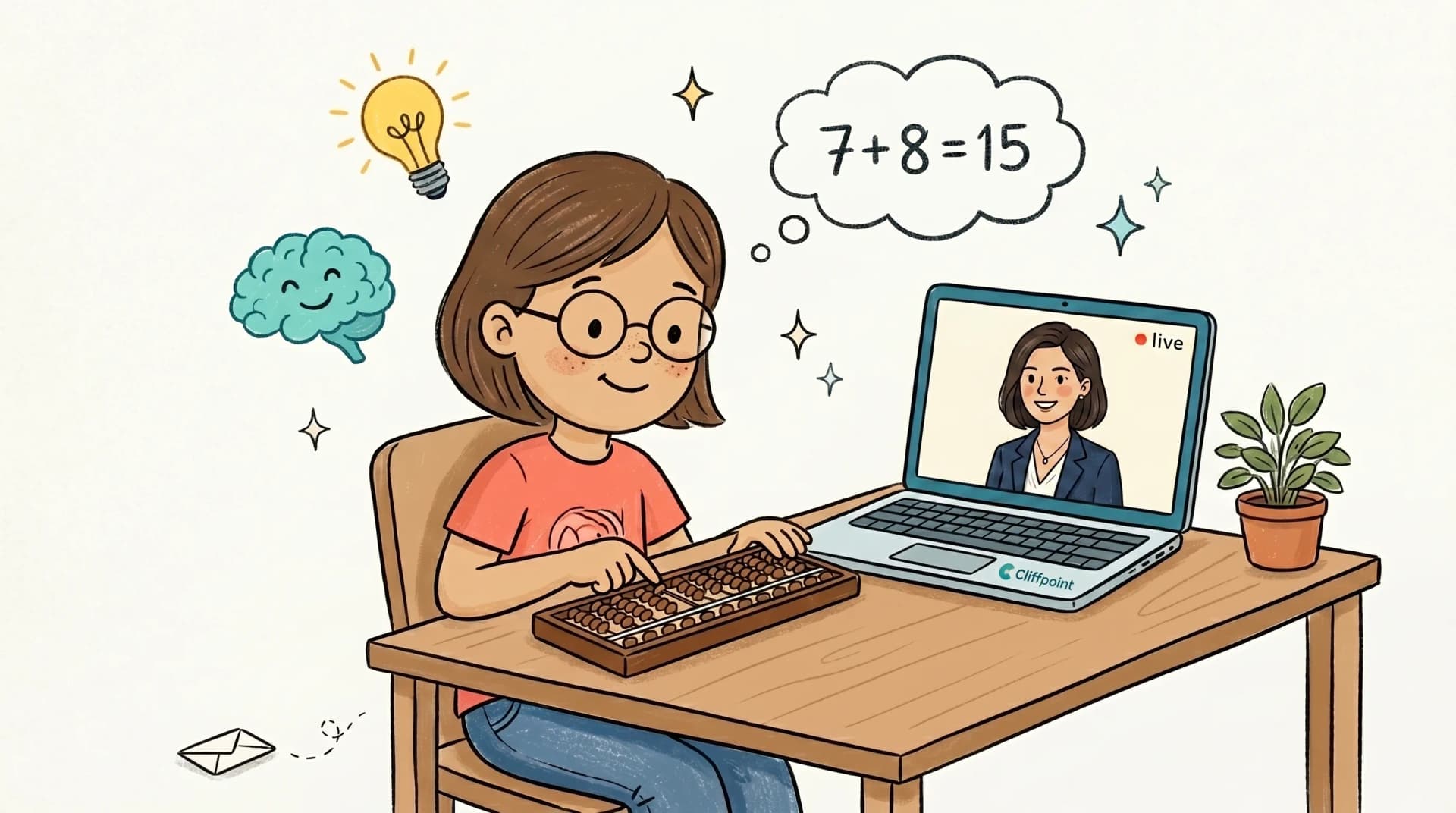
Many anxious children relax when maths becomes something they can see. On a soroban, a number is a pattern of beads, so a child can check an answer with their eyes rather than worrying about it. Progress is also visible: a set done faster than last time, a level finished.
Abacus is not a cure for anxiety, and no honest class should claim it is. What a good class can do is keep the steps small, correct gently, and let a child succeed often. You can see how your child responds with the free starter course, or with the practice sets, where a wrong number is simply the number on the beads and nothing turns red.
If you would like a teacher’s view, the free demo classis a live lesson that you watch from beside your child. If anxiety is severe, or it spreads beyond maths, talk to your child’s school or a doctor as well.
Questions parents ask
Is maths anxiety real?
Yes. It is well documented in research: worry takes up the working memory a child needs for mental arithmetic, which leads to more mistakes and more worry. It is common, and it can improve with the right support.
What should I say when my child says they are bad at maths?
Treat it as a feeling rather than a fact. Point to something specific they did well, keep the next step small, and avoid saying that you were bad at maths too.
Can abacus help a child who is scared of maths?
It can help some children, because it makes numbers visible and progress easy to see. It is not a cure for anxiety. Try a short, free lesson first and watch how your child responds.