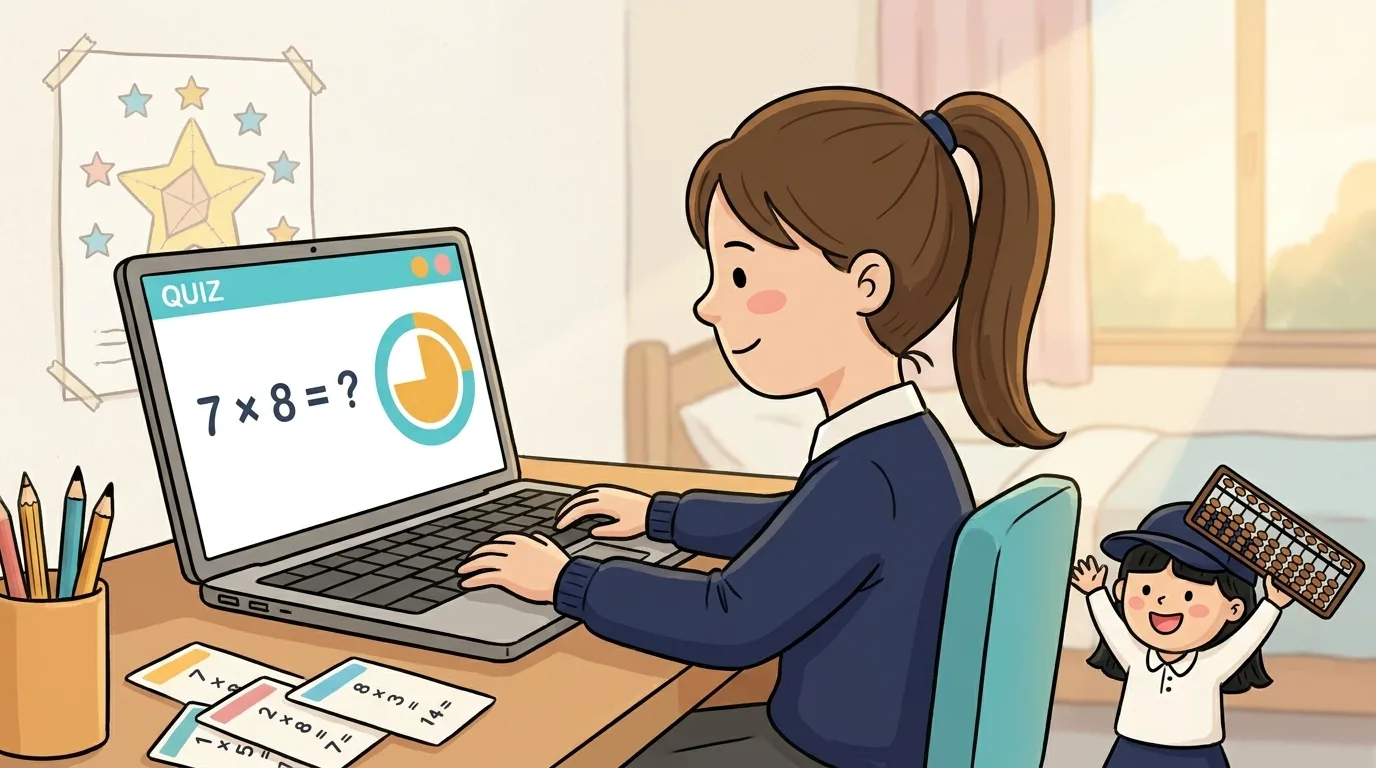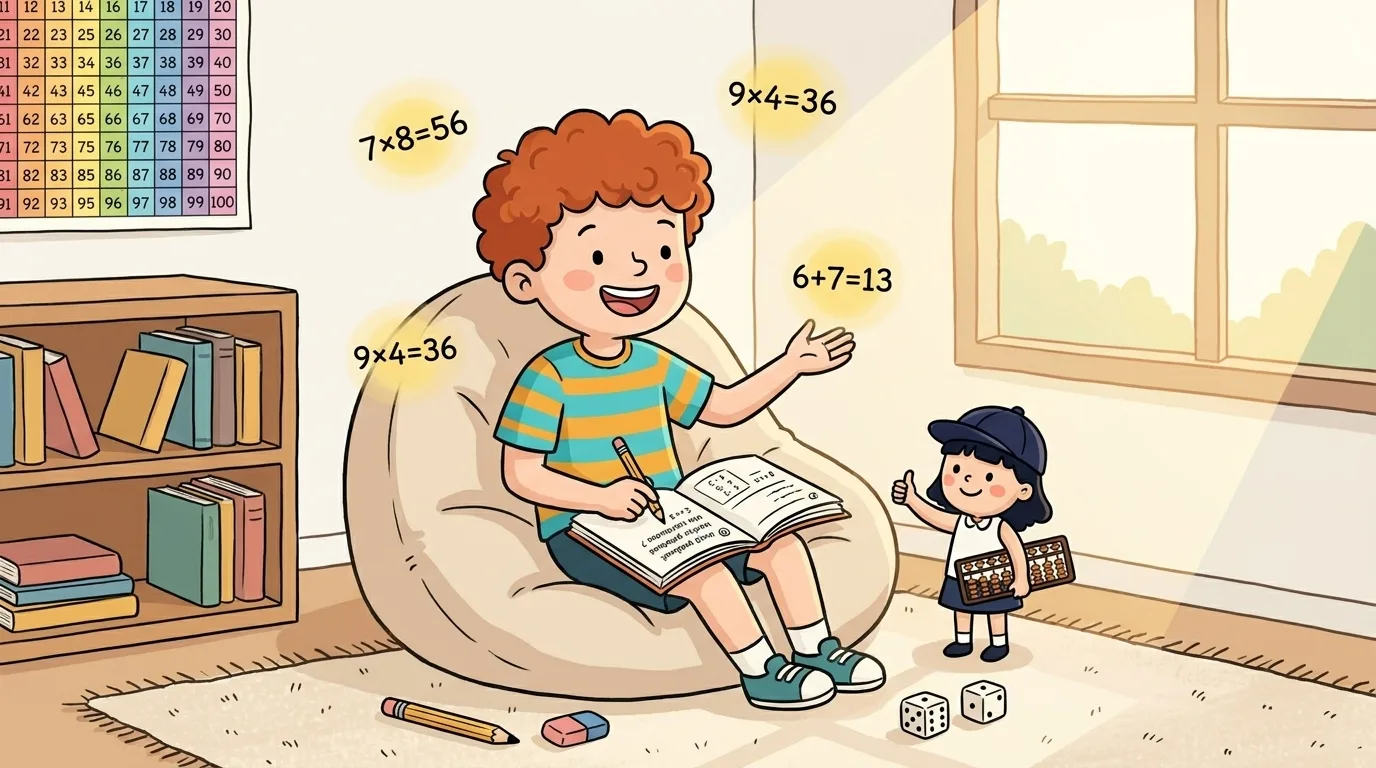
Ask a teacher what quietly separates confident young mathematicians from anxious ones and you will hear the same phrase: fact fluency. This guide explains what fluency really is, why worksheets alone rarely build it, and what does.
Somewhere around Grade 3, math quietly changes. Problems stop asking children to calculate and start asking them to think, with the calculation embedded inside. The children who thrive are the ones for whom 7 × 8 costs nothing. The ones who struggle are often not "bad at math" at all; they are paying full price for every fact, every time.
What fact fluency actually means
Fluency is not just speed. It is three things together: getting the answer right, getting it fast, and getting it without effort, the way you know your own name. That last part is the one that matters most, because effort is the scarce resource. A child's working memory is small. If recalling 6 + 7 fills it, there is no room left for the two-step word problem wrapped around it.
This is why fluency matters so much later on: it is not that fast kids are smarter, it is that automatic facts free the whole brain for the actual mathematics, fractions, proportions, algebra, problem solving.
Why timed drills alone often backfire
The classic response to weak facts is a stack of timed worksheets. For some children that works. For many, it teaches something else entirely: math is a race, and I am losing it. Anxiety narrows working memory further, which slows recall, which confirms the fear. Ramirez and Beilock, who study maths anxiety and working memory, describe exactly this loop: the children it hurts most are often the ones with the most working memory to lose.
The order matters. Timed practice is excellent after facts are secure, and corrosive before. Build first, then add the clock in small, playful, zero-stakes doses.
What actually builds fluency
- Structure, not shuffle. Facts stick when they are learned in families and patterns: doubles, near doubles, making ten, times tables built from ones a child already owns. Our times tables charts group every table with the pattern that unlocks it. Random flashcards ask the memory to hold 121 separate items; structure asks it to hold a system.
- Short, daily retrieval. Five to ten minutes a day, mixing a few shaky facts into a stream of known ones, beats an hour on Saturday. Our Year 3 maths worksheets are one page built for that five-minute slot, at the age this shift usually bites. Pulling a fact out of memory is what fixes it there, which is why testing yourself beats rereading. Older children can extend the same habit to square and cube numbers, which are recall facts of exactly the same species.
- A mental model of number. Children who can see quantities, on fingers, number lines, or beads, have something to fall back on when memory blanks. This is where visualization-based methods earn their keep.
- Games over grades. Dice, cards, shop-keeping with real coins. A child who plays with numbers volunteers for hundreds of retrievals without noticing.
The abacus route: fluency through visualization
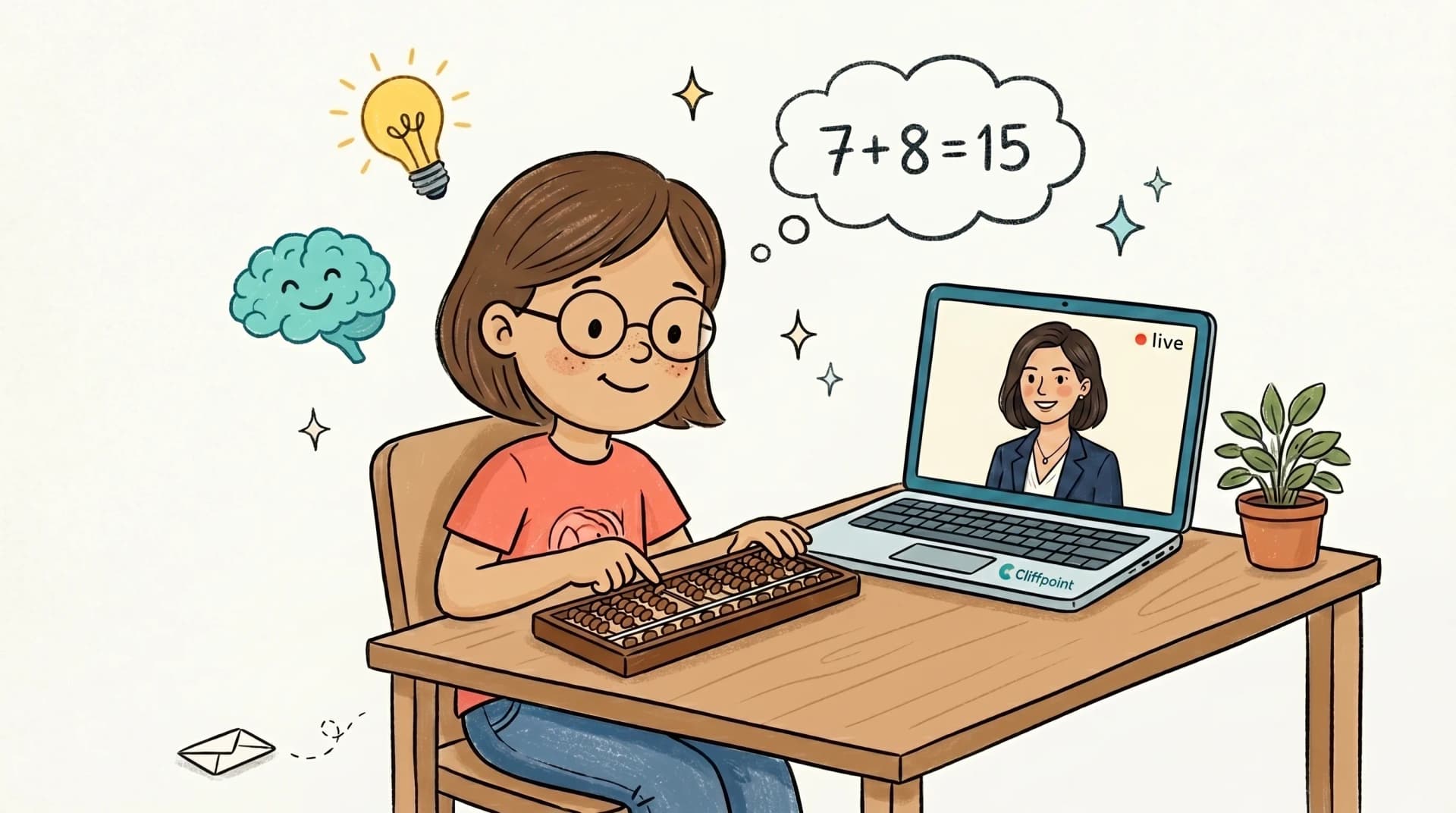
Abacus training is, at heart, a fact-fluency engine with a mental model built in. Children learn every number as a physical pattern of beads on the Japanese soroban, then practice until the beads move in their imagination instead of their hands. Facts stop being 121 memorized items and become positions and moves in a system the child can see. Speed and calm under a clock come along for free, because every level of a structured program practices them gently from day one.
You can feel the idea in about two minutes on our free virtual abacus. And if you want it taught properly, our live online abacus and mental math classes for US kids run in small groups of ten with a live instructor, starting with a free 30 minute demo. For the wider foundations, see our guide on helping your child get better at math.
Frequently asked questions
At what age should math facts be fluent?
Roughly: addition and subtraction facts secure by the end of Grade 2, multiplication facts by the end of Grade 4. But later is fixable at any age; the method matters more than the calendar.
How many minutes a day should my child practice?
Five to ten. Daily, short, and slightly playful beats long and dutiful. Stop while it is still going well.
Are timed tests bad for kids?
Not inherently. Timing facts a child already owns builds confidence. Timing facts a child is still counting out builds anxiety. Secure first, then time.
Do math apps build fluency?
Good ones help with retrieval practice, but most reward speed of tapping over depth of understanding. Apps work best as the five-minute daily supplement, not the foundation.