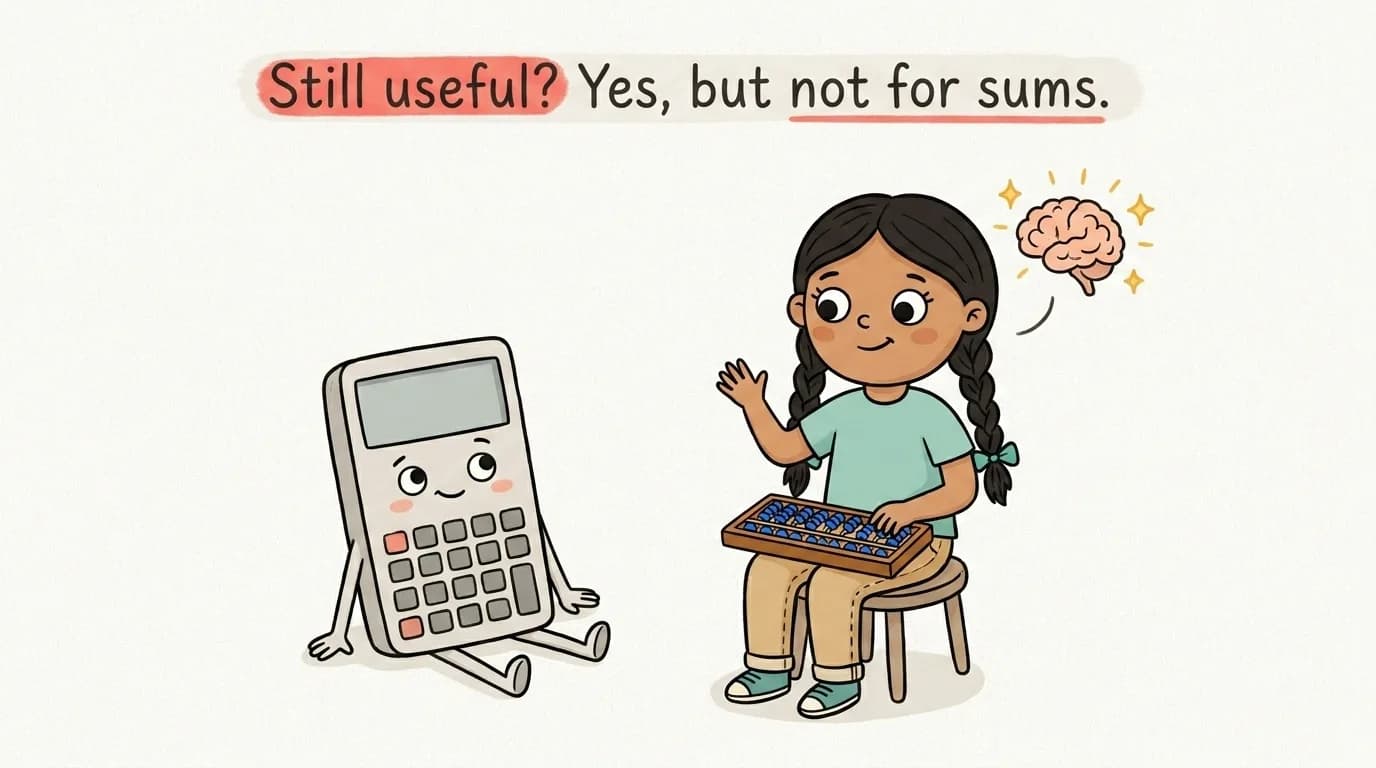
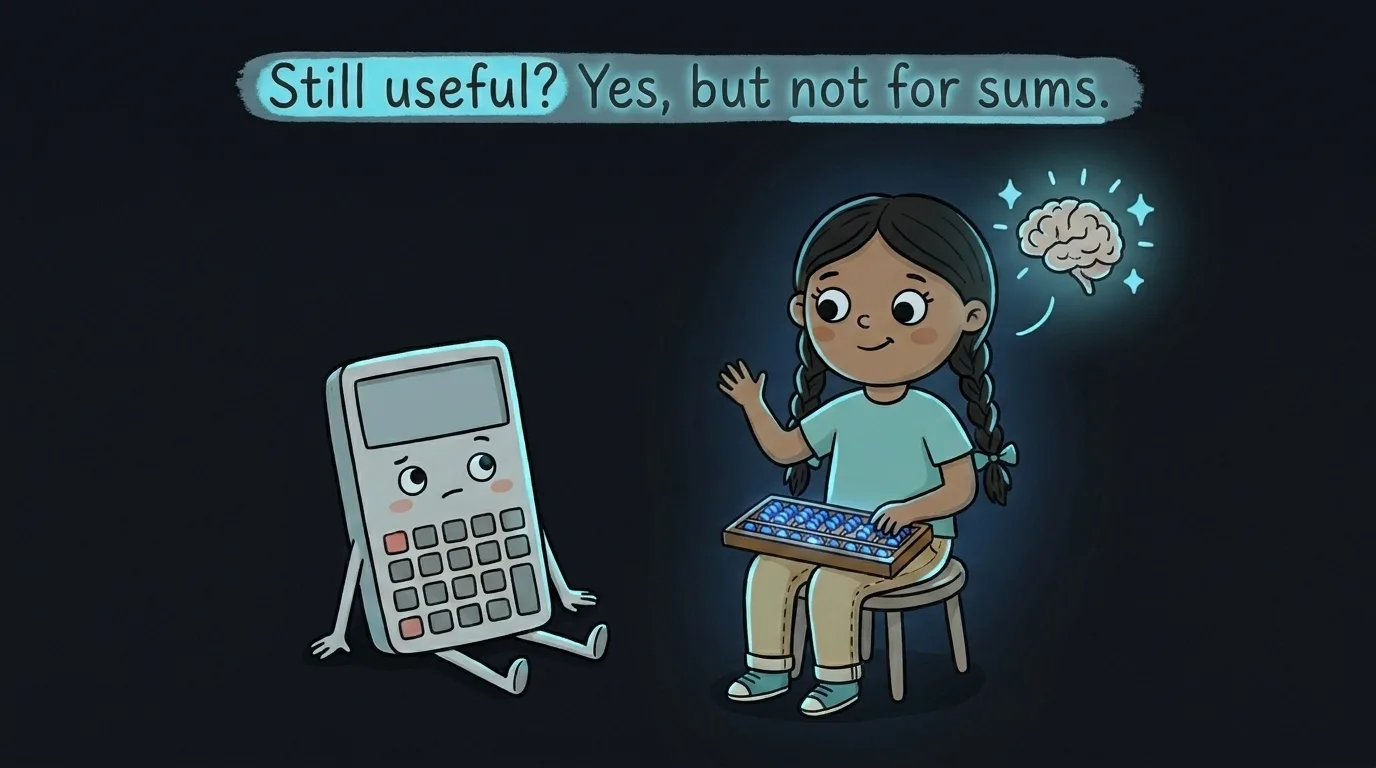
It is a fair question, and most thoughtful parents ask it. If a phone can multiply any two numbers instantly, why would a child spend years learning to do it on a wooden frame of beads? The answer is that the abacus was never really about calculation. It is about what calculation builds in the brain.
It is a fair question, and a sensible one. If the phone in your pocket can multiply any two numbers instantly, why would a child spend years learning to do it on a frame of wooden beads?
The answer is that the abacus was never really about getting the answer. A calculator already does that. The abacus is about what the practice builds inside your child’s head, and in a world of instant answers, that is more valuable than ever, not less.
The short answer: it is not about calculation
A calculator gives an answer and teaches nothing. The abacus is the opposite. It is a piece of training equipment for the brain. The goal is not the sum on the page, it is the focus, memory, and number sense that doing the sum builds. You would not stop a child from learning to run just because cars exist, and the same logic applies here.
What the abacus actually trains
Years of abacus practice quietly build a set of skills that show up far beyond maths class:
- Mental calculation. Children eventually picture the beads and calculate in their heads, with no tool and no writing.
- Working memory. Holding numbers in mind while working is a constant, gentle workout.
- Focus and concentration. Each problem demands full attention, and that habit carries into homework and reading.
- Number sense. A deep, physical feel for how numbers behave, which underpins all later maths.
- Confidence. A child who can calculate quickly in their head simply feels capable with numbers.
Calculators give answers, they do not build brains
Reaching for a calculator offloads the thinking. That is perfect for an adult at work, but for a developing brain, the thinking is the point. Every time a child works a problem on the abacus, they strengthen the mental muscles a calculator lets them skip. The tool that does the work for you cannot also be the tool that trains you.
The real prize: calculating without any tool
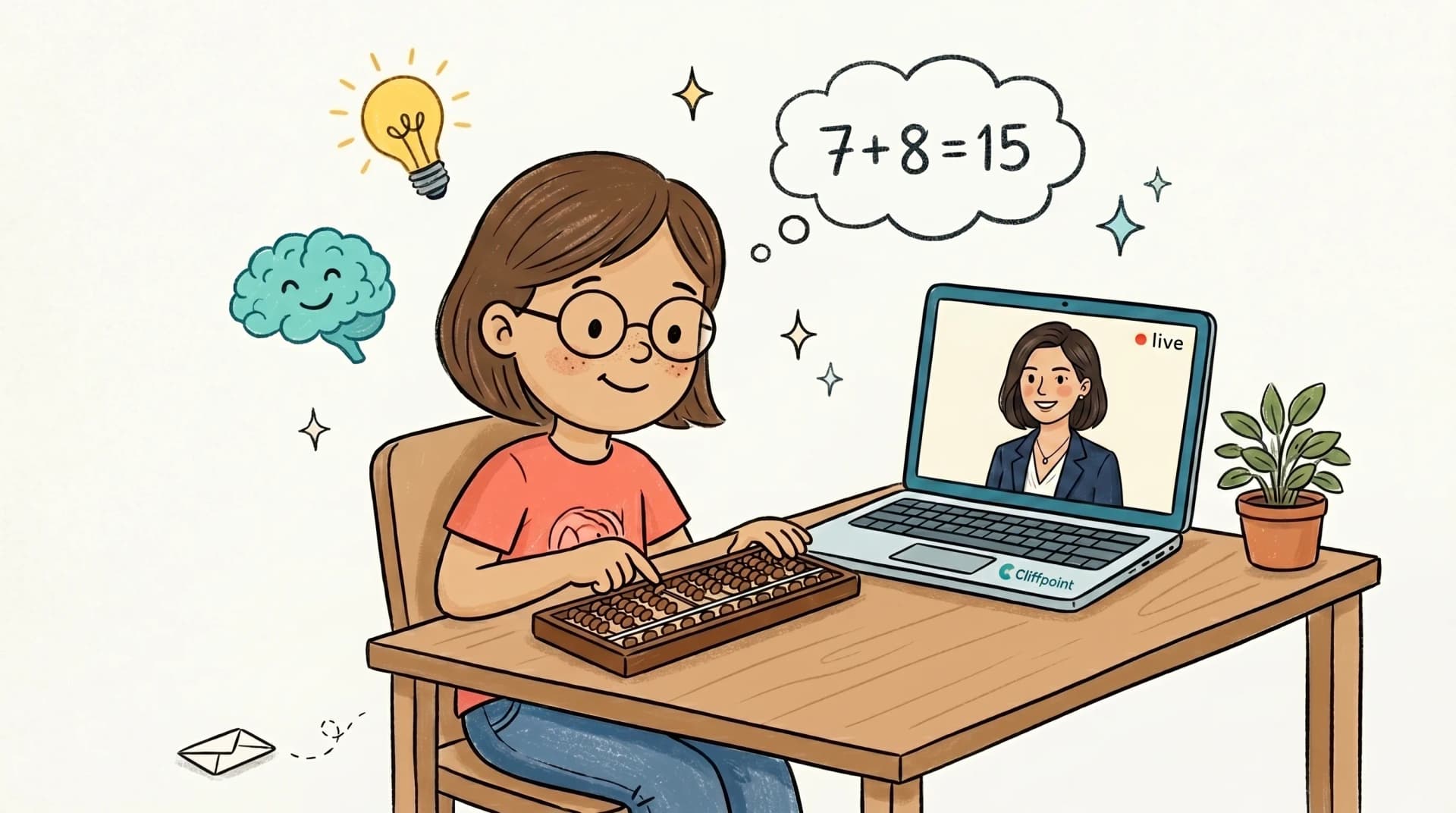
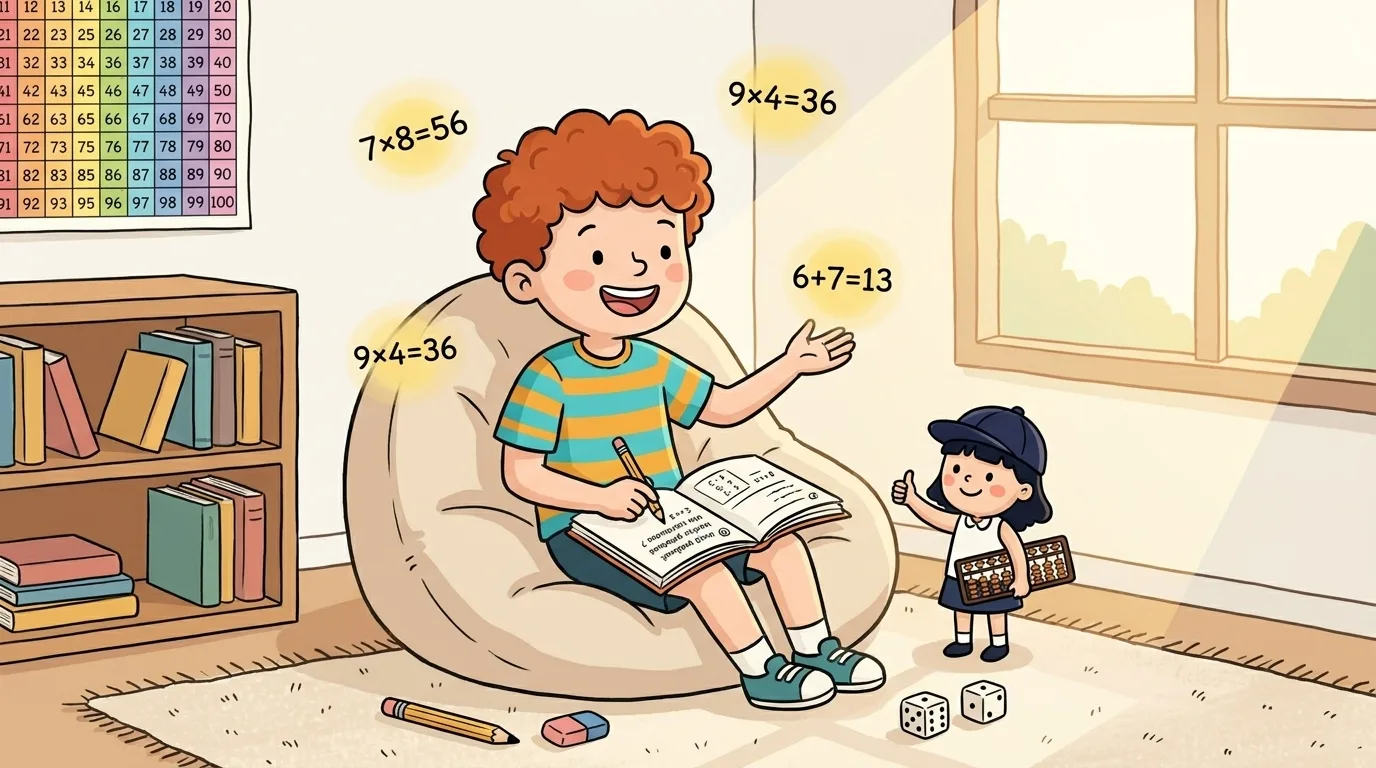
The destination of abacus training is a skill called anzan, where a child calculates by imagining the beads, with no physical abacus at all. At that point your child carries the tool in their mind, available instantly, with no battery and no screen. That is a genuinely useful skill, and a calculator cannot give it.
Does it still matter for school?
Quite a bit. A strong, confident feel for numbers makes the arithmetic that runs under a lot of school maths feel easier, and a child who can calculate in their head is not reaching for a calculator out of habit. The abacus does not compete with the calculator. It just means your child is not dependent on one.
The clearest way to see the difference is to watch a child calculate in their head. You can apply for a free demo class to see it, try our free virtual abacus at home, or read our complete guide to the abacus.
Frequently asked questions
Is the abacus still useful today?
Yes. The abacus is a brain training tool, not a calculator. It builds focus, working memory, and number sense, which matter more in a world of instant answers, not less.
Why learn the abacus when calculators exist?
A calculator gives the answer but teaches nothing. The abacus trains the brain to calculate, remember, and focus, skills a child keeps for life. The two do different jobs.
Does the abacus help with school maths?
Yes, indirectly. A confident feel for numbers makes the arithmetic that sits under a lot of school maths easier. It supports school maths rather than replacing it, since the reasoning and word problems still come from the classroom.
What is anzan?
Anzan is calculating by picturing the abacus beads in your mind, with no physical tool. It is the end goal of abacus training and a genuinely fast mental maths skill.