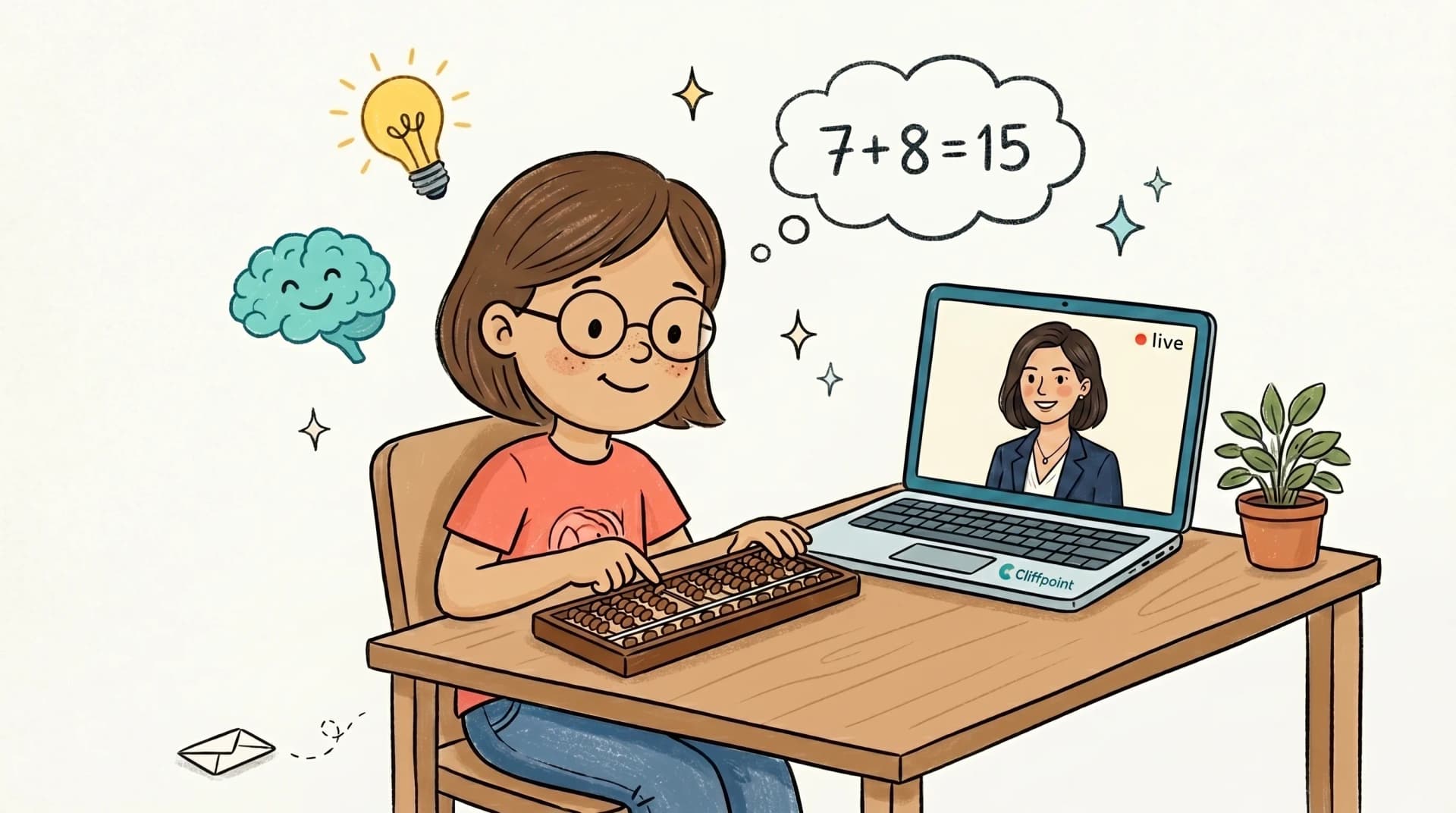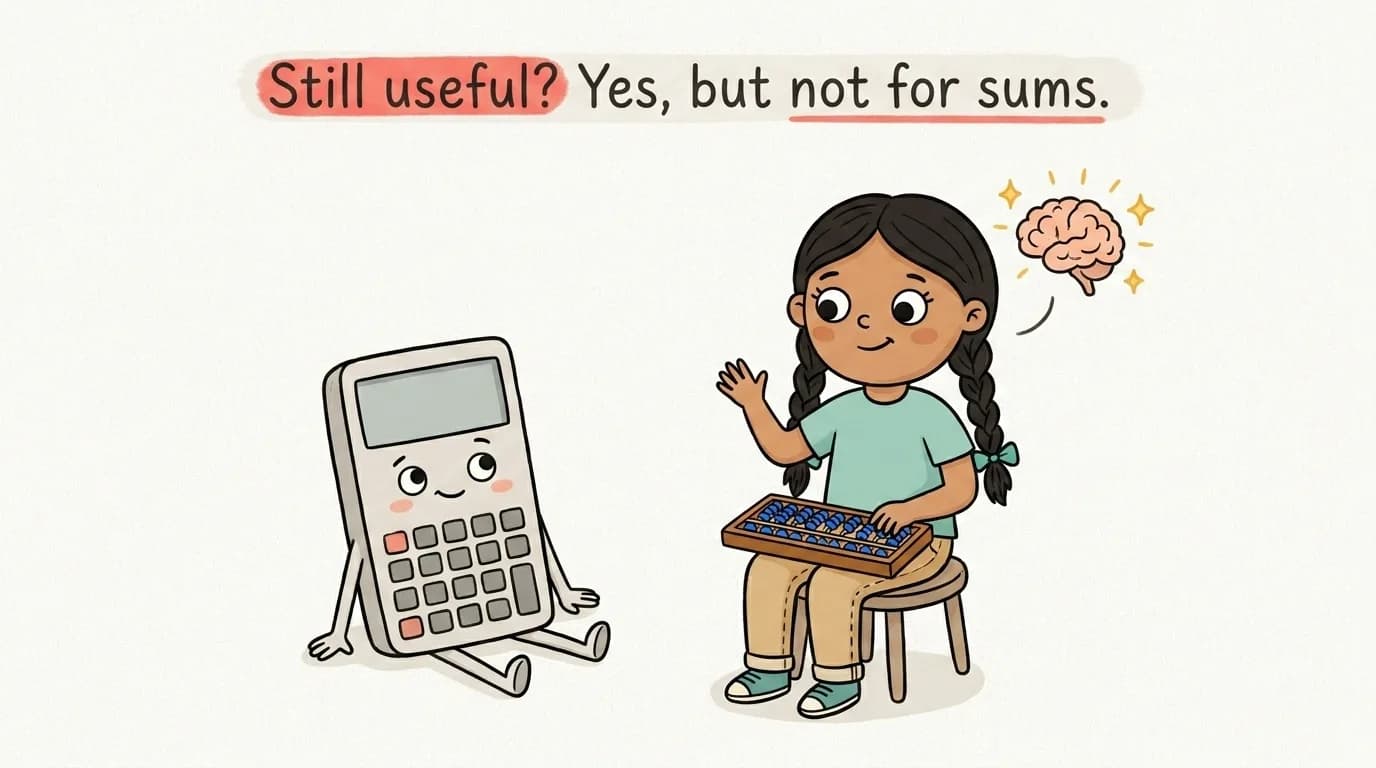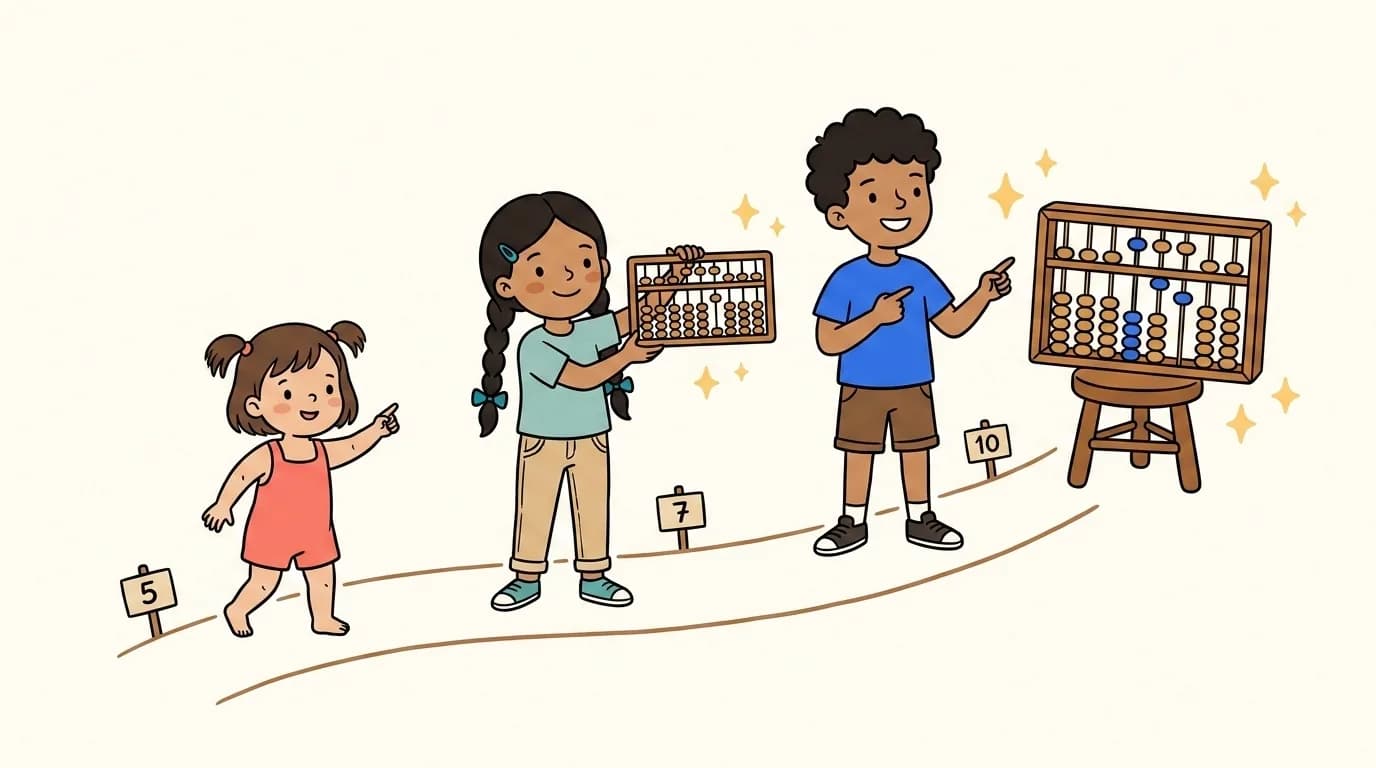
Most parents meet the abacus around the same time, and the first question is always the same: is my child the right age, or have we missed the window? The honest answer has less to do with a number on a birthday cake than with a handful of readiness signs. Here is exactly how to tell.
Of all the questions parents ask before signing up for abacus, the most common is also the simplest: what age should my child start?
It is a fair worry. Start too early and a young child can get frustrated. Wait too long and you assume the window has closed. The good news is that neither fear is usually justified. Age is only half the story, and readiness matters more than the number on the birthday cake. This guide covers the best age to start abacus, the five signs that your child is ready, and what to do at every age from four to twelve.
What is the best age to start abacus?
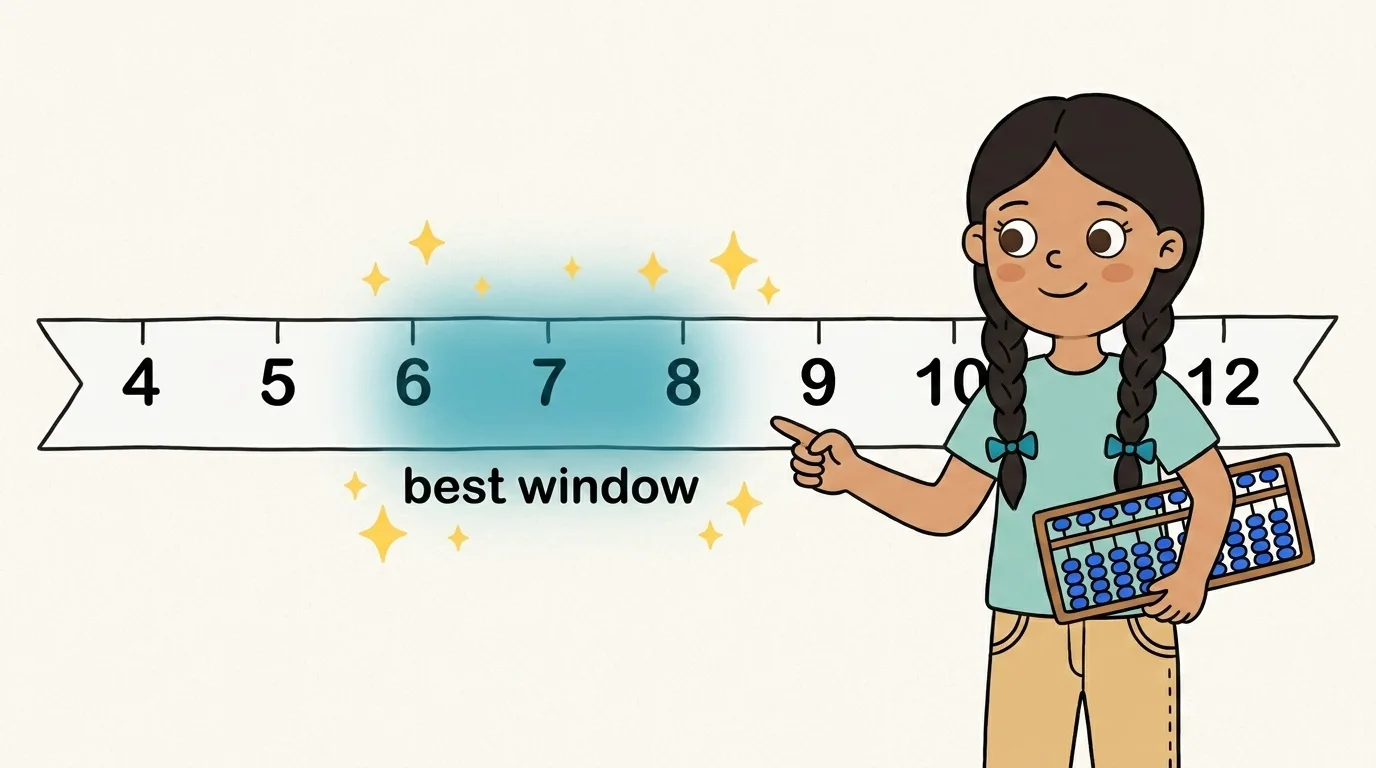
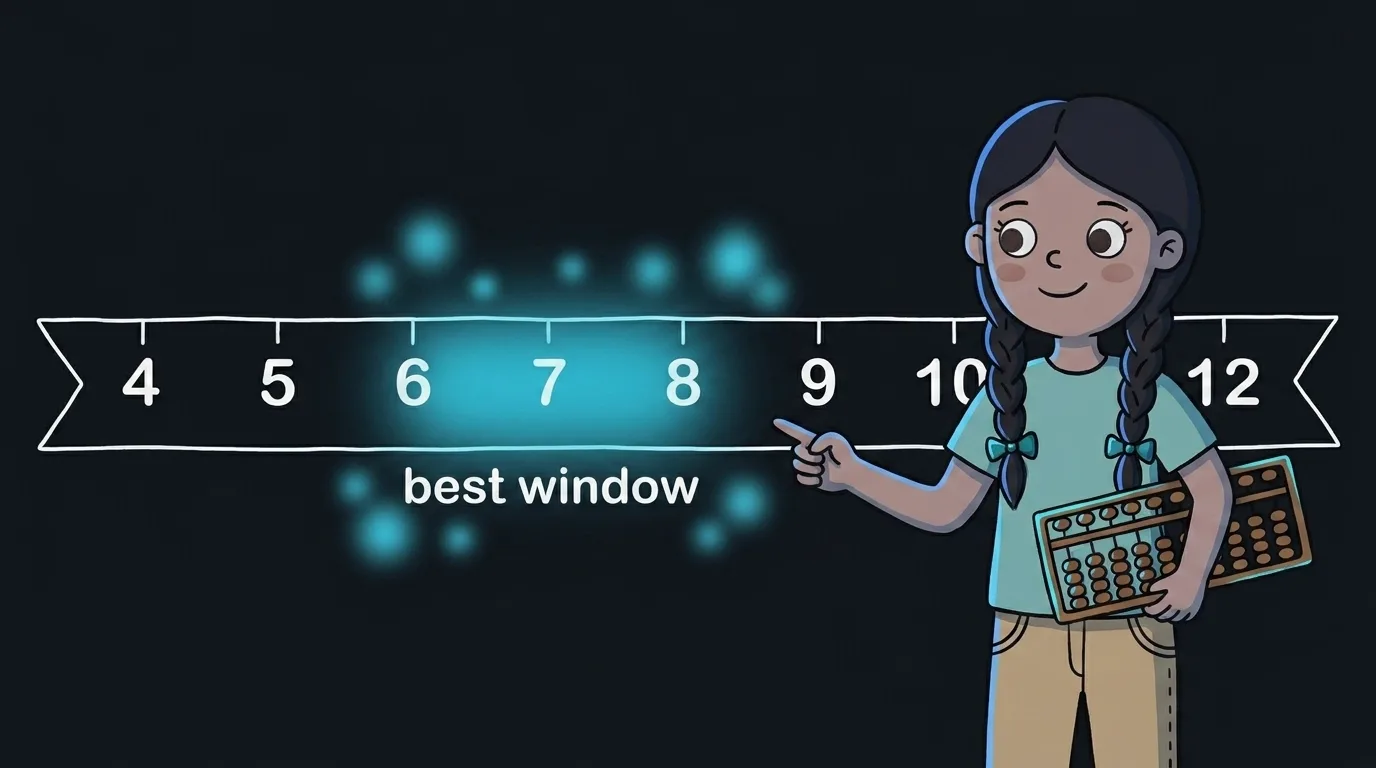
For most children, the best age to start abacus is between six and eight years old. By six, kids can usually recognise numbers, count comfortably, focus for a short lesson, and control their fingers well enough to move the beads. That is exactly why our live abacus classes for kids are built for ages six to twelve.
Still, the best age to start abacus is a guide, not a hard rule. Younger and older children learn it well too, as long as a few readiness boxes are ticked. Below we cover every age from four to twelve, and the signs that matter far more than the date on the calendar.
Why six to eight is the sweet spot
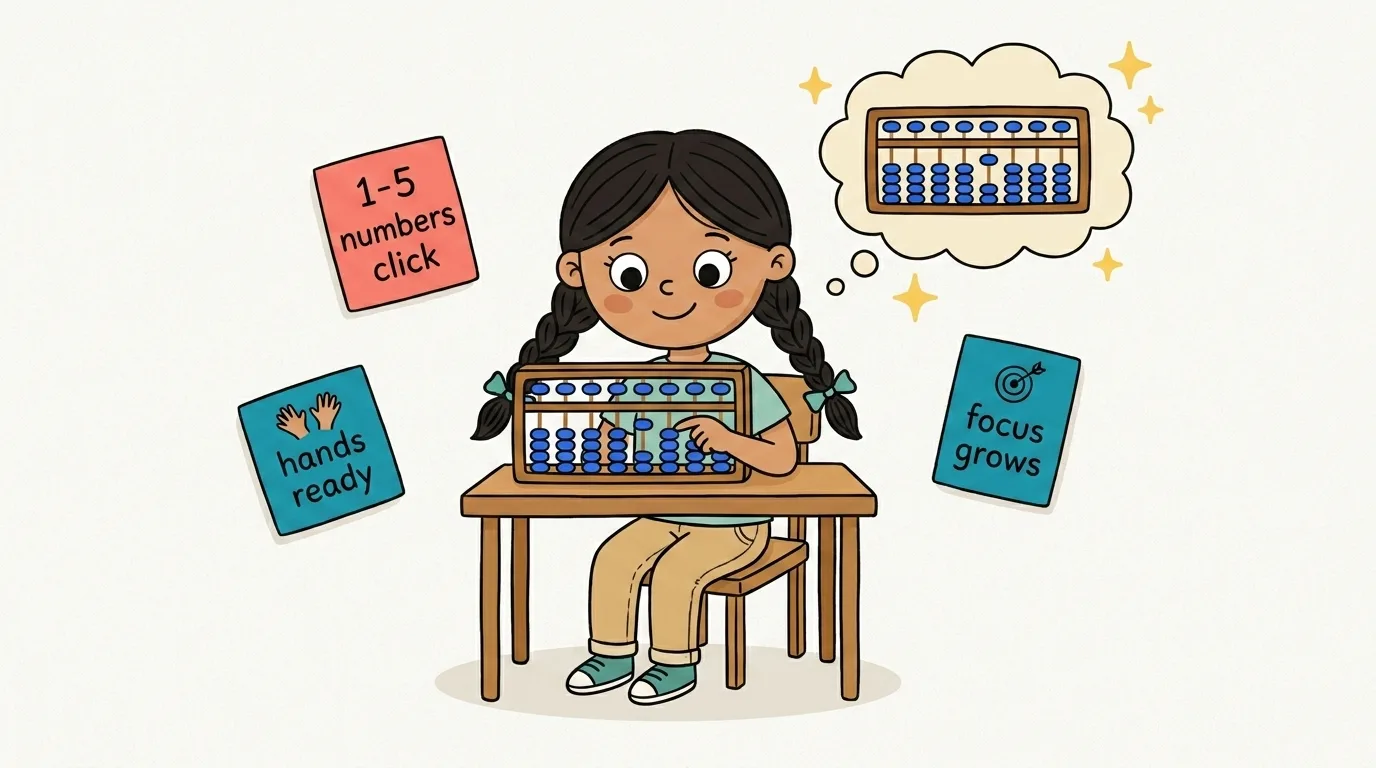
Learning the abacus blends three skills at once: fine motor control for moving beads, number sense for knowing what the beads represent, and attention for following a sequence of steps. Around ages six to eight, all three tend to arrive together.
- Fine motor control. The thumb and index pinch used to flick beads feels natural.
- Number sense. The child already recognises digits and can count past twenty.
- Attention span. They can stay with one activity for 15 to 20 minutes without losing focus.
- Following instructions. They can follow a two or three step instruction, which is how every abacus technique is taught.
When these line up, progress feels easy. That keeps a young child motivated, and motivation is what carries them through the first few months of abacus classes.
Can a 4 or 5 year old start abacus?
Yes, but with realistic expectations. A four or five year old can enjoy the beads, learn to count on them, and build early number sense. What most cannot yet do is sit through a structured lesson or grasp the formulas that make the abacus fast.
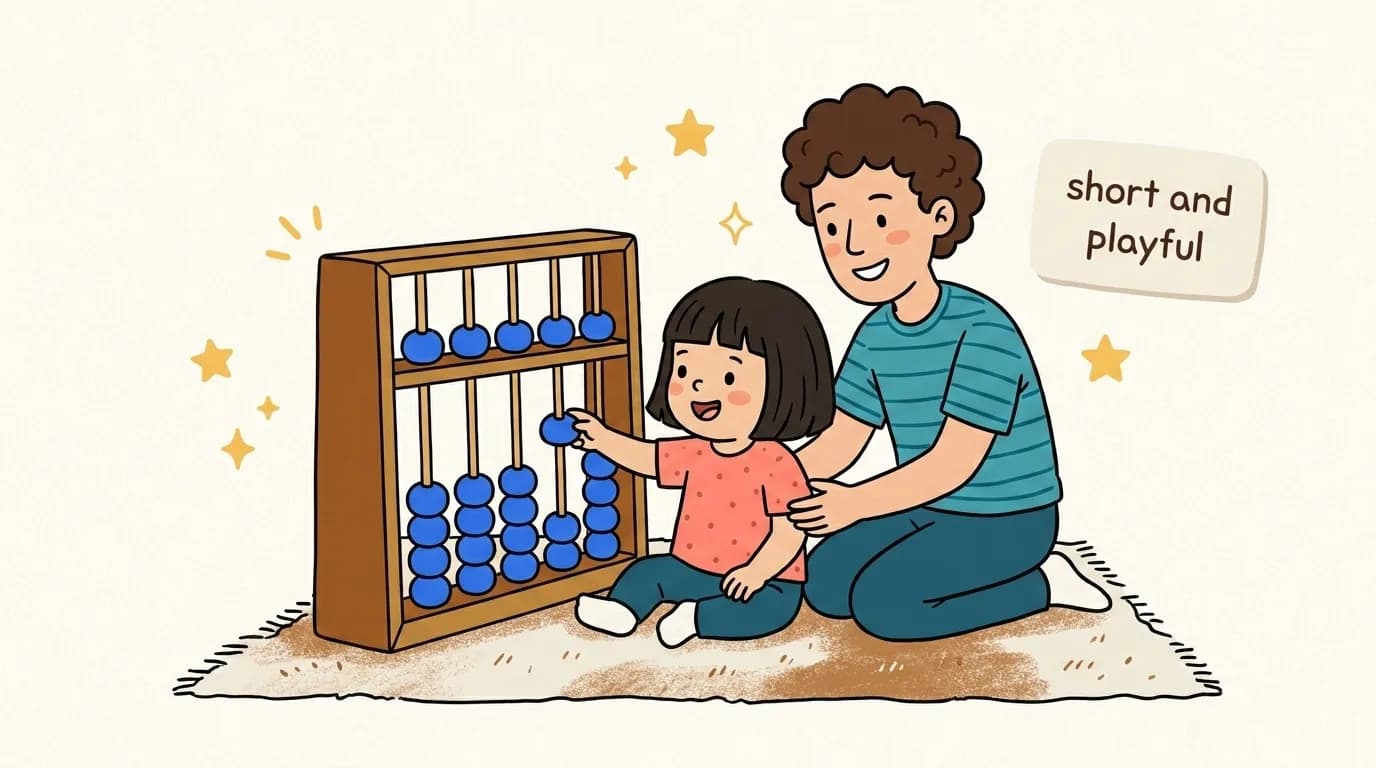
If you have a very young child who loves numbers, keep it short, playful, and parent-supported. Treat it as a head start rather than the full programme. Most children get far more from formal abacus classes once they turn six, which is why we start our live classes there.
Is 9 to 12 too late to start abacus?
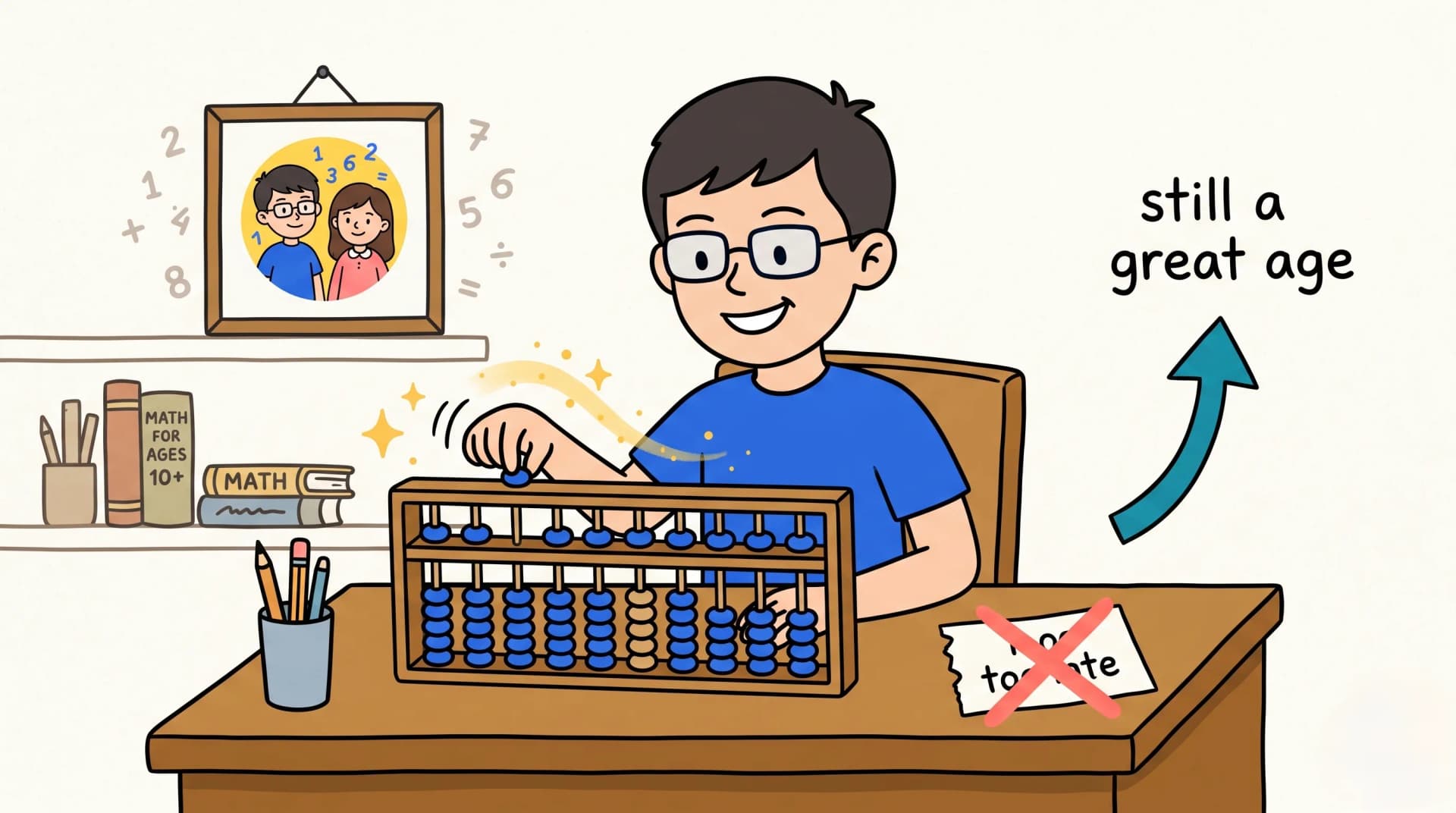
Not at all, and this is the worry we most want to put to rest. Older children often move through the early levels faster, because their number sense and focus are already strong. A nine or ten year old often moves through the early levels noticeably faster than a younger beginner, and still reaches a strong mental math payoff.
The only thing that changes with an older start is the framing. An eleven year old wants to feel the speed and the “secret skill” of calculating in their head, so the early bead drills should move quickly. There is no upper cutoff where abacus stops working.
5 signs your child is ready for abacus classes
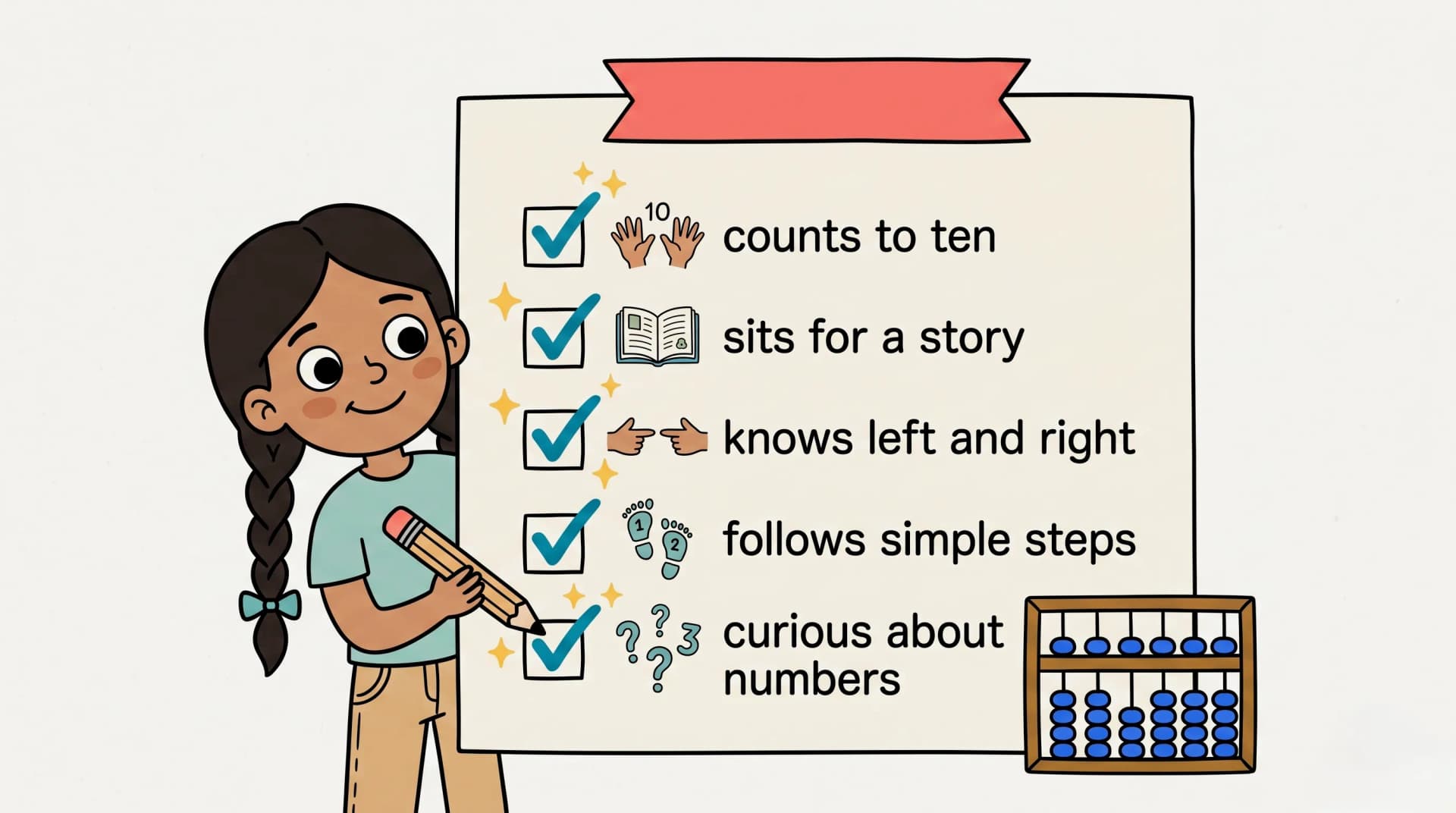
Forget the birthday for a moment. Your child is ready to start abacus when most of these are true.
- They can count to at least 20, ideally toward 100, without help.
- They recognise written digits 0 to 9 on sight.
- They can sit and focus on one activity for 15 to 20 minutes.
- They can follow a two-step instruction, such as “pick this up, then put it there”.
- They show curiosity about numbers, counting toys, ages, or stairs.
If most of these are ticked, the exact age is almost irrelevant. Your child is ready.
Not sure which boxes your child ticks? The fastest way to find out is to watch them try. You can book a free 30-minute demo class and a teacher will tell you where your child stands.
What to do if your child is not ready yet
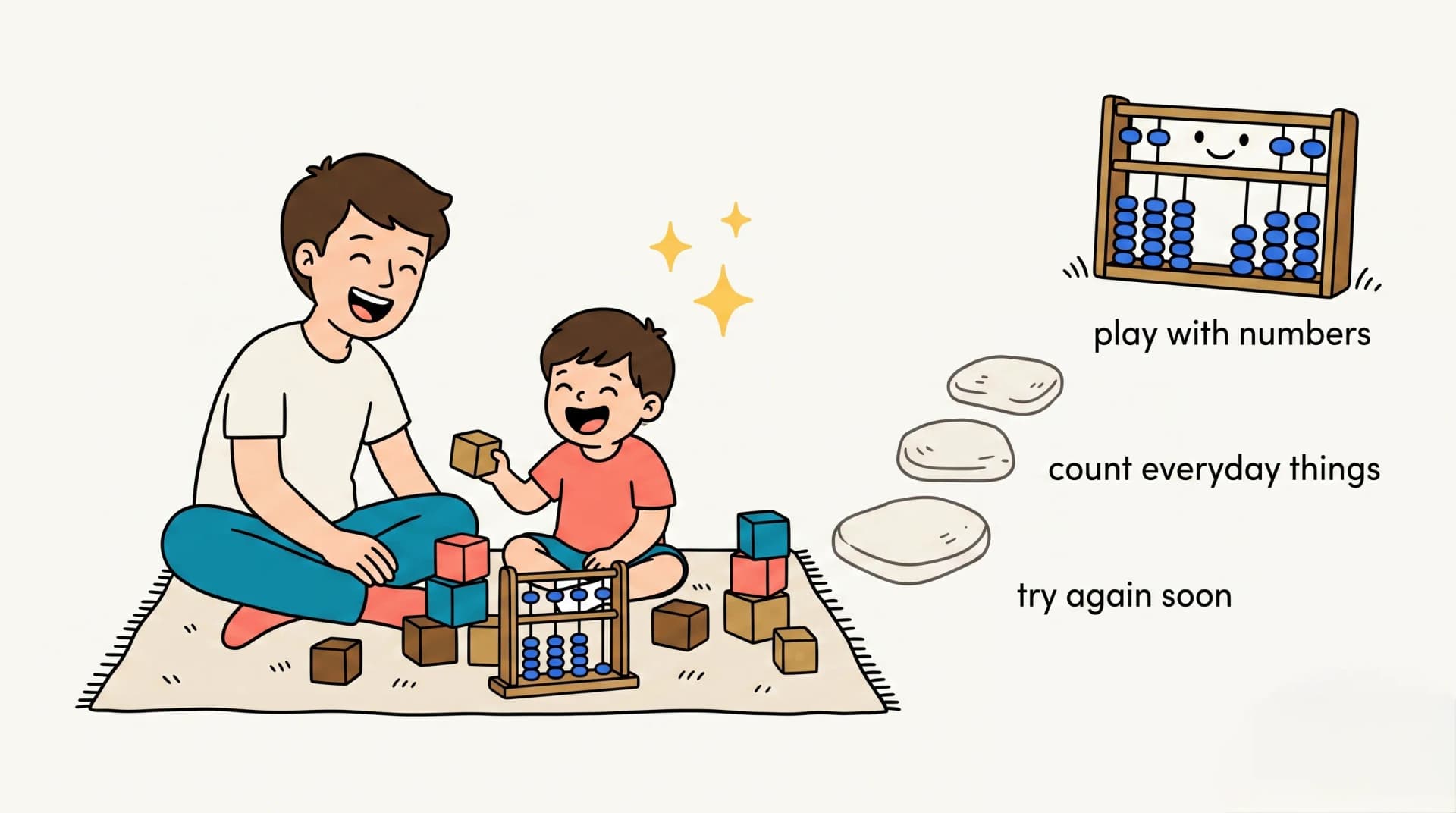
If a couple of those signs are missing, there is no rush. Spend a few months building the foundations through everyday play. Count steps together, point out numbers on doors and clocks, and play simple counting games. These cost nothing and make the eventual start far smoother. Then try again in a term or two.
Online abacus classes and younger children
Live online abacus works well from age six up, especially in small groups where a teacher can still watch each child move the beads. For children at the younger edge, look for small batches and live, not pre-recorded, instructionso a real teacher can keep them engaged. A video alone rarely holds a young child’s attention.
The easiest way to know for sure
Every child is different, so the surest test of readiness is a real lesson. Our free 30-minute demo class introduces the beads and lets you and the teacher see exactly how ready your child is.
You can also try our free virtual abacus together at home to gauge their interest, or read our complete guide to the abacus for more background. When you are ready, apply for a free demo class and see how your child takes to it.
Frequently asked questions about the right age for abacus
What is the best age to start abacus?
Six to eight is the sweet spot for most children, but any age from six to twelve is a great time to start abacus classes. Readiness matters more than the exact age.
Can a 5 year old learn abacus?
A five year old can begin with short, playful, parent-supported sessions, but most children get more from a structured abacus course once they turn six.
Is 10 too old to start abacus?
No. Ten year olds often progress faster than younger beginners because their focus and number sense are already strong, and they still gain the full mental math benefit.
What age is too late to learn abacus?
There is no real cutoff. Children, teens, and even adults can learn the abacus. The earlier you build the habit, the more years of benefit your child enjoys, so the best time to start is usually now.
When your child is ready to try, we run online abacus classes in the UK and live batches for families in the USA, Australia, and Dubai and the UAE, each starting with a free 30 minute demo.