Every parent has seen a video of a child adding long numbers in seconds. That speed is real, but it is not magic and it does not come from a single trick. It is built from small, automatic skills, practised a little at a time.
Where speed actually comes from
A fast child is not doing the same work as a slow child, only faster. They are doing less work, because more of it has become automatic. Three things make the difference:
- Number facts that need no thought, such as the pairs that make ten and the times tables.
- A clear mental picture of numbers, so a child can see 47 as four tens and seven ones rather than as two symbols.
- Accuracy first. A fast wrong answer is still wrong, and checking it costs more time than getting it right slowly. Speed grows out of accuracy, not the other way round.
Techniques that work
- Pairs that make ten. 7 and 3, 6 and 4: once these are instant, 8 + 7 becomes 8 + 2 + 5, which is 15.
- Adding from the left. For 47 + 25, add the tens first (40 + 20 = 60), then the ones (7 + 5 = 12): 72. Working from the left keeps the size of the answer in view, and it is how a soroban is worked.
- Near doubles. 6 + 7 is double 6, plus one: 13.
- Rounding and adjusting. 49 + 26 is 50 + 26, minus one: 75.
- Times tables by pattern, not only by chanting. Our times tables chart shows the patterns that make each one easier.
How abacus builds speed
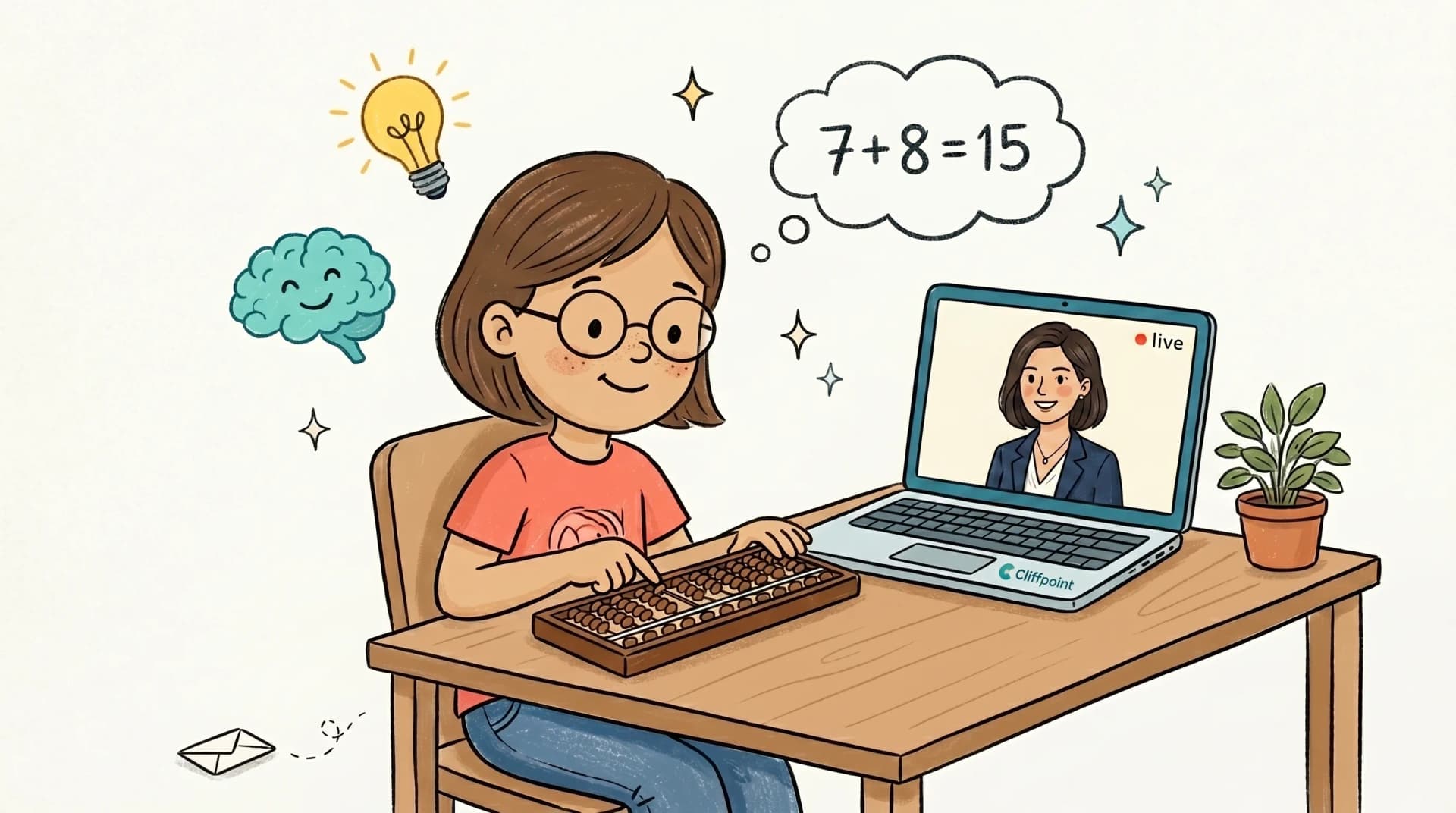
On a soroban, every number is a position of beads, and every sum is a short sequence of bead moves. Children practise those moves until they are automatic, with the thumb lifting the lower beads and the index finger lowering them and working the top bead. Then the beads move into the mind: the child pictures the soroban and calculates on the picture. That is the mental abacus, and it is where the speed in those videos comes from.
The evidence is encouraging but specific. A three-year randomised controlled trial (Barner and colleagues, 2016) found that children taught the mental abacus improved in arithmetic compared with children given extra standard maths, most of all those who started with stronger visual-spatial memory. It did not raise general intelligence. Abacus builds calculation; it is not a shortcut to being clever at everything.
A daily routine that works
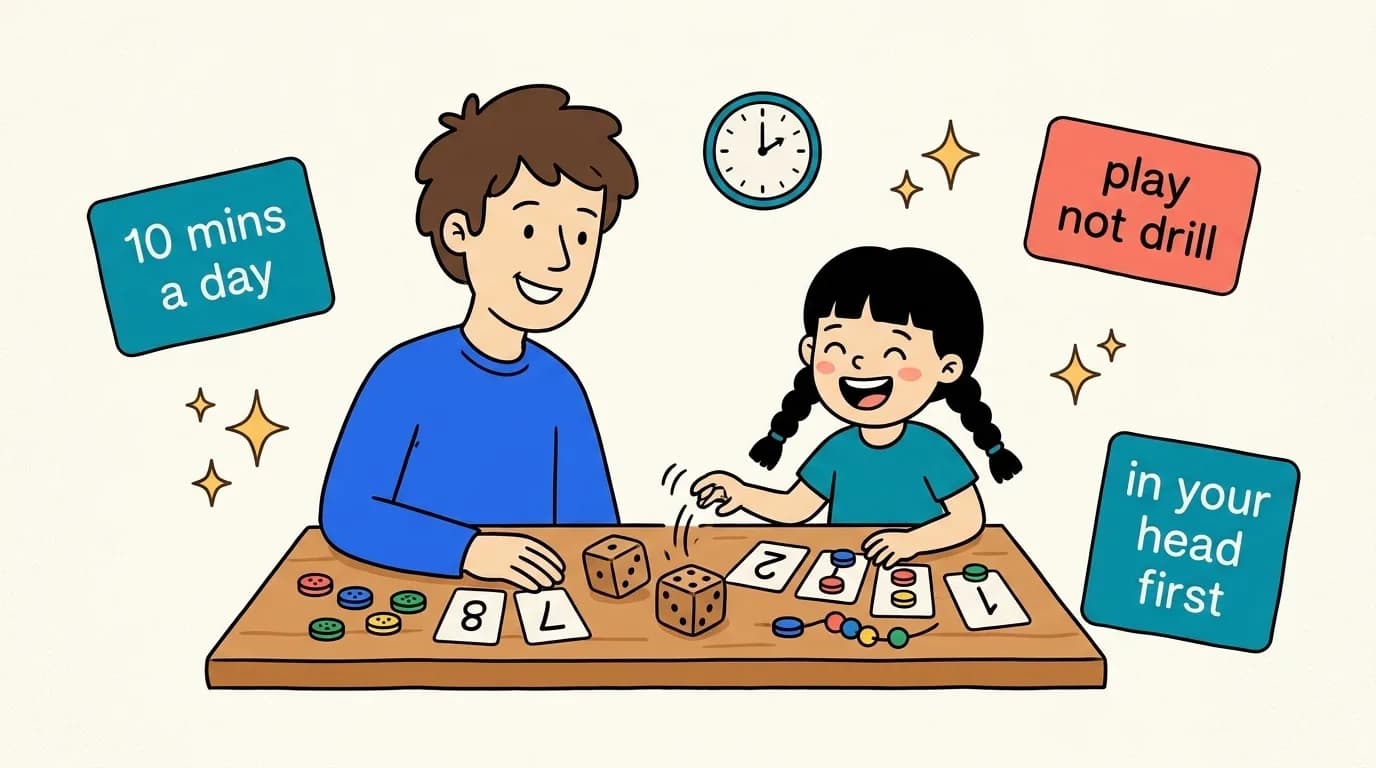
- Five to ten minutes a day, at the same time each day, such as straight after homework.
- One small skill at a time, until it feels easy.
- A timer only once the skill is accurate, and then against the child’s own best time, never against someone else.
- Stop while it is still going well.
The free Level 1 practice sets are built on that routine: a short timed set, a best time kept on your device, and a note on what a teacher would notice, such as whether a child set the tens first.
What to avoid
- Comparing a child’s speed with a sibling’s or a classmate’s.
- Timed drills before the facts are secure, which build worry rather than speed.
- Collecting tricks with no understanding underneath; they fall apart on bigger numbers.
Questions parents ask
At what age can children learn speed maths?
Simple strategies such as pairs that make ten suit children from about five or six. Abacus is usually taught from around six, once a child can count reliably and sit for a short lesson.
Are speed maths tricks worth learning?
Some are, when a child understands why they work. Tricks without understanding tend to break down on bigger numbers. Automatic number facts and a clear picture of numbers matter more.
How long does it take for a child to get faster?
It varies from child to child. Short daily practice on one skill at a time usually shows progress within weeks, as long as accuracy comes first.