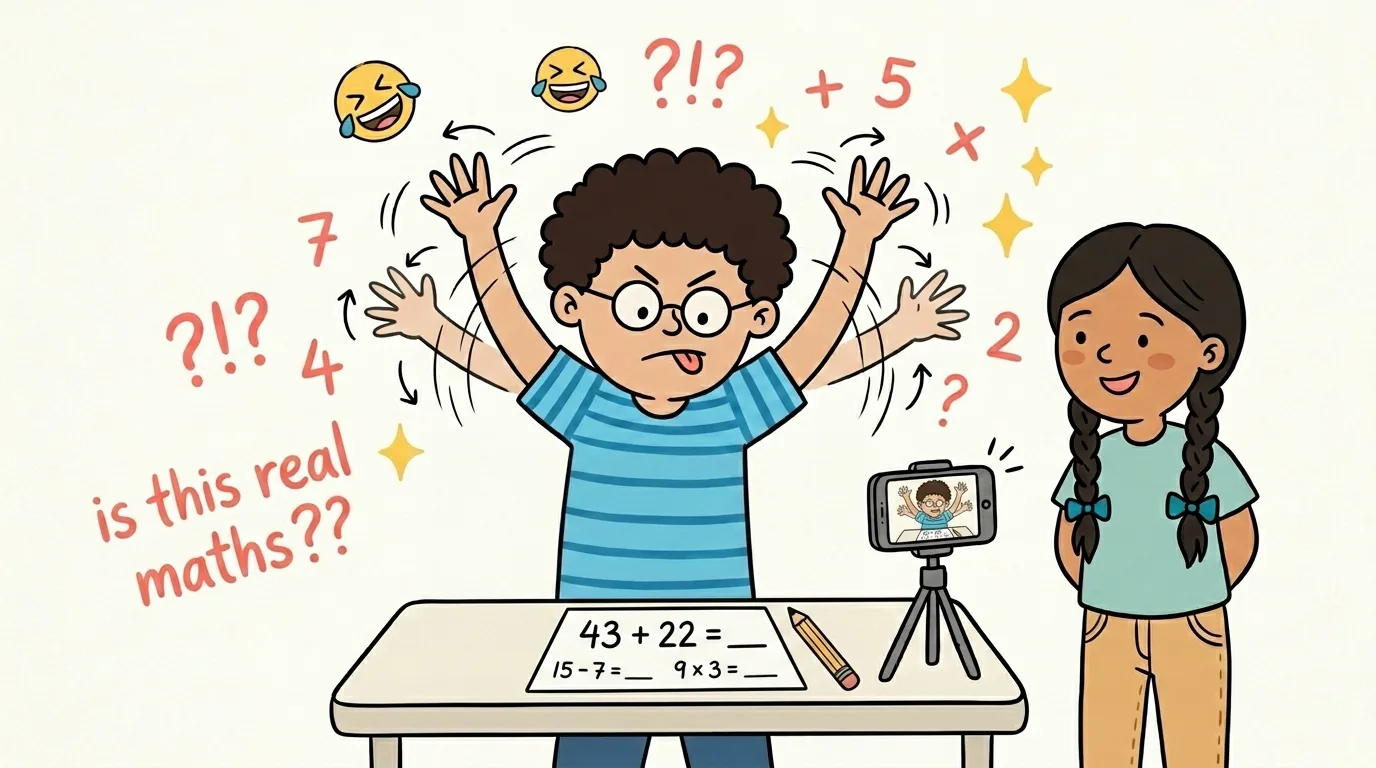
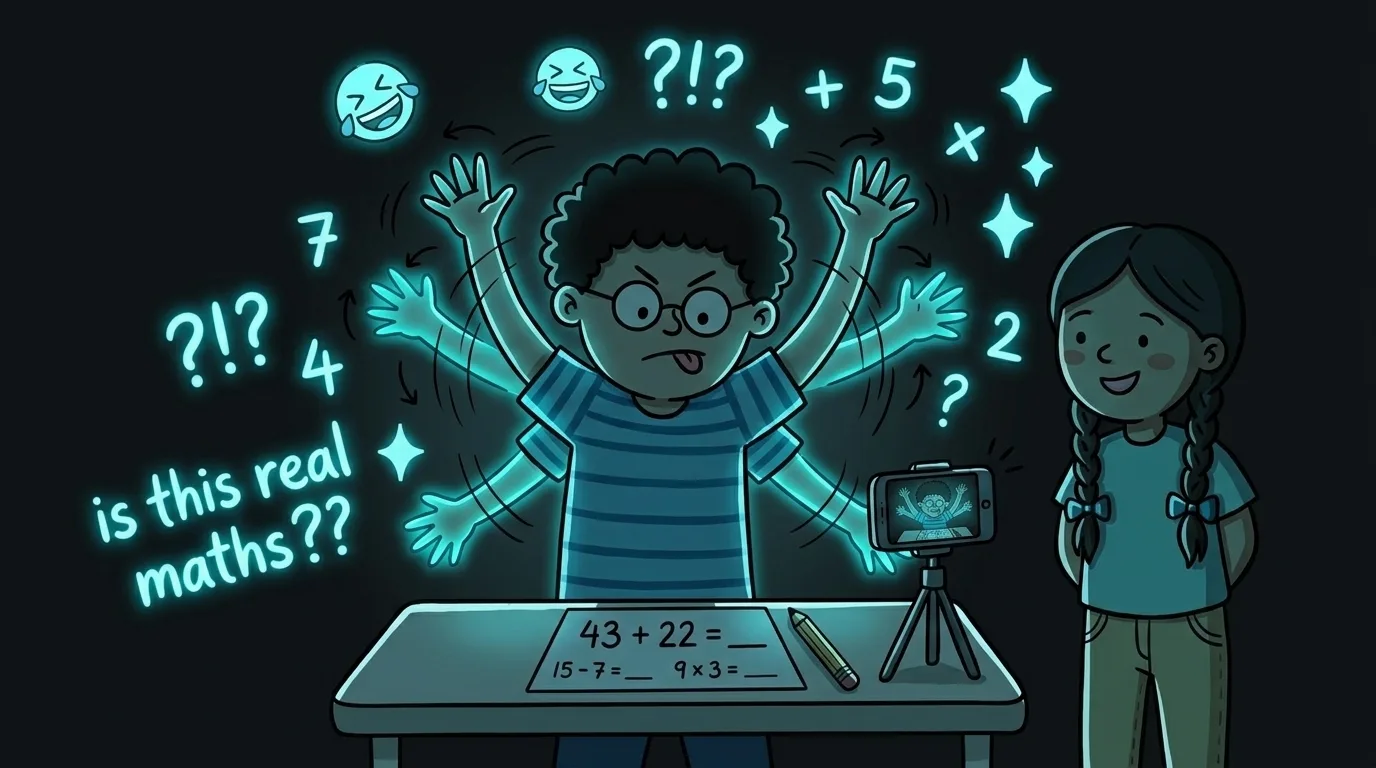
If you spend any time on social media, you have probably seen abacus children rattling off big sums while their hands flutter through the air, with a comments section full of people calling it a circus trick. We run an abacus academy, so this is our honest answer to the memes: what is really happening, why the finger abacus idea is wrong, and the teaching reason so many children end up waving their hands at all.
If you spend any time on social media, you have seen the videos: a child rattling off answers to big sums while their hands flutter and swing through the air, and a comments section full of people laughing that this is nonsense, a circus trick, or proof that abacus is fake maths.
We run an abacus academy, so this is our honest answer to the memes. Some of the mockery comes from a fair confusion, and some of it is just misinformation. Here is what is actually going on, including the part almost nobody explains: why so many abacus kids end up waving their hands in the first place.
First, the kids are not doing nonsense
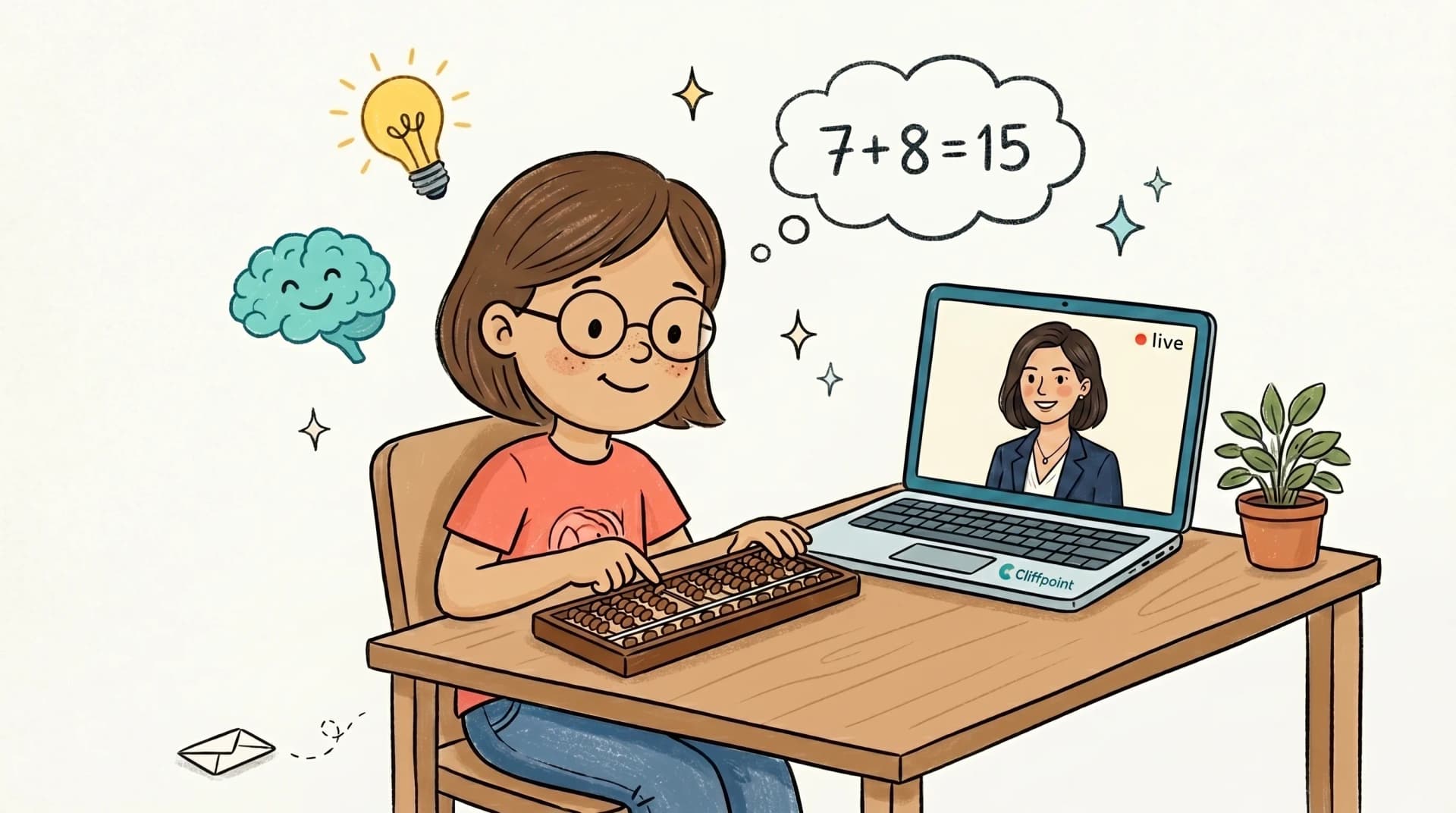
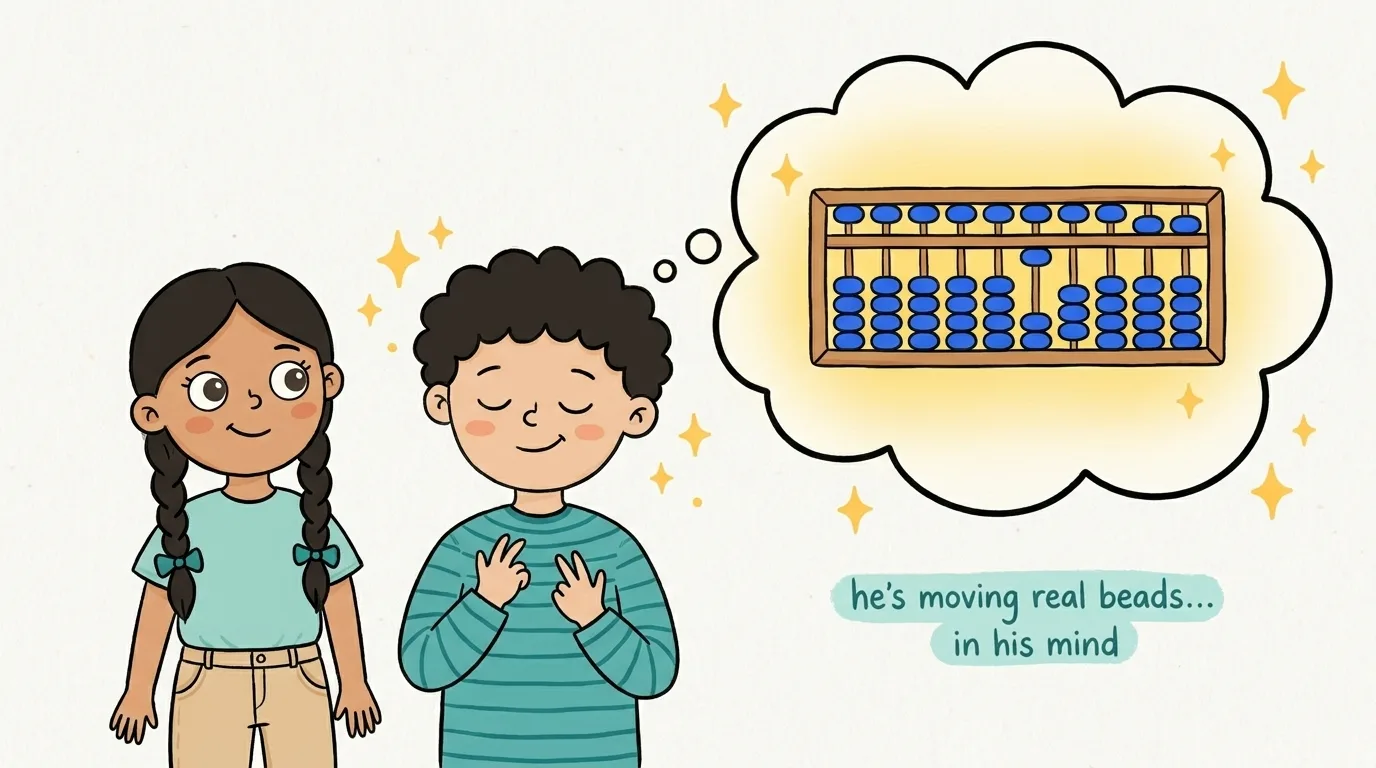
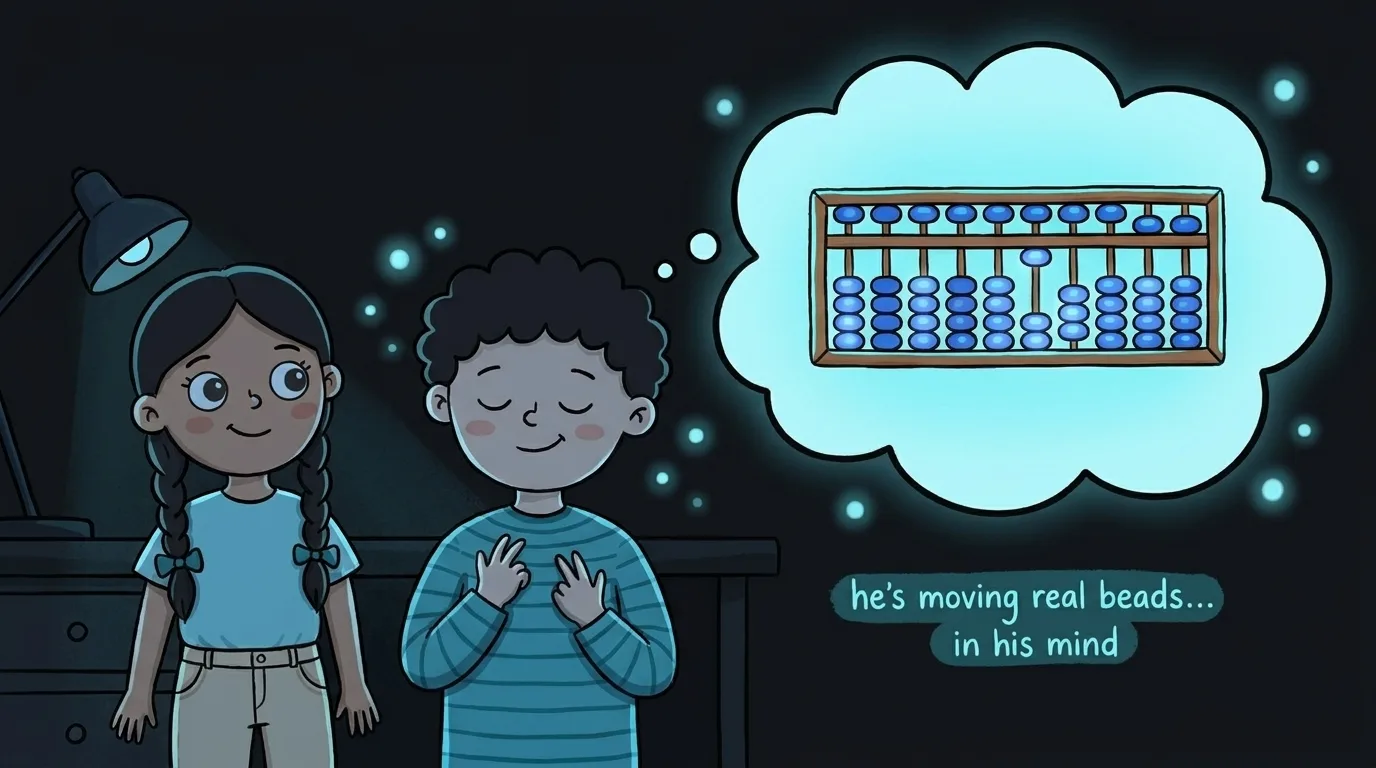
The child in the video is not performing magic or flapping at random. They are picturing an abacus in their mind and “moving” its beads to calculate. That is a real mental skill called anzan, and the hand movements are them operating that imaginary abacus. So the first piece of misinformation to clear up is simple: yes, it is genuine mental maths, not a fake.
You can see the mental picture they are building on our free virtual abacus.
The “finger abacus” myth
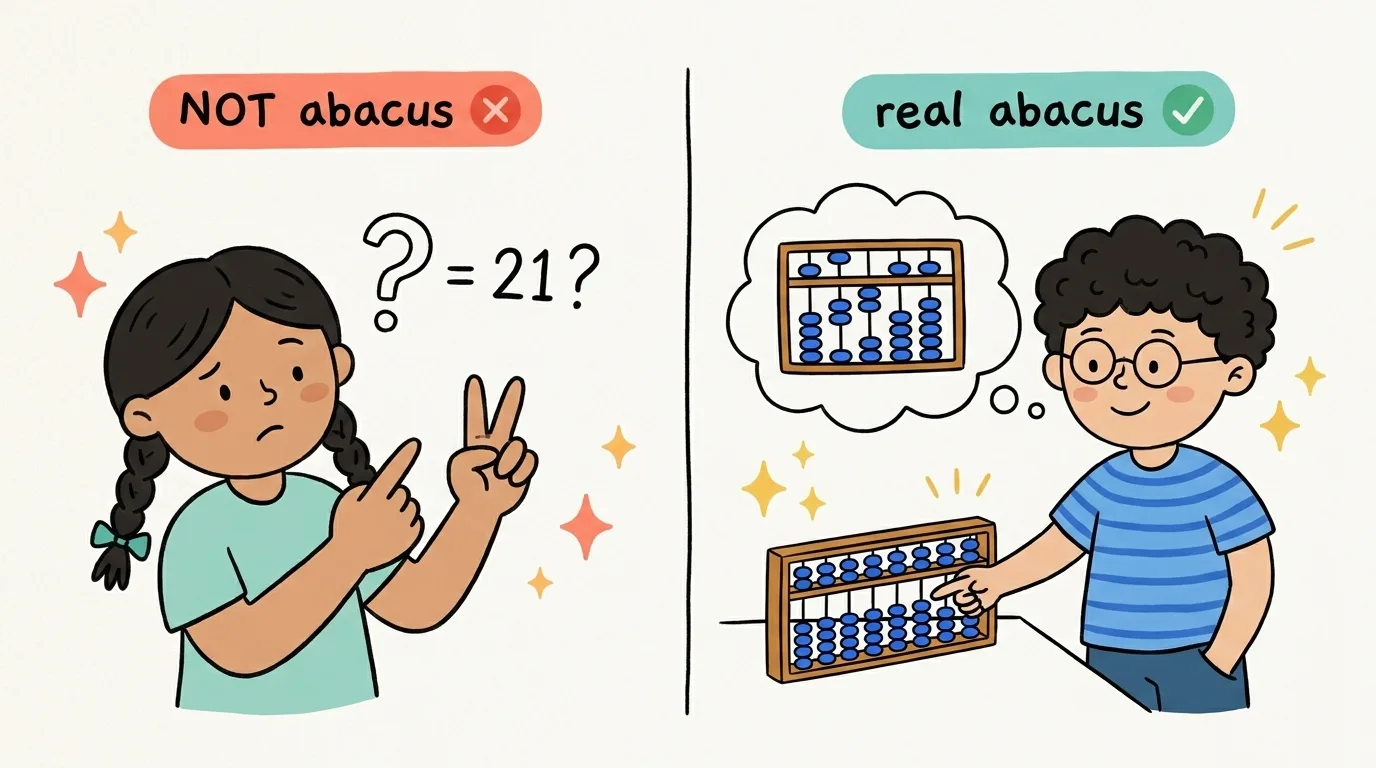
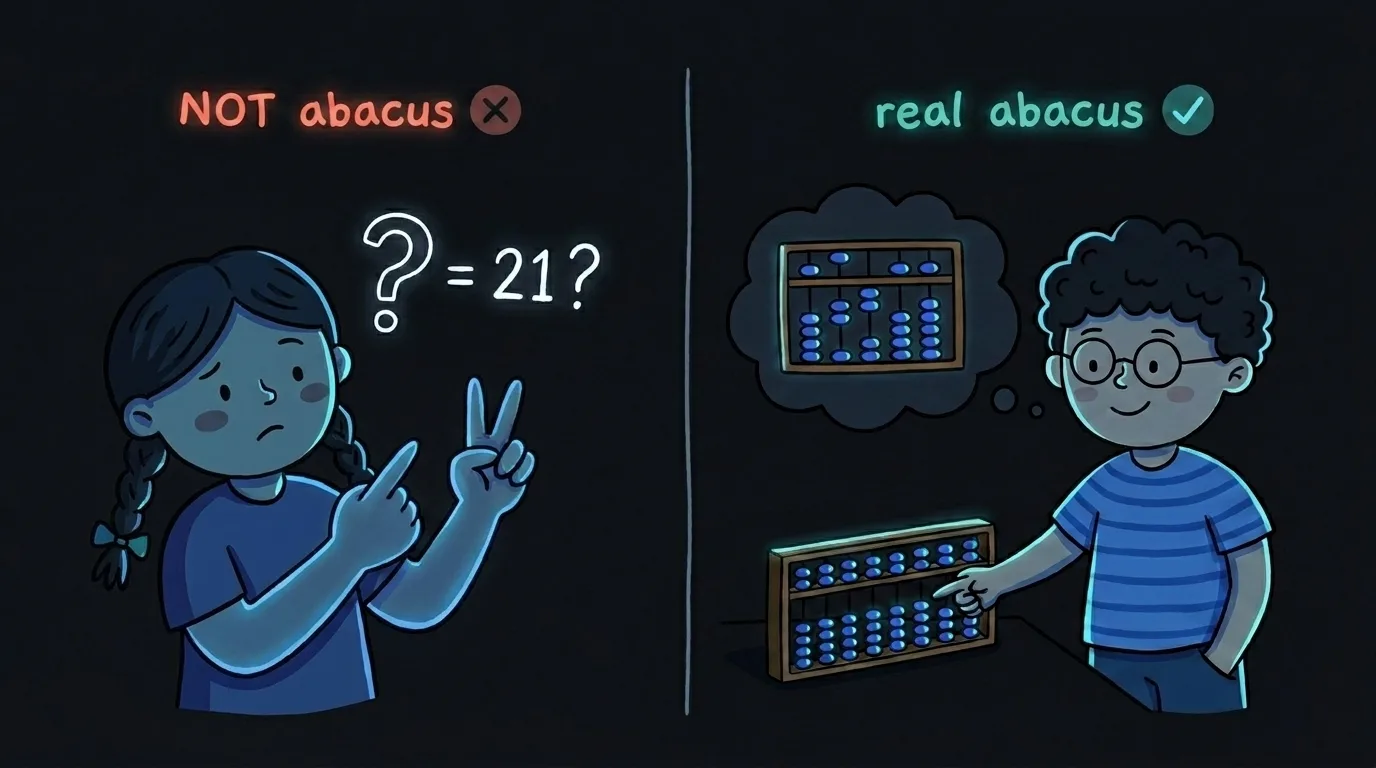
Here is a related bit of misinformation. Some tutors teach children to count on their fingers and present that as mental maths, even calling it “finger abacus.” The idea is that to show 21 you hold up two fingers on the left hand and one on the right.
Calling that “finger abacus” is misleading. Counting on your fingers is its own technique, and it even has real names like Chisanbop or finger math, but it is not the abacus. The abacus is a specific bead tool with ancient roots, best known today in its Chinese form, the suanpan, and its Japanese form, the soroban, each with its own formulas and techniques. Real abacus mental maths means learning that bead tool and then imagining it to calculate in your head. Borrowing the abacus name for plain finger counting only adds to the confusion.
So why do so many abacus kids wave their hands?
This is the part the memes miss, and it is not really about the children. It is about how abacus is usually taught.
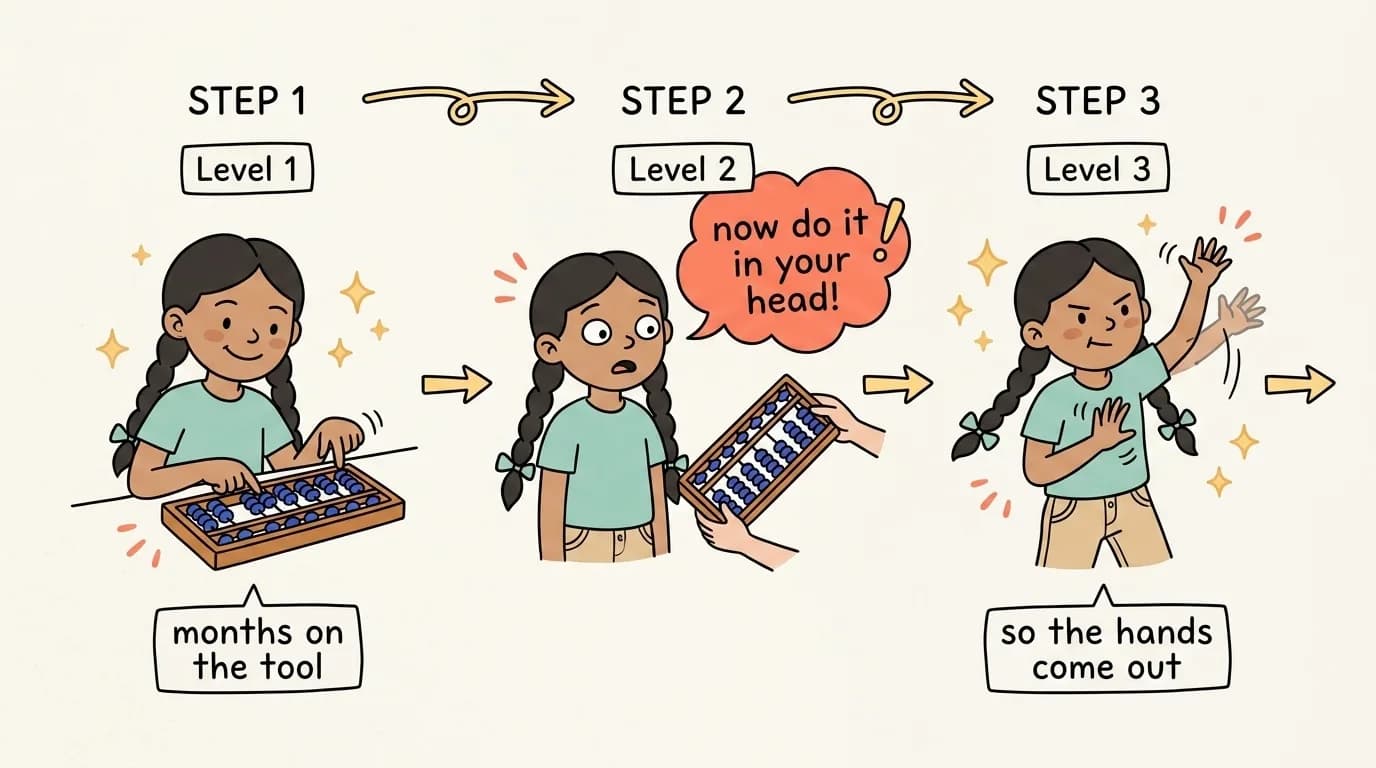
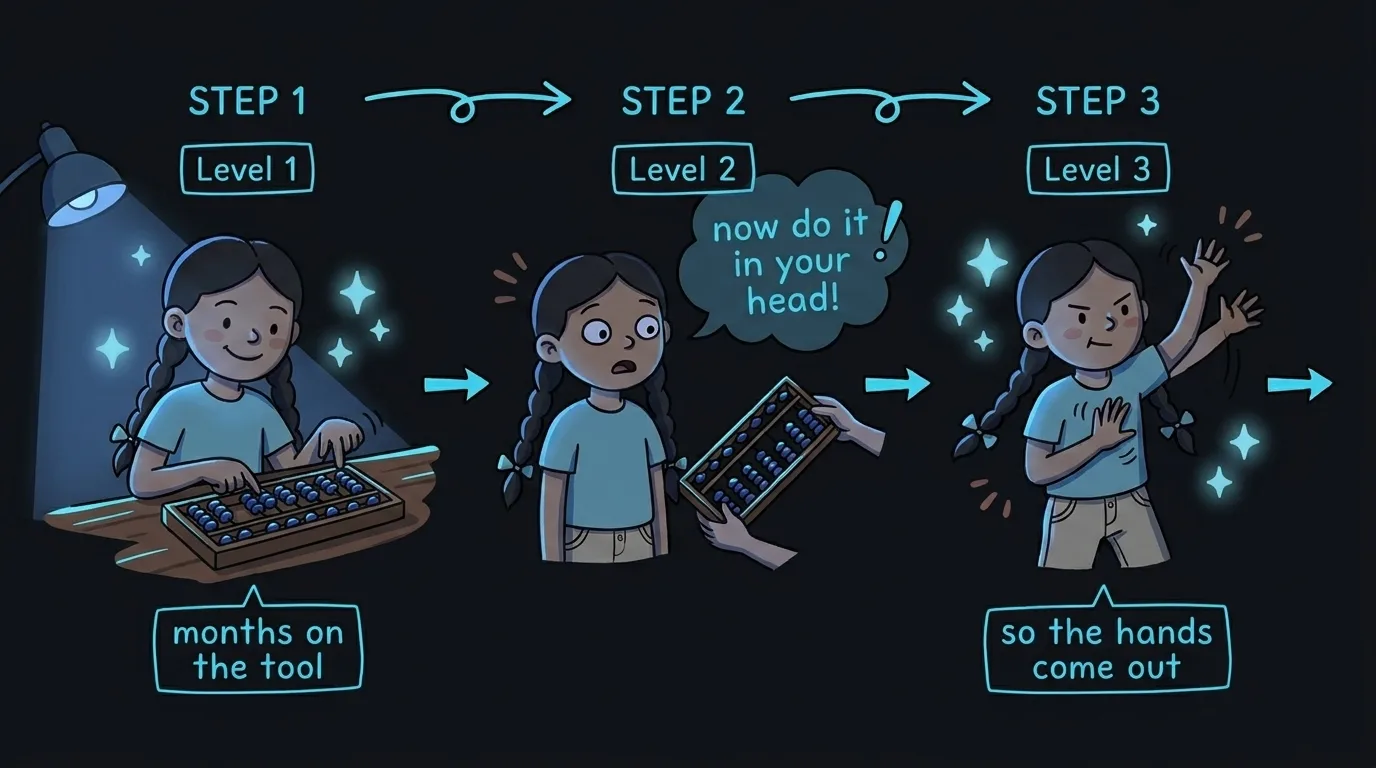
In most programmes, students spend the whole of the first level working on the physical abacus. That level alone often takes three to four months, and throughout it the child does every sum by touching real beads. By the end they are good with the tool, but they are also completely dependent on it.
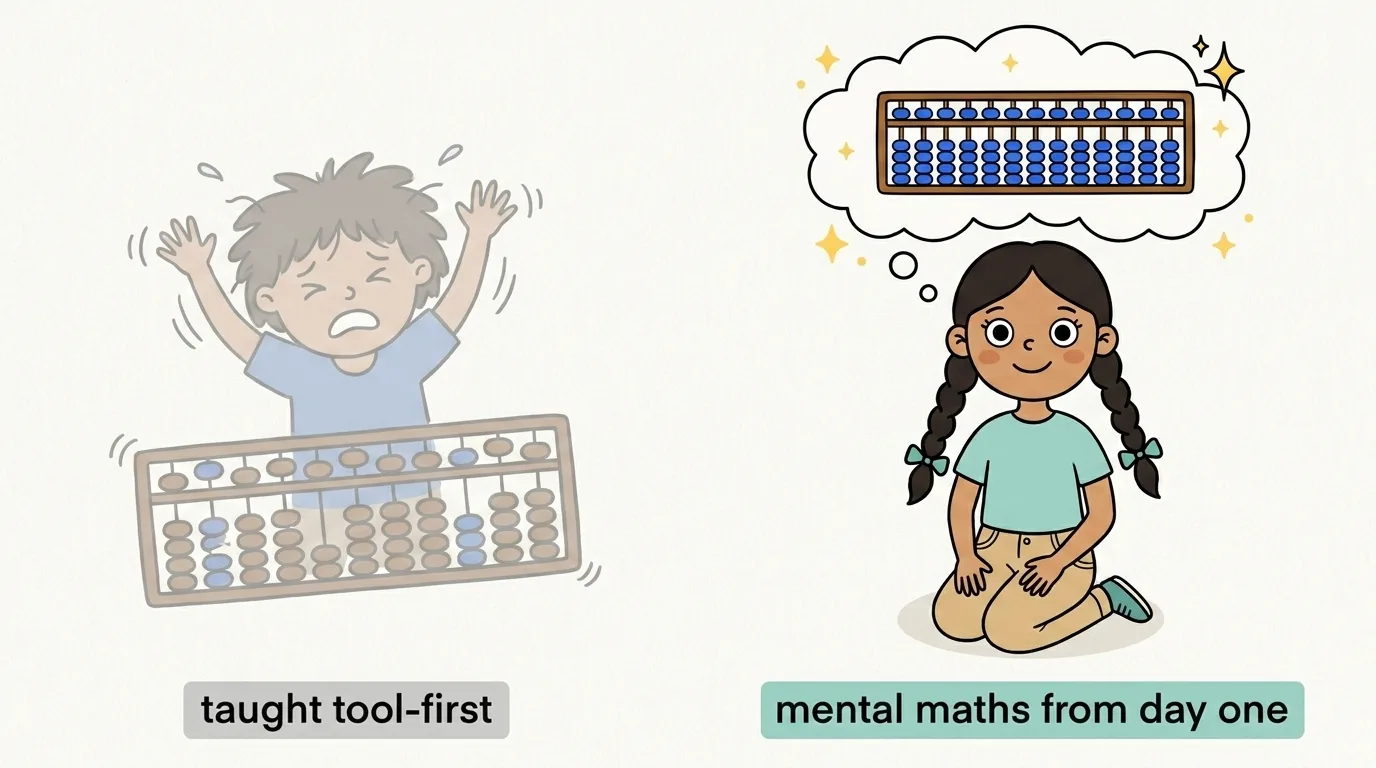
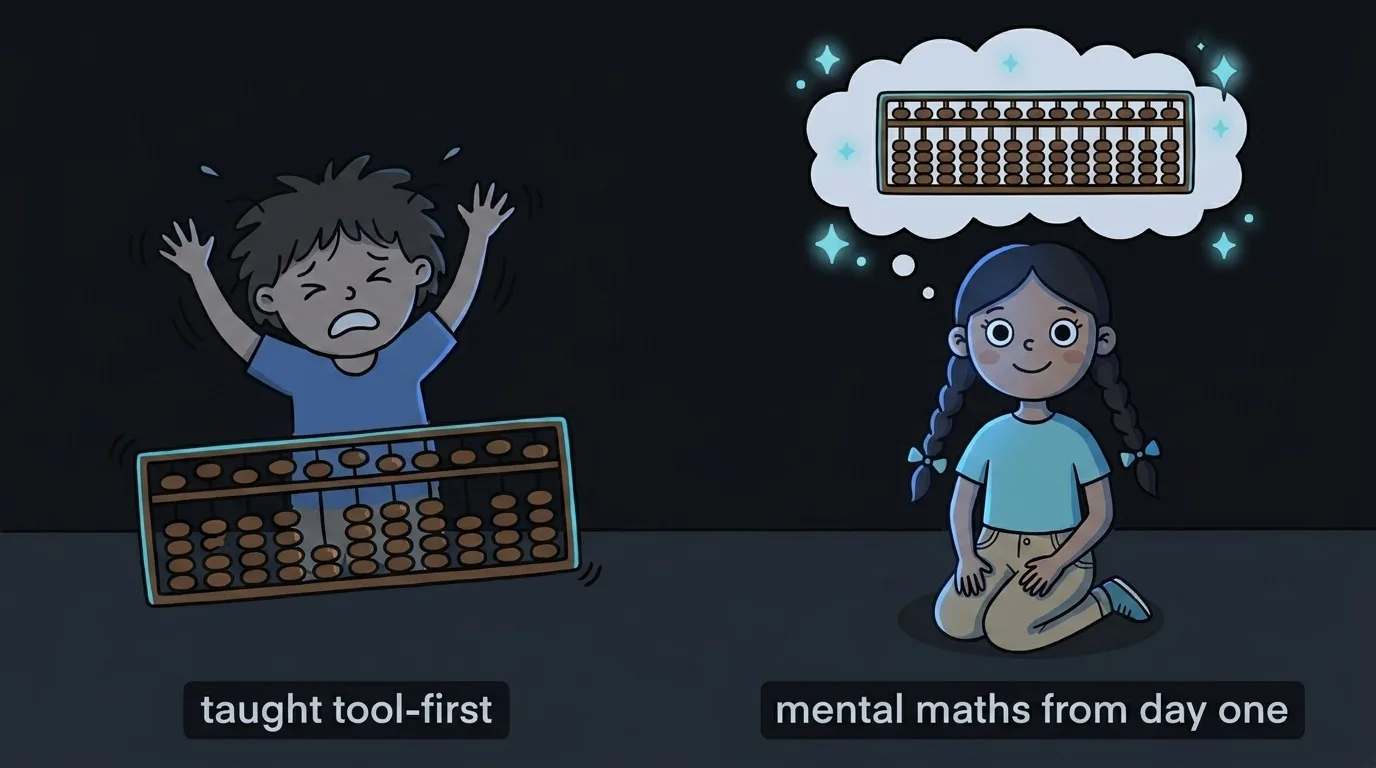
Then, from the second level, the teacher suddenly asks them to put the abacus down and calculate in their head. For a child who has never once practised mentally, that jump is hard. So they do the natural thing: they recreate the tool with their hands, swinging and tapping in the air to operate the abacus they are now forced to imagine. The hand-waving is a crutch, and it exists because mental maths was introduced far too late.
How we avoid it at Cliffpoint
At Cliffpoint Abacus we introduce the mental picture alongside the tool from the earliest sums, rather than leaving it until a child has spent months leaning on the beads.
When the mental skill grows alongside the tool rather than after it, there is nothing to unlearn later, and the hand-waving in those videos has no reason to appear. Swinging hands are not a sign of abacus. They are a sign of abacus taught back to front.
The bottom line
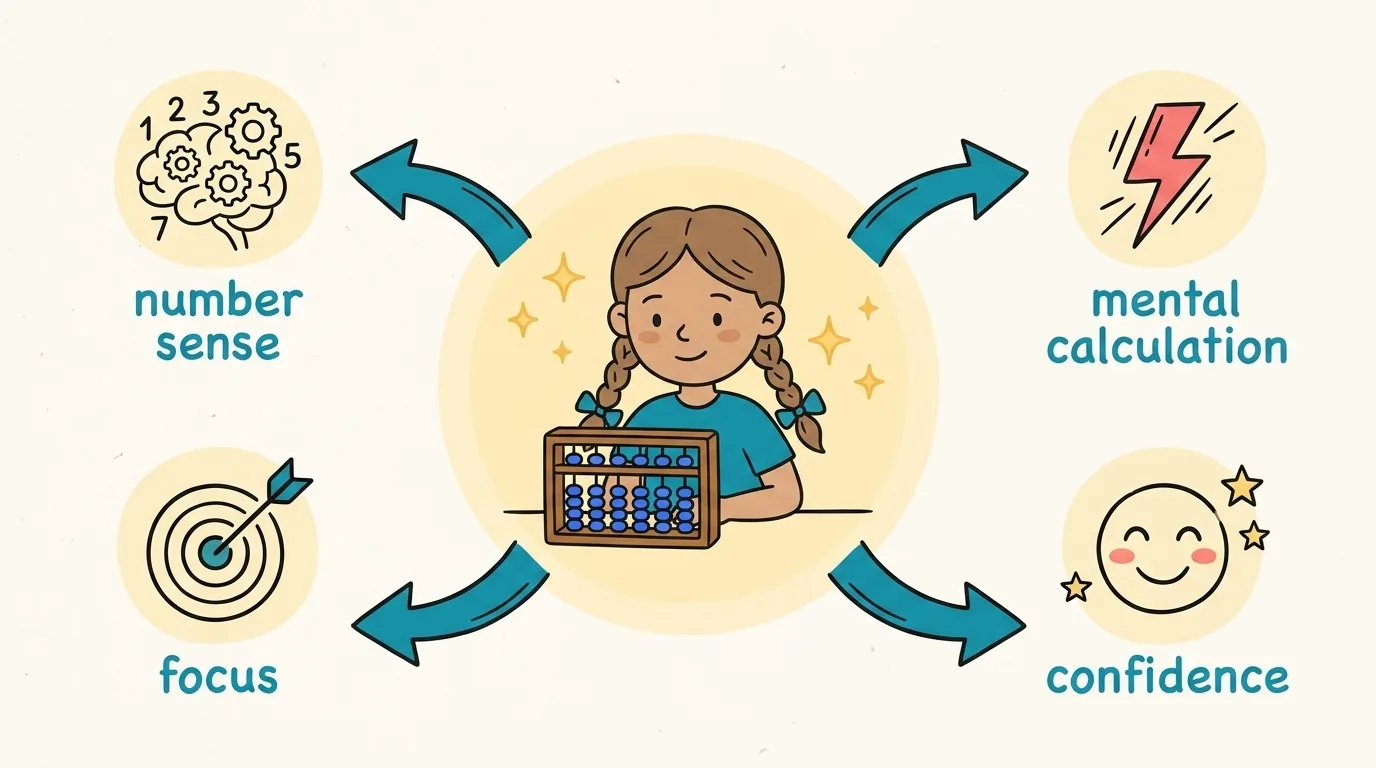
The memes are laughing at a symptom of poor teaching, not at abacus itself. Taught properly, abacus is quiet, mental, and genuinely useful. The children in the videos are doing real maths. They were just never shown how to do it without a crutch.
If you want to see calm mental calculation without the theatrics, the best thing is to watch a lesson. You can apply for a free demo class, or read our honest look at what abacus really does and the myths to ignore.
Frequently asked questions
Are abacus kids in the memes actually doing maths?
Yes. They are picturing an abacus in their mind and moving its beads to calculate, a real skill called anzan. The hand movements are them operating that imagined abacus, not random flapping.
Is finger abacus a real thing?
Finger counting is real and even has proper names like Chisanbop or finger math, but it is not the abacus. Calling it “finger abacus” is a misleading label. The abacus is a bead tool with its own techniques, and real abacus maths means imagining that tool, not counting on your fingers.
Why do abacus children wave their hands in the air?
Usually because they were taught the entire first level on the physical abacus and only asked to calculate mentally later. With no early mental practice, they recreate the tool with their hands as a crutch. Teaching mental maths from the start avoids it.
Can a child do abacus without the hand movements?
Yes. When mental calculation is built from the first lessons rather than bolted on later, children learn to picture the abacus and answer without swinging their hands at all.