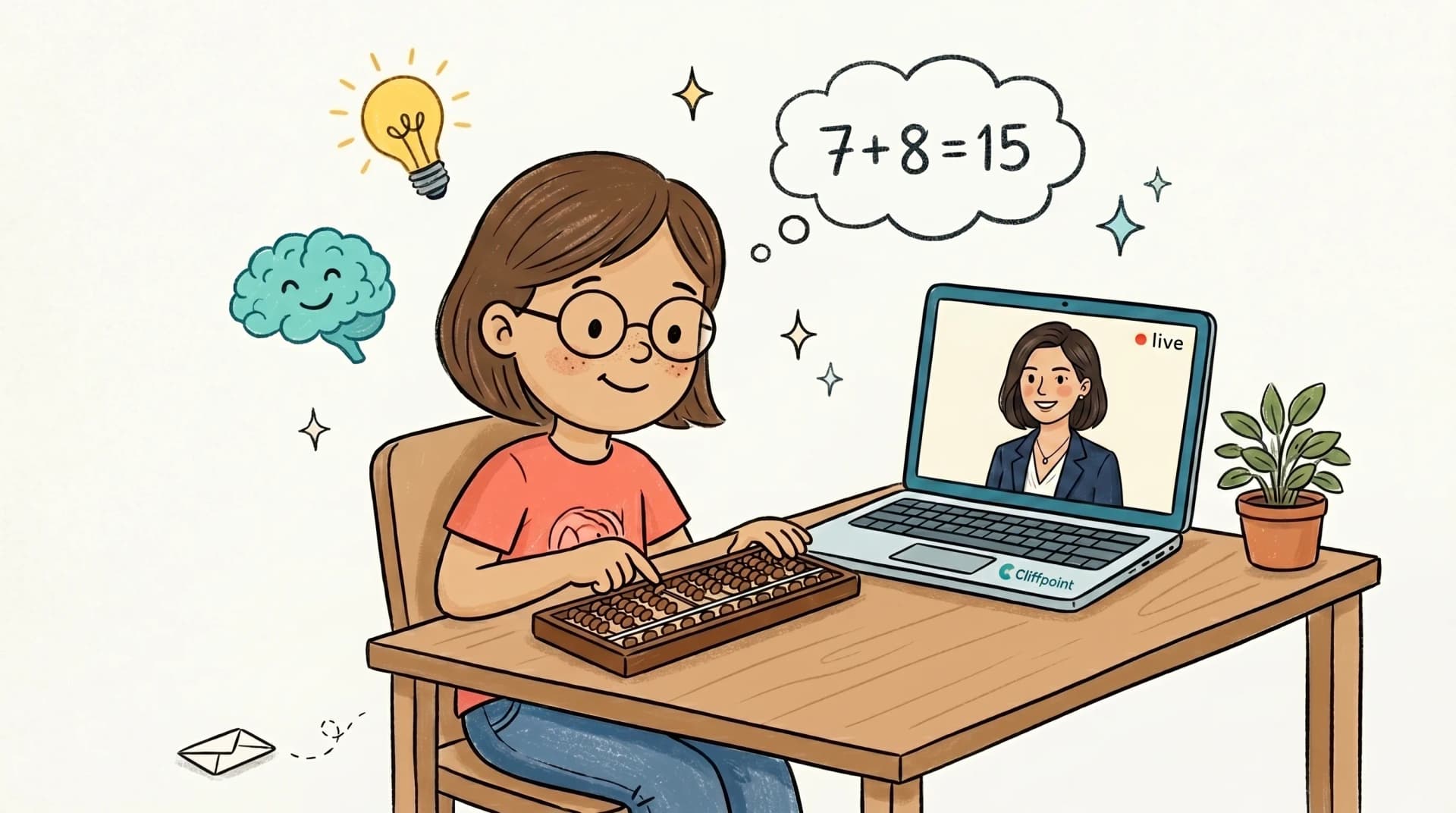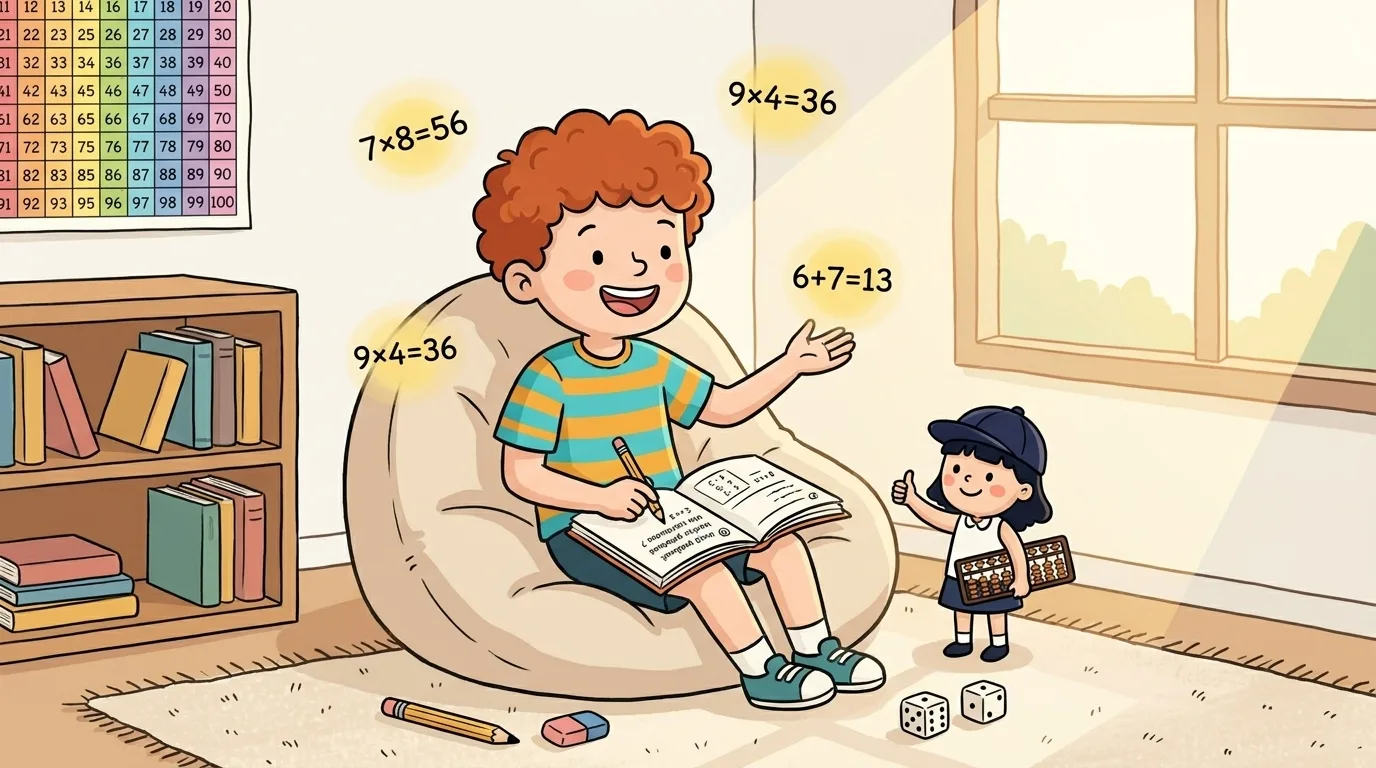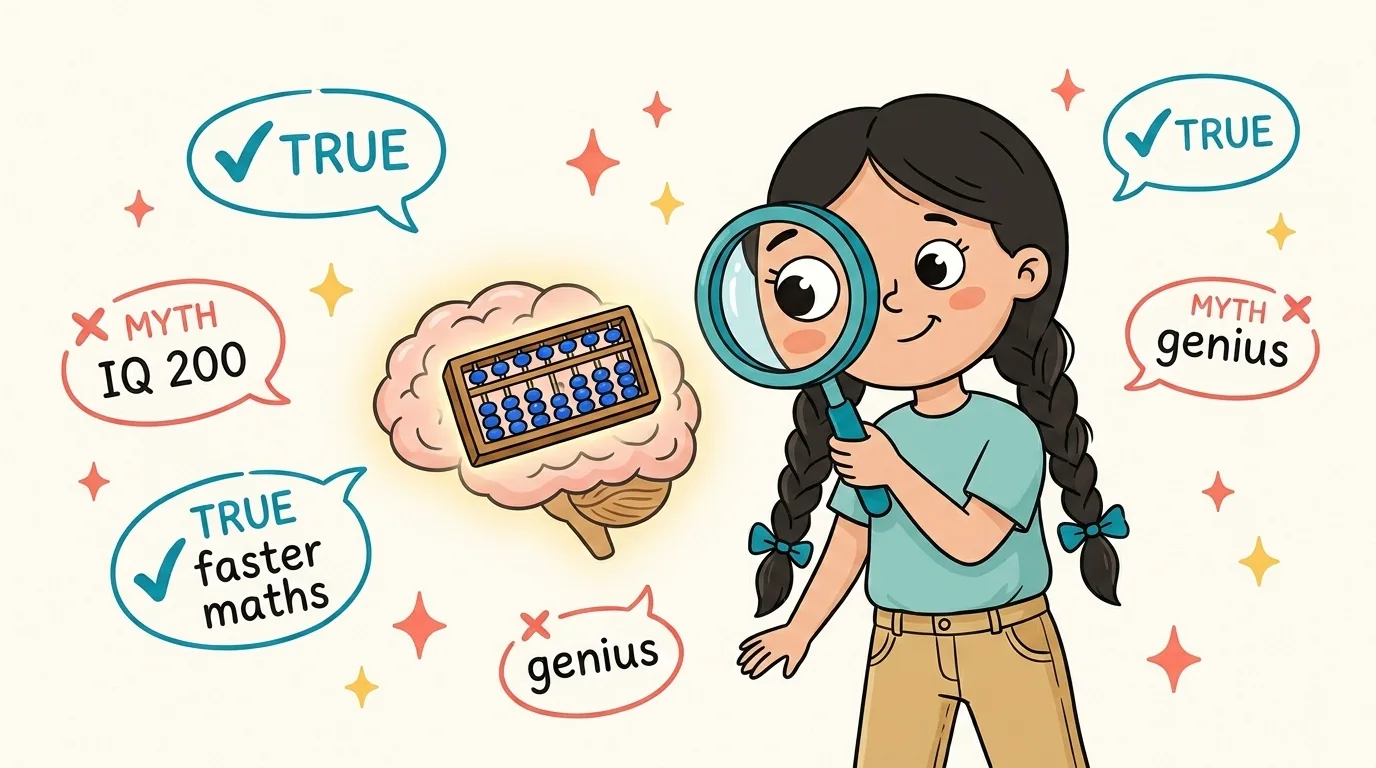
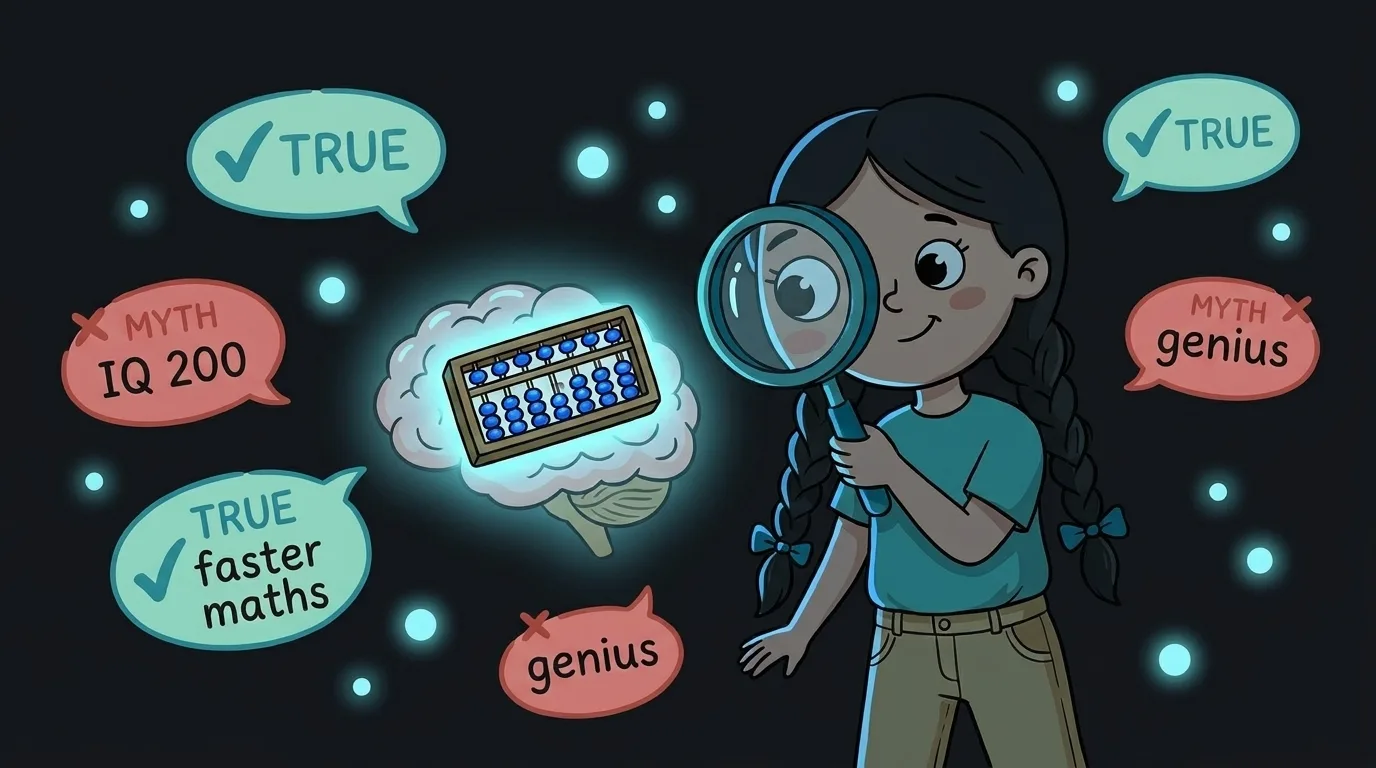
Search for abacus online and you will find two wildly different stories. In one, it is a miracle that turns ordinary children into genius calculators with photographic memories. In the other, it is a pointless party trick where kids wave their hands in the air for no reason. Both stories are wrong. Here is what the actual research says, so you can decide with clear eyes.
Abacus has an image problem, and it is being attacked from two opposite directions at once.
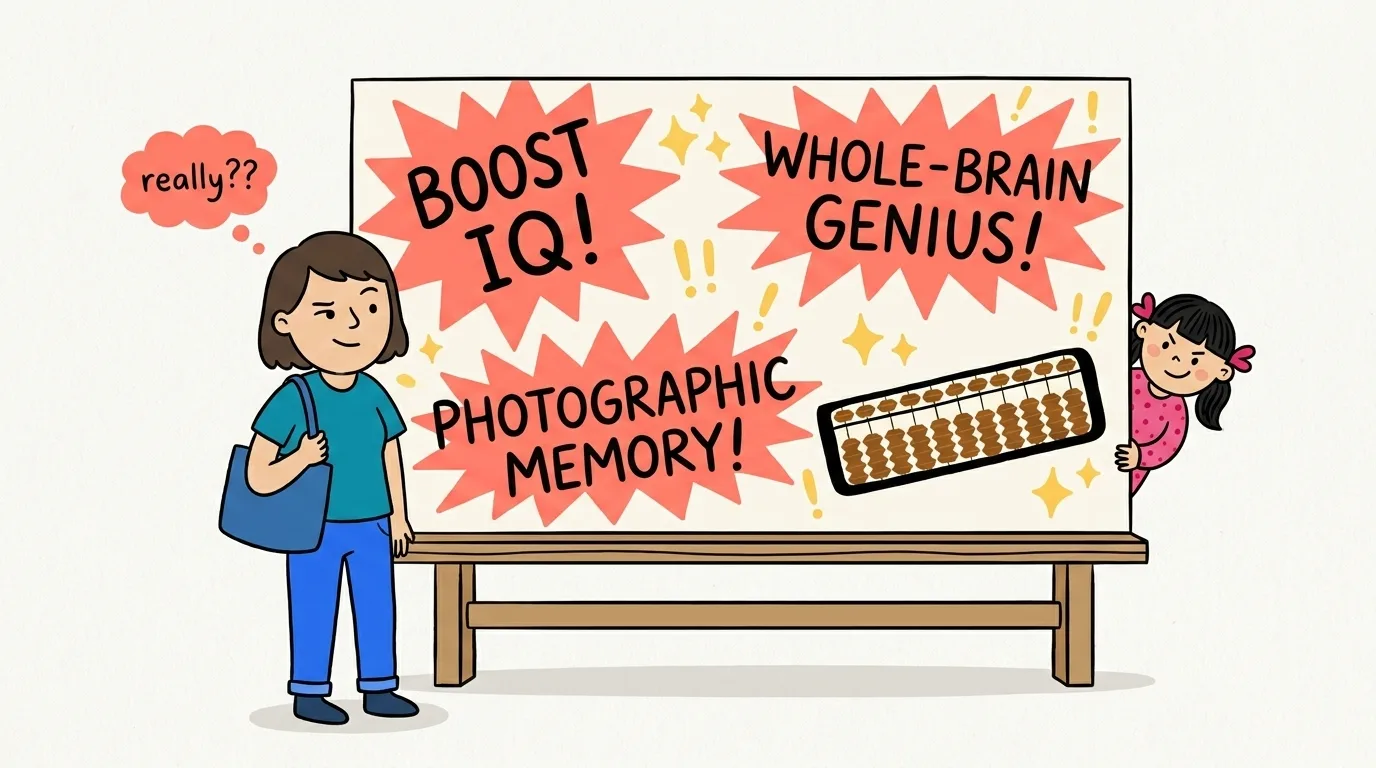
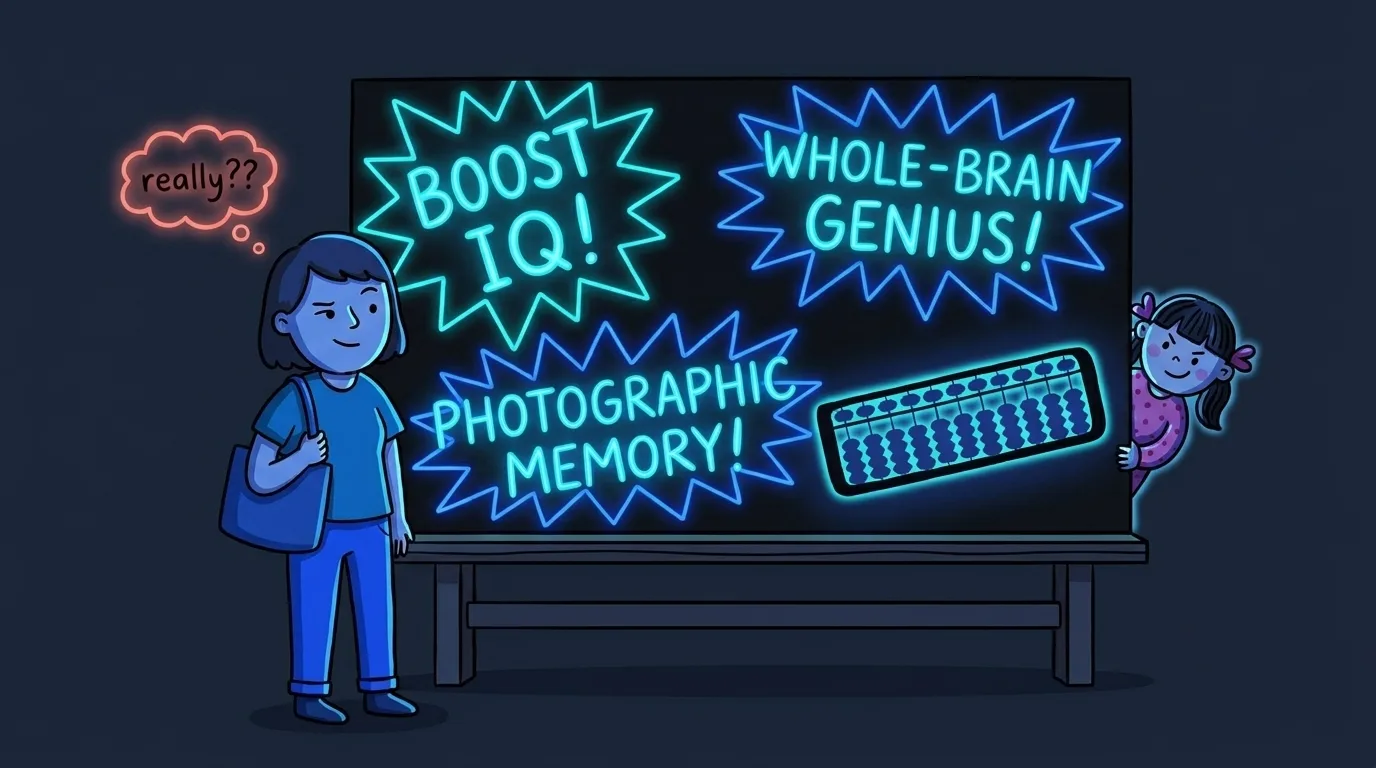
On one side, a lot of marketing sells it as a shortcut to genius: claims that it boosts your child’s IQ, unlocks the right brain, builds a photographic memory, and makes them brilliant at every subject. On the other side, especially in India, there is a wave of ridicule: videos of children flicking their fingers in the air, mocked as a useless circus trick that has nothing to do with real maths.
The honest answer sits in neither camp. Abacus is a real, research-backed skill with genuine benefits, and it is also heavily oversold with claims that simply are not true. Here is how to tell the two apart.
What the abacus genuinely does
Start with the good news, because it is real and it is backed by a three-year randomised controlled trial run in ordinary classrooms (Barner and colleagues, 2016).
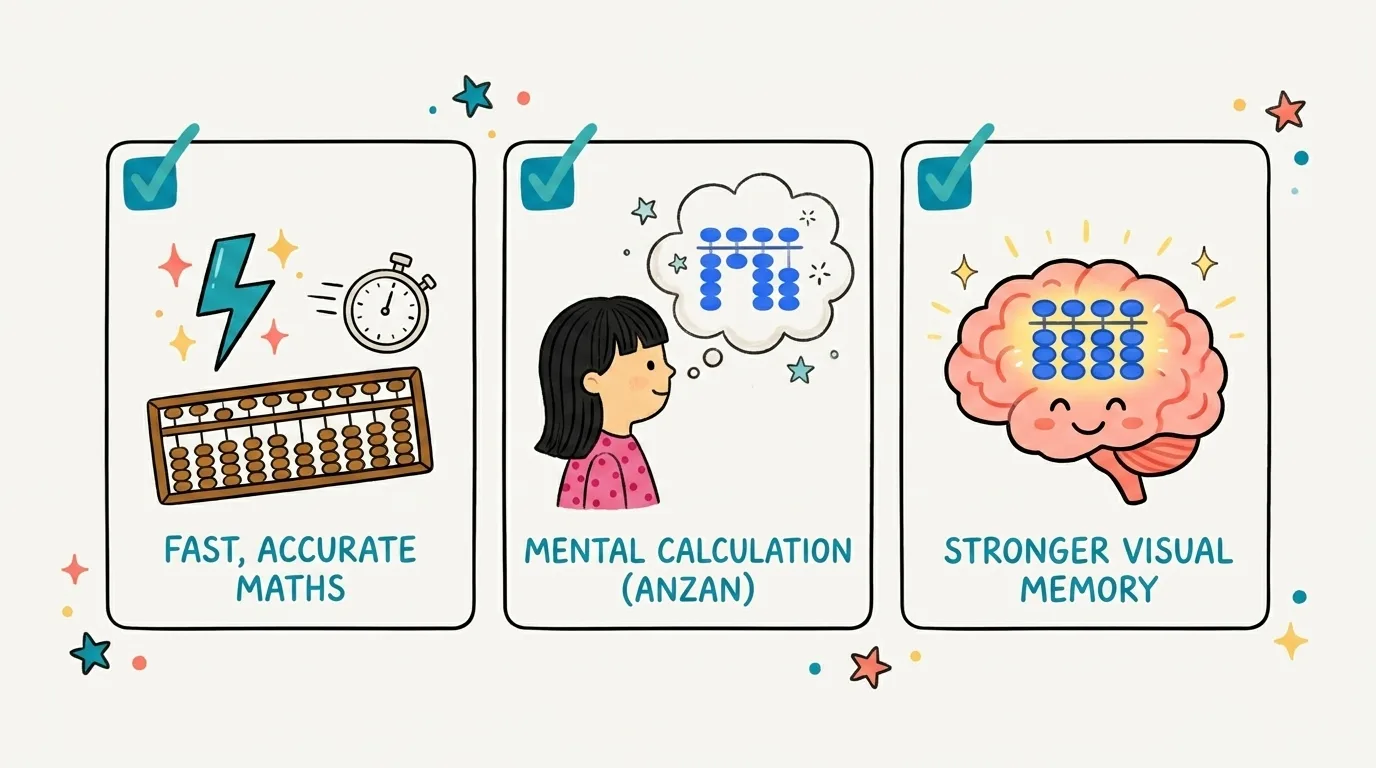
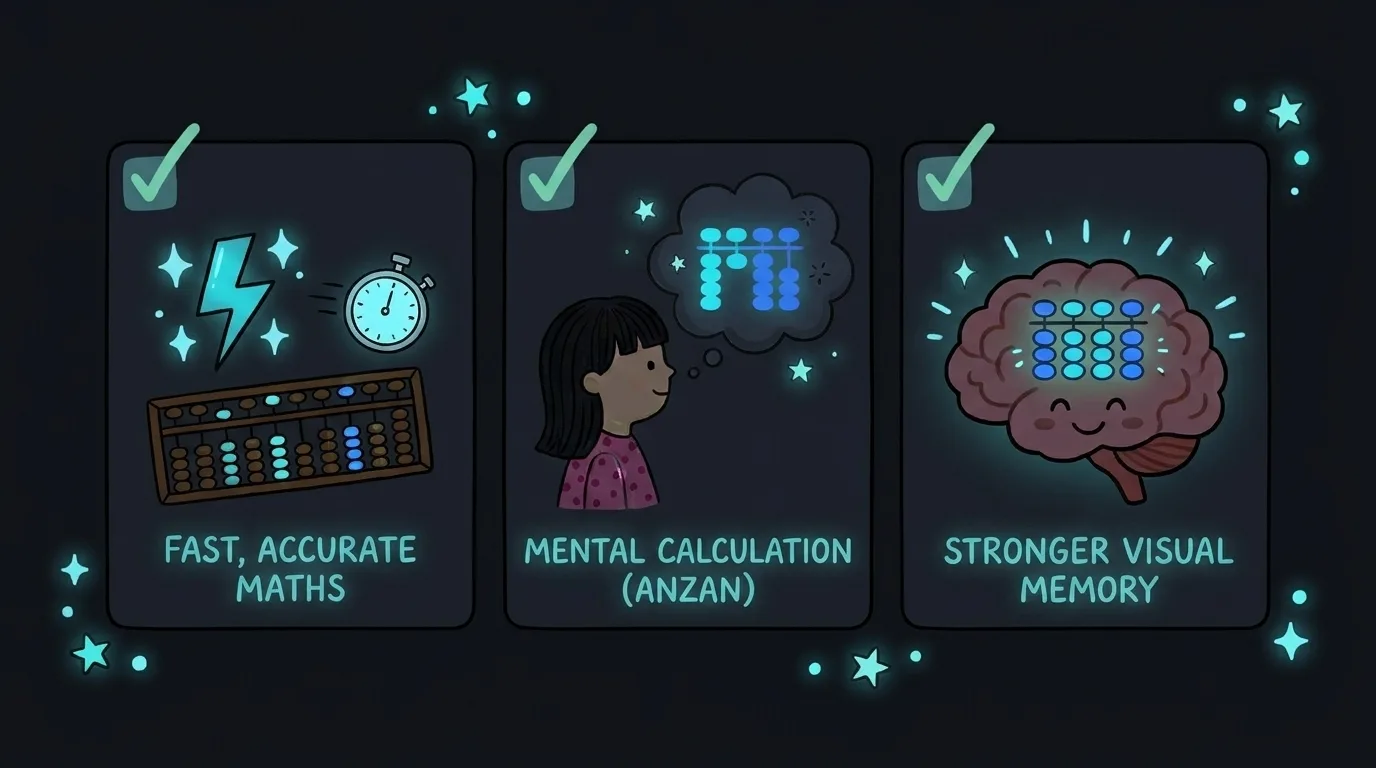
- It makes children fast and accurate at arithmetic. This is the core, well-evidenced benefit. Trained children calculate quickly and confidently, and the gain holds up in controlled research.
- It strengthens visual working memory. Holding and moving an imagined abacus in the mind exercises the brain’s ability to store and manipulate visual information. How far that carries beyond arithmetic is not settled.
- It builds real mental calculation (anzan). With practice, a child pictures the beads and calculates in their head, with no physical tool. This is a genuine skill, not a gimmick.
You can see the mental picture being built on our free virtual abacus. None of these benefits require believing any of the myths below.
Why do abacus kids wave their hands in the air?
This is the part everyone laughs at, and it is actually the most misunderstood. Those finger movements are not a performance, and they are not nothing. Here is what is really happening.
When a child calculates without a physical abacus, they are operating an imaginary one in their mind. The hand movements trace the beads they are picturing. Researchers who studied this found the gestures are tied directly to the calculation: they get bigger as the problems get harder, which is not what you would expect from random fidgeting.
But here is the twist that both the fans and the critics miss. Studies found it is the planningof the movement that helps the child, not the visible waving itself. When researchers simply held children’s hands still, or even blindfolded them, it barely affected their answers. The hands are the outward sign of an internal skill, not the magic itself.
And it is a stage children grow out of. Beginners cannot do it at all. Intermediate learners genuinely benefit from the gestures. The most advanced children have internalised the whole thing and calculate perfectly still, hands flat on the desk. So the truth is this: the hand movements are a real window into a real mental skill, and a scaffold the child eventually leaves behind. The goal was never the hand-waving. It was the calculation. We answer the memes, and the “finger abacus” myth, in our look at abacus memes and misinformation.
The myths: what abacus does NOT do
Now the claims to ignore. Each of these is common in abacus advertising, and each is contradicted by the evidence.
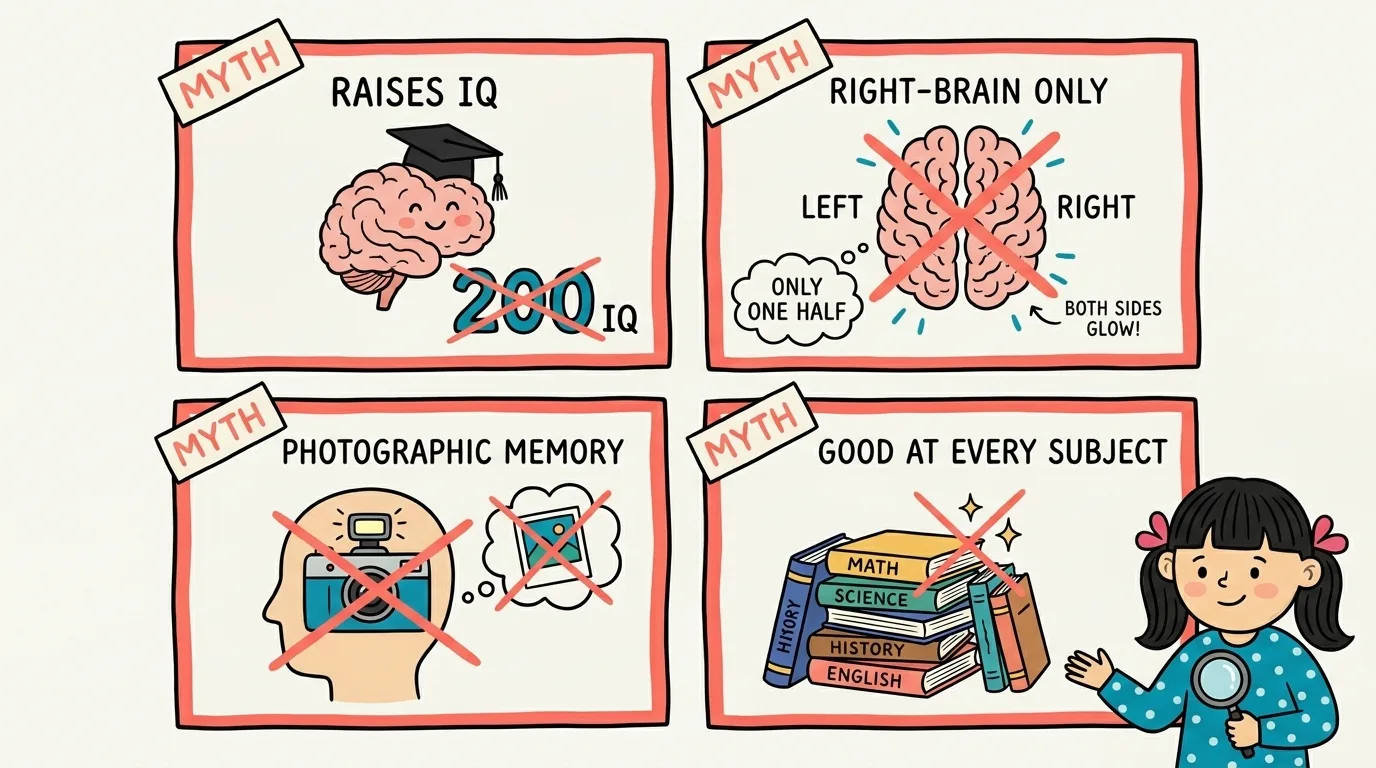
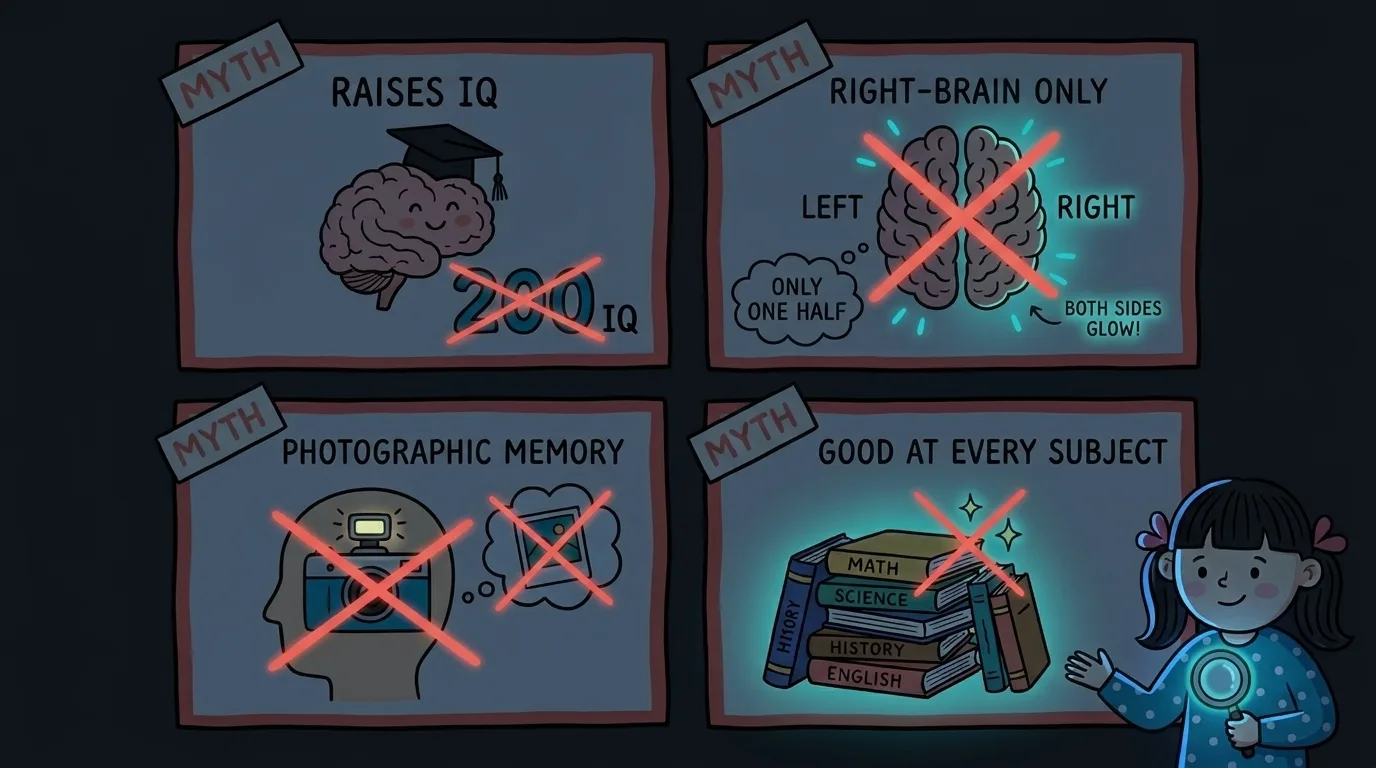
- Myth: it raises your child’s IQ. A three-year randomised trial (Barner and colleagues, 2016) found no improvement in general intelligence tests. Abacus makes them better at calculating, not measurably smarter overall.
- Myth: it develops the “right brain” or the “whole brain.” Brain imaging shows mental abacus uses a network across both sides of the brain, not one special hemisphere. The whole left-brain versus right-brain idea is itself pop-science that researchers abandoned long ago.
- Myth: it gives children a photographic memory. Reliable photographic memory in the way it is advertised is not a real, documented ability in the first place, so no class can install one.
- Myth: it makes children better at every subject. The benefits stay close to what is trained, mainly arithmetic and visual memory. They do not reliably spill over into reading, general schoolwork, or overall ability. In fact, the same 2016 trial found the children who gained most were those whose visuospatial working memory was already strong, rather than abacus creating that strength from nothing.
Where the myths come from
The hype exists because “makes your child a genius” sells better than “makes your child quick and confident with numbers.” A lot of programmes lean on impressive sounding brain-science language that does not hold up, and some of it even finds its way into children’s workbooks. Once one programme makes a big claim, the next has to match it, and the promises drift further from reality.
The mockery is the natural backlash. When something is oversold as magic and then a child is filmed waving their hands, it is easy to swing to the opposite extreme and call the whole thing fake. Both the hype and the ridicule miss the same quiet truth in the middle.
So is abacus worth it?
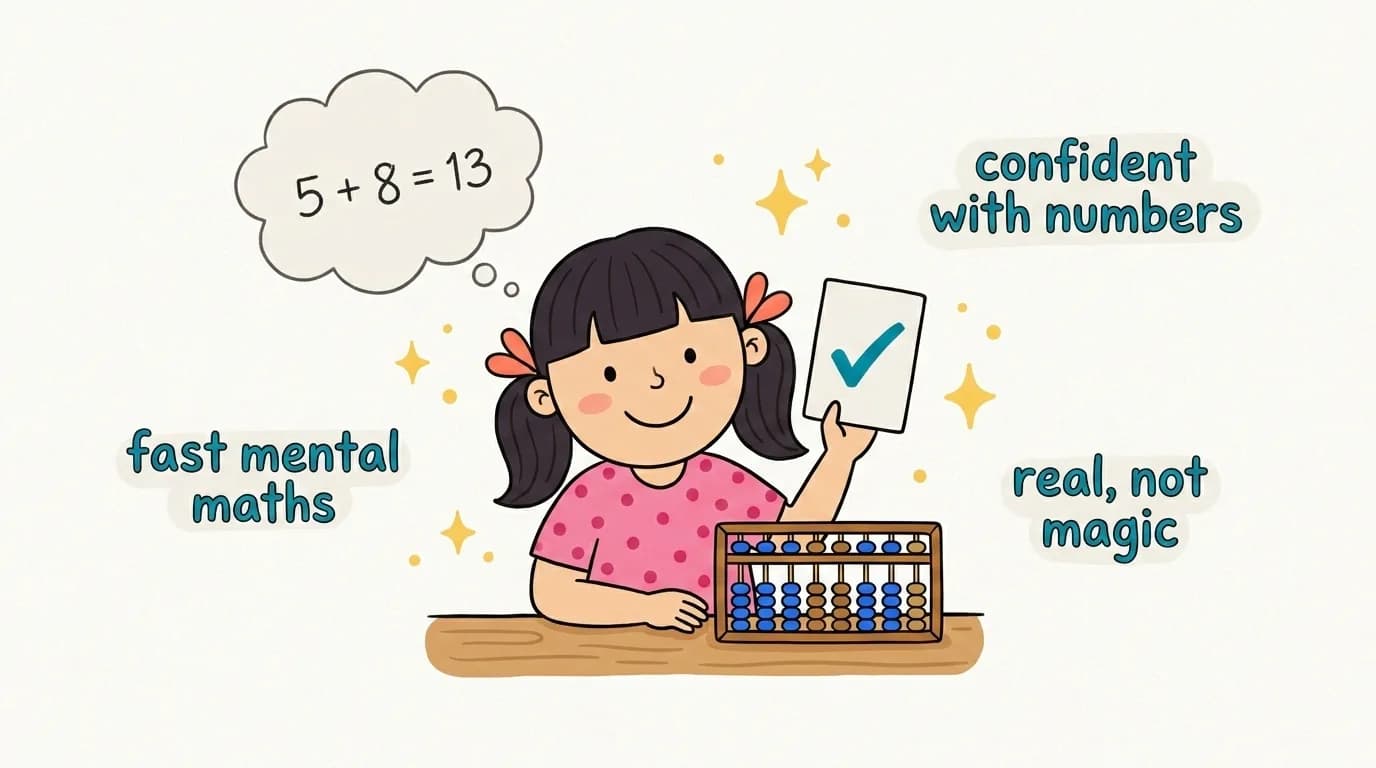
Yes, as long as you want it for what it actually delivers: genuinely fast, confident mental arithmetic, stronger visual working memory, and a child who is comfortable and unafraid with numbers. Those are real, lasting, and worth having.
Just do not buy it as a genius pill or a brain-hemisphere upgrade, and do not dismiss it because of a meme. We teach abacus for exactly what the evidence supports, and nothing it does not. The best way to judge it is to watch your own child try. You can apply for a free demo class, or read our honest guide to whether abacus is still useful in a calculator age.
Frequently asked questions
Does abacus really make children smarter or increase IQ?
Not in the way it is often advertised. Studies training children for years found no rise in general intelligence scores. Abacus reliably improves arithmetic speed and visual working memory, but it does not raise IQ or make a child better at every subject.
Why do abacus learners wave their hands in the air?
They are tracing the beads of an imaginary abacus as they calculate. The gestures are tied to the maths and grow with the difficulty of the problem. Research suggests it is the planning of the movement that helps, not the visible waving, and advanced learners stop moving their hands altogether.
Is the right-brain or whole-brain claim about abacus true?
No. Brain imaging shows mental abacus uses a network spread across both sides of the brain, not a single hemisphere. The left-brain versus right-brain personality idea is pop-science, not real neuroscience.
Is abacus a waste of time then?
No. It is a waste of money only if you pay for the genius claims. For fast, confident mental arithmetic, stronger visual memory, and number confidence, it works well and the benefits last.
If you want to see what honest abacus teaching looks like, our online abacus classes in Australia, the USA, the UK, and the UAE all start with a free demo class and none of the genius claims.