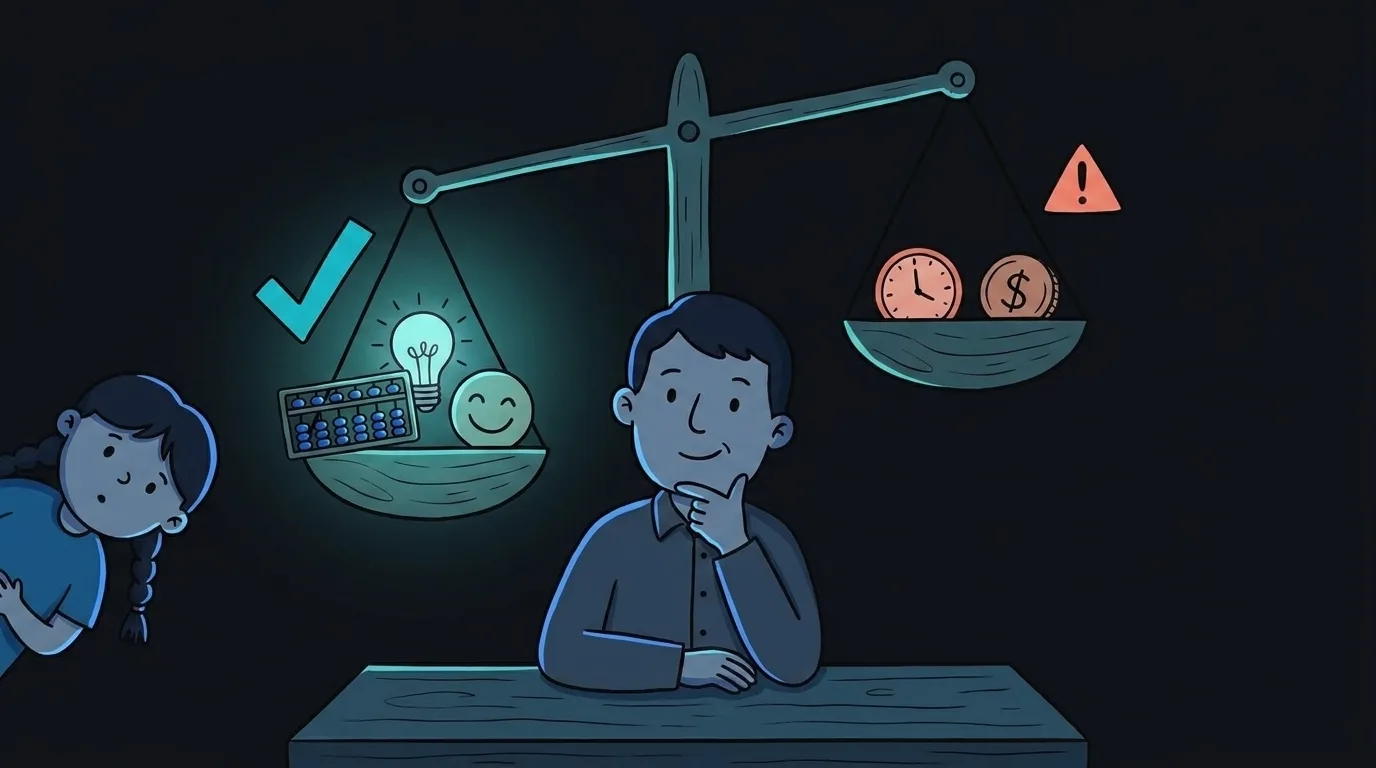
Most parents who search for an alternative to Kumon are not unhappy with maths itself. They want to know whether something else would suit their child better: more live teaching, less paperwork at the kitchen table, or a different kind of skill. Here is a fair comparison with one of those alternatives, the abacus.
First, what Kumon is
Kumon is both a company and a method. According to Kumon’s own history, it began in 1954, when Toru Kumon, a high school maths teacher in Japan, started writing worksheets for his son, and the company was established in 1958. Kumon centres now run its programme in many countries, in maths and in reading.
The method is built on self-learning. A child works through worksheets matched to their level, completes a short set at home every day (Kumon UK suggests about 30 minutes per subject), and visits the study centre once or twice a week, where an instructor checks the work and sets the next step. A child moves on once they can complete a level accurately and at a good pace.
What abacus is
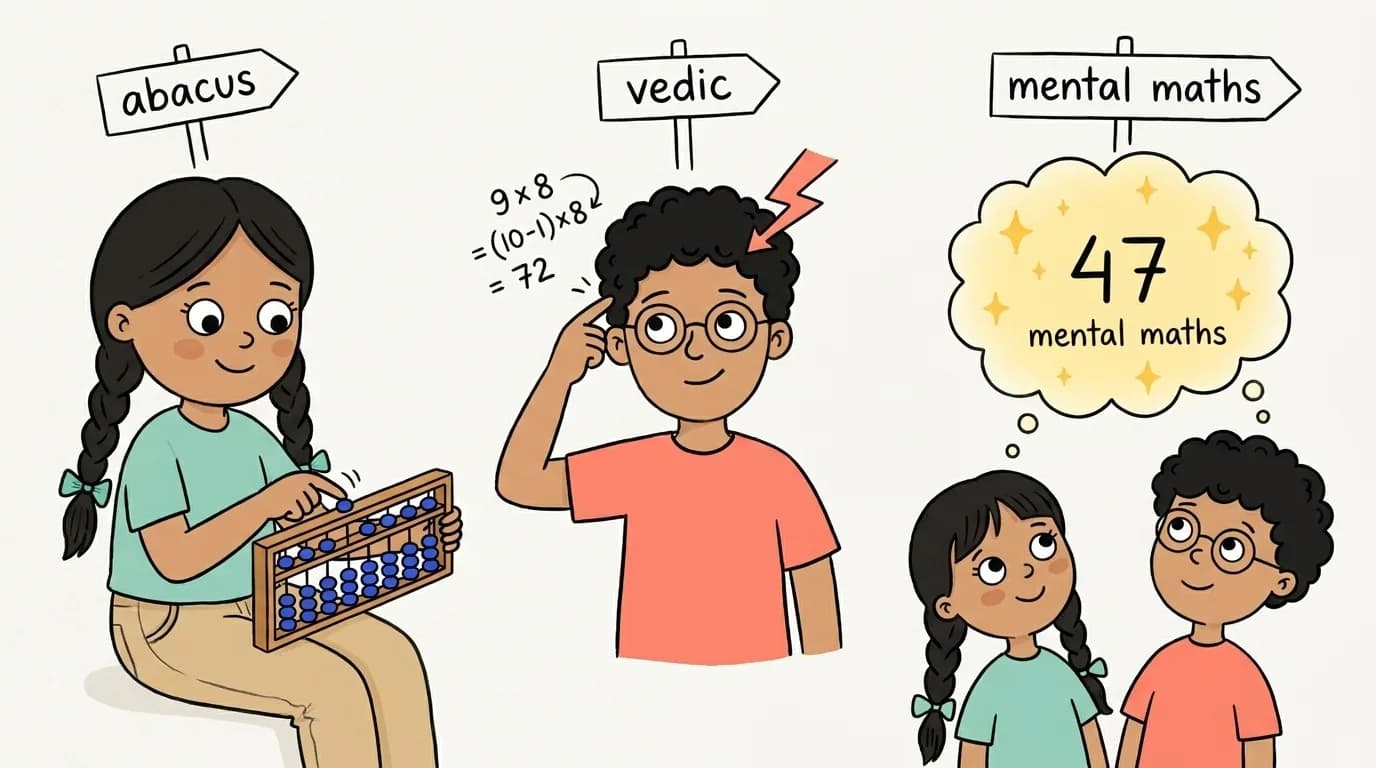
Abacus is a method, not a brand. Children learn arithmetic on a soroban, the Japanese abacus, where every number is a position of beads. With practice, the beads move into the mind: the child pictures the soroban and calculates on that mental image. Teachers call this the mental abacus. Many schools teach it; this comparison uses how Cliffpoint teaches it, because those are the details we can stand behind.
Side by side
- Who does the teaching. Kumon: the child teaches themselves from the worksheets, with an instructor checking and guiding. Abacus at Cliffpoint: an instructor teaches a live class online, in a batch of at most ten children.
- How a child practises. Kumon: daily paper worksheets at home. Abacus: on the beads in class, then short practice between classes. The free online soroban and its timed practice sets are there for that.
- What it builds best. Kumon: fluent written calculation and a steady independent study habit, in maths and reading. Abacus: fast, accurate mental arithmetic, by picturing numbers rather than writing them.
- Subjects. Kumon covers maths and reading. Abacus is arithmetic only: it does not teach geometry, fractions in the school sense, or reading.
- How you see progress. Kumon: worksheet levels, and the instructor at the centre. Cliffpoint: a parent portal with attendance, a note from the instructor after most classes, a timed test for each level with every answer, and a certificate when a level is complete.
Which child each suits
Kumon tends to suit a child who is comfortable working alone with paper, who benefits from a fixed daily routine, and whose family wants reading support as well as maths.
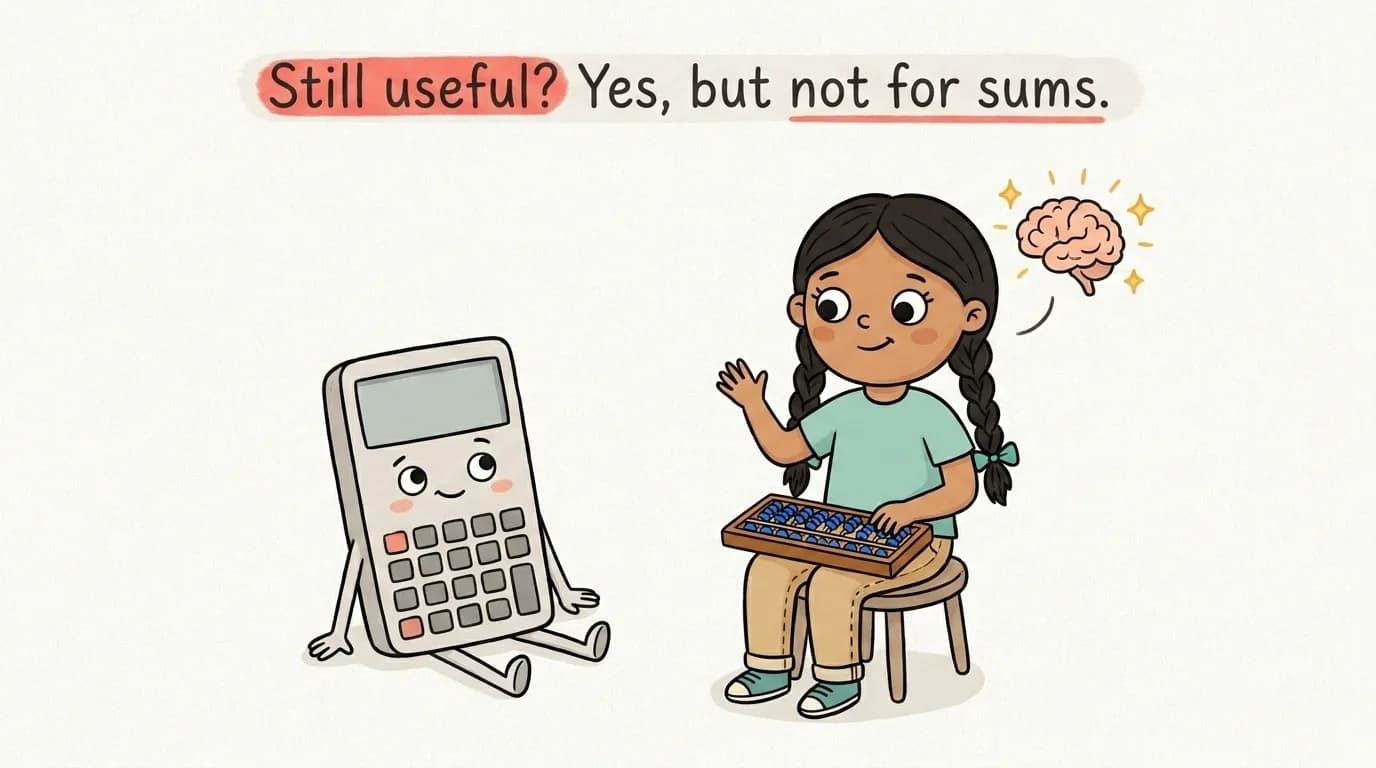
Abacus tends to suit a child who learns by doing and seeing, who enjoys a live class with other children, and whose family wants mental arithmetic in particular: working out sums in the head, quickly and correctly, without paper or a calculator.
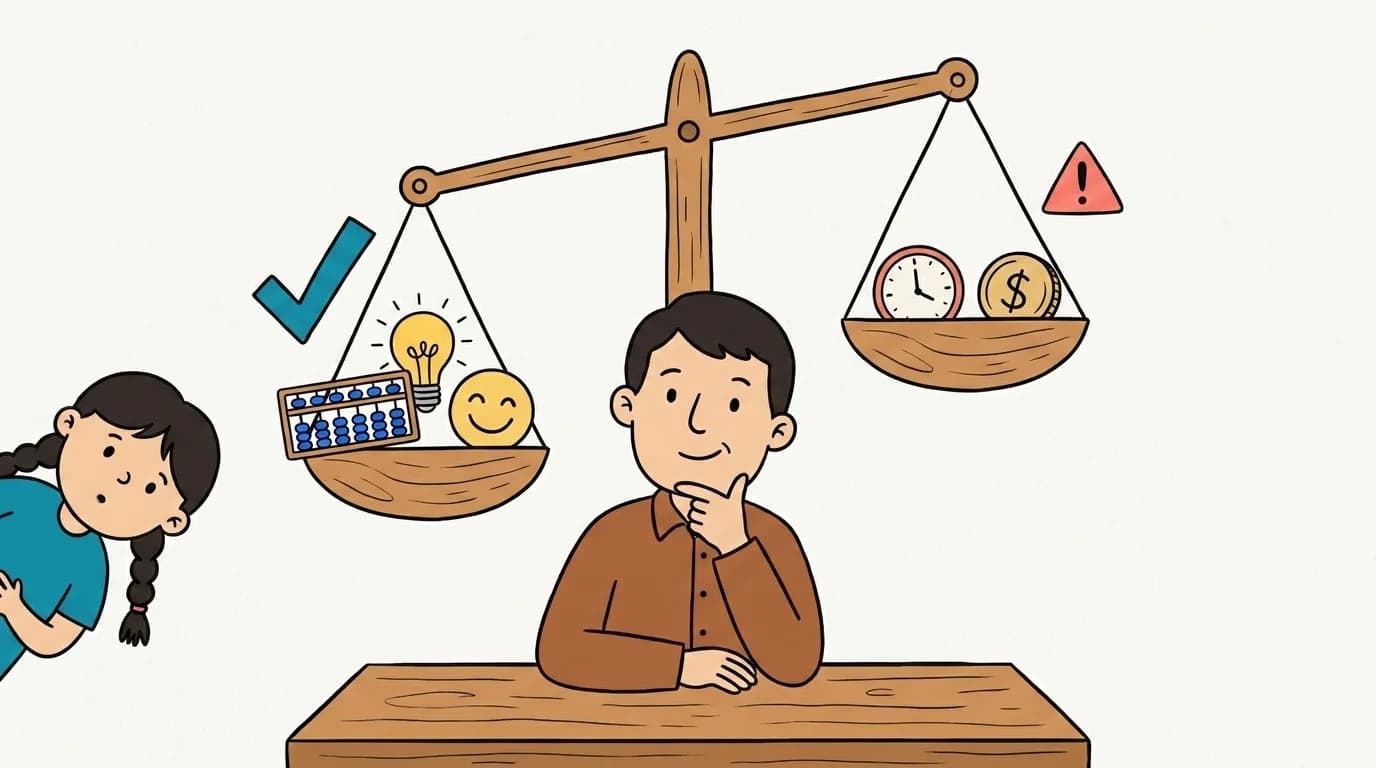
Neither replaces school maths. A child doing either will still need the school curriculum for everything beyond arithmetic. Some families do both: written practice from one, mental arithmetic from the other. If you try that, watch the total load; a tired child learns less from both.
What the research says about abacus
The most careful study is a three-year randomised controlled trial in ordinary classrooms (Barner and colleagues, 2016). Children taught the mental abacus improved in arithmetic compared with children given extra standard maths, with the biggest gains among children who started with stronger visual-spatial memory. It did not raise general intelligence. Abacus makes children better at calculating; claims that it turns any child into a genius go beyond the evidence.
Other kinds of alternative
Abacus is one option among several. A one-to-one tutor follows your child’s school curriculum closely. Online maths programmes and apps give practice at home on a screen. Group enrichment classes stretch children who are already ahead. The right choice depends on what you want the next year to change: school grades, confidence, written fluency, or mental arithmetic.
Try it before you decide
You do not need to commit to anything to see whether abacus suits your child. The free starter course takes about five minutes and ends with a printable certificate. The Level 1 practice sets show how your child takes to the beads. And the free demo class is a live lesson with an instructor, which you watch from beside your child.
Questions parents ask
Is abacus better than Kumon?
Neither is better for every child. Kumon builds written fluency and an independent daily habit in maths and reading. Abacus builds mental arithmetic through live teaching. The better choice is the one that matches your child and what you want to change.
Can my child do Kumon and abacus at the same time?
Yes, some families do, since one builds written practice and the other mental arithmetic. Keep an eye on the total workload, because a tired child gets less from both.
Does abacus cover the school maths curriculum?
No. Abacus teaches arithmetic: adding, subtracting, multiplying and dividing, mentally and fast. It does not cover geometry, data or the other parts of school maths.