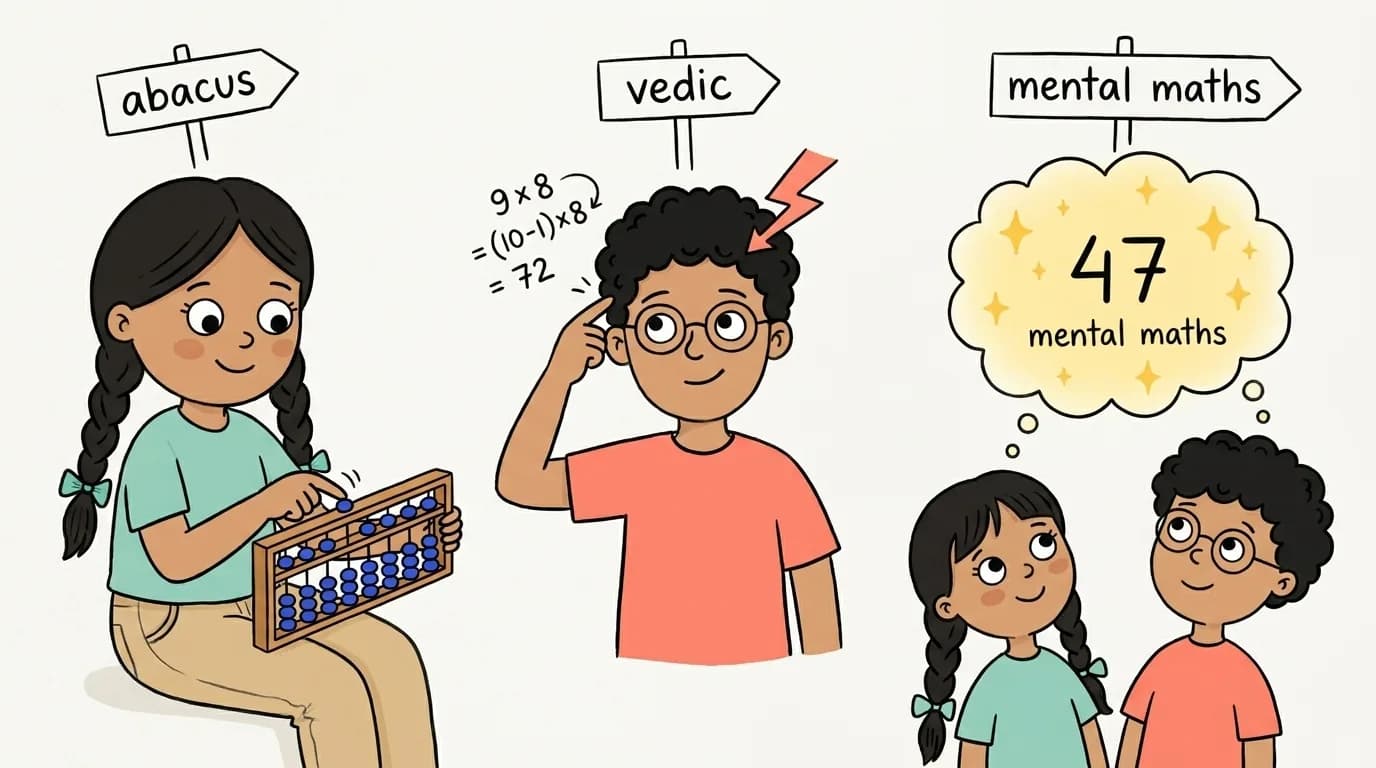
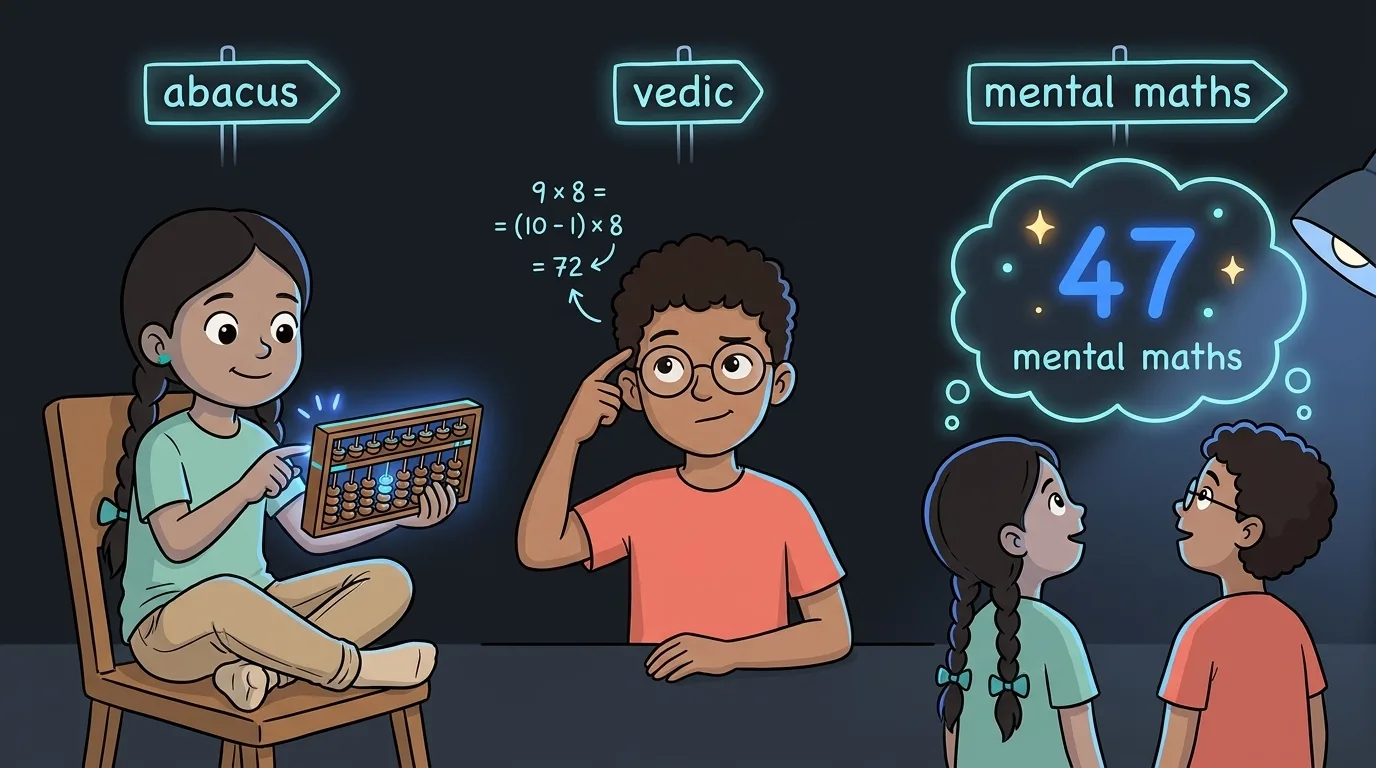
Abacus, Vedic maths, and mental maths get used as if they are three competing brands of the same thing. They are not. One is a goal and two are very different routes to it. Once you see how they fit together, choosing the right one for your child becomes easy.
If you have looked into maths enrichment for your child, you have probably met three terms thrown around as if they compete: abacus, Vedic maths, and mental maths. It is easy to assume you must pick one.
In truth, they are not three versions of the same thing. Mental maths is the goal. Abacus and Vedic maths are two very different routes to it. Here is the plain difference, and how to choose.
Mental maths is the goal, not a method
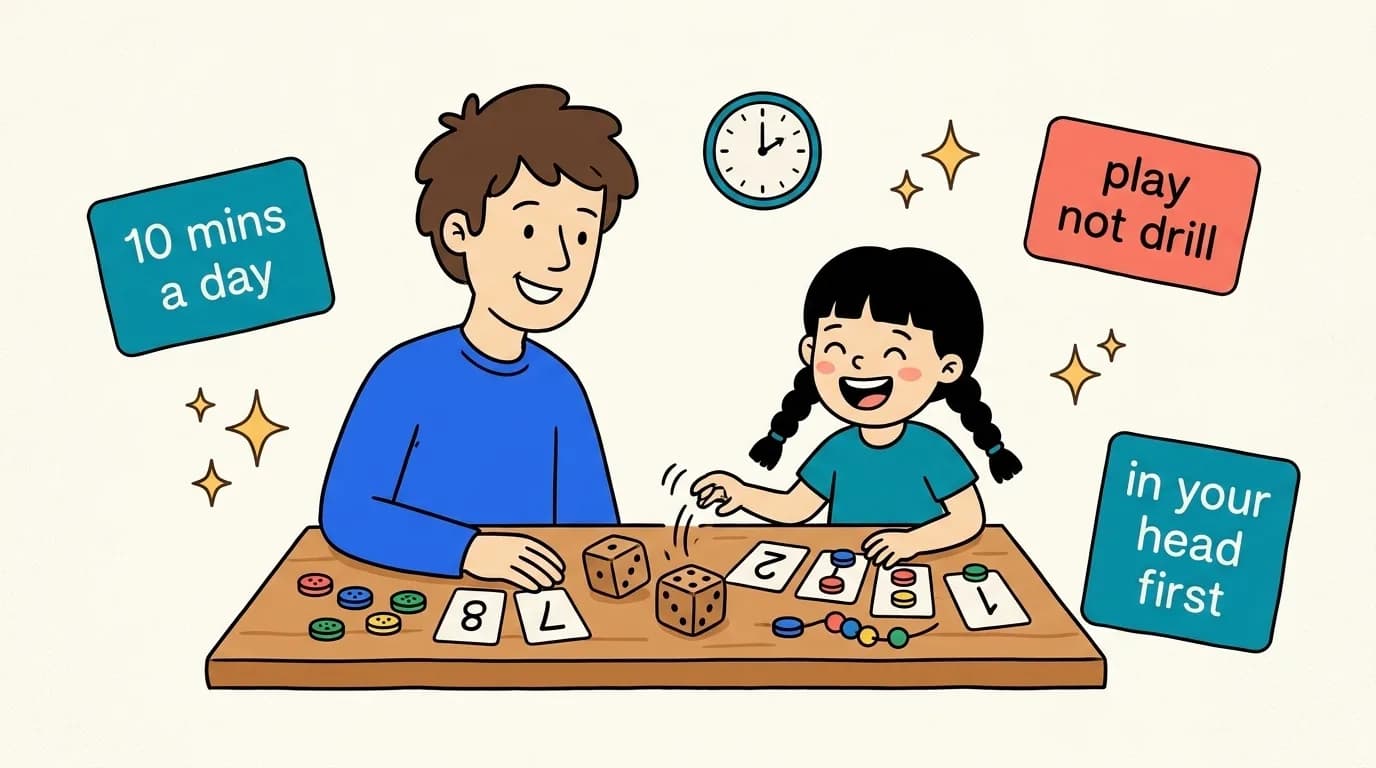
Mental maths simply means calculating in your head, quickly and accurately, without writing or a calculator. It is not a course or a technique. It is the outcome that both abacus and Vedic maths are trying to reach, by different paths.
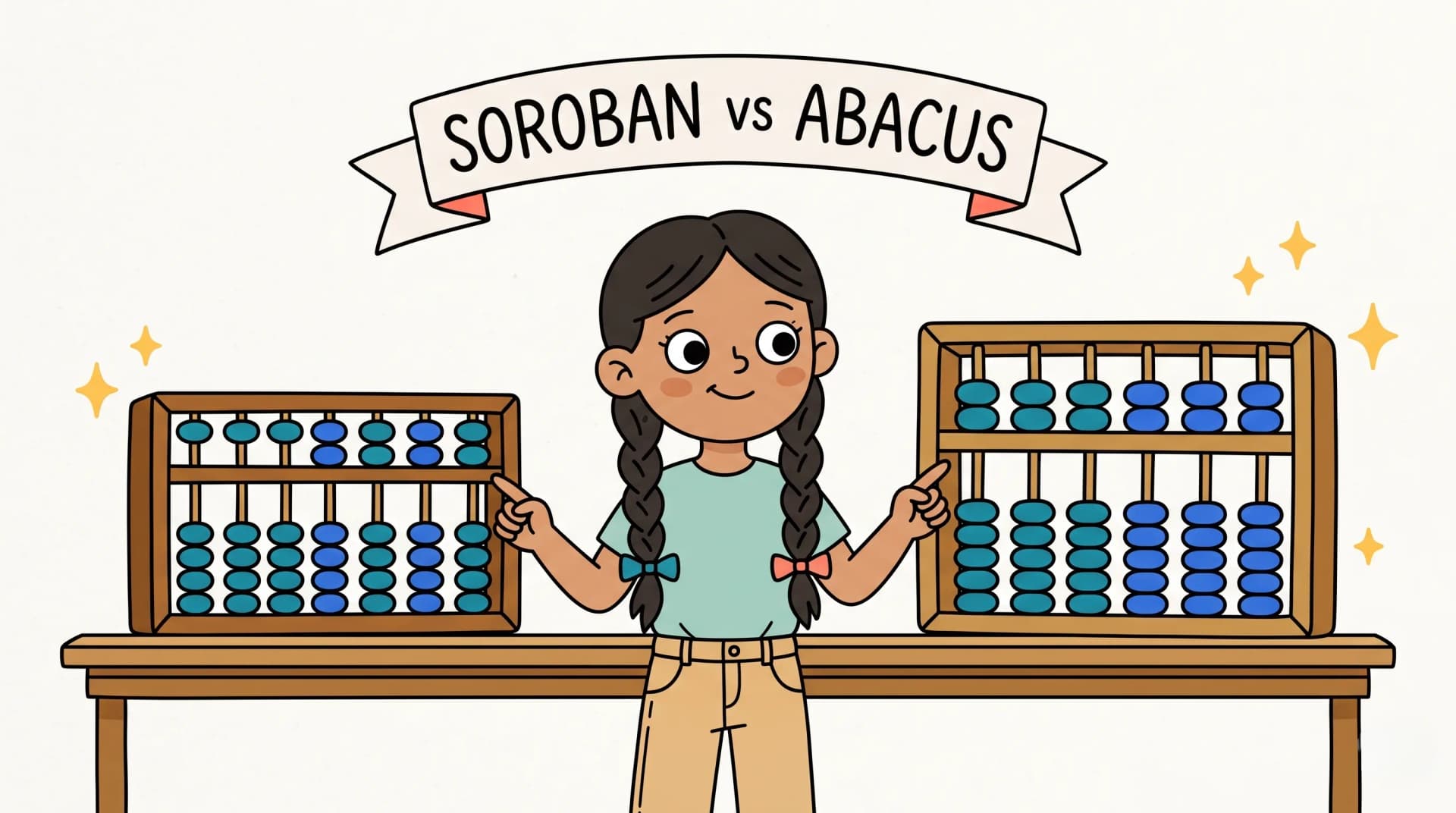
What abacus (the soroban) is
Abacus training starts with a physical tool, the Japanese soroban, and a set of bead techniques. Over time the child stops needing the tool and begins picturing the beads in their mind, a skill called anzan. The route is visual and physical, which is why it suits younger children so well. It builds a deep, lasting number sense from the ground up.
You can see exactly how it works on our free virtual abacus.
What Vedic maths is
Vedic maths is a collection of mental calculation shortcuts, often called sutras, set out by Bharati Krishna Tirtha in a book published in 1965. The name points at the Vedas, though historians have not found the methods in them. There is no tool. It teaches clever patterns that make specific calculations, like multiplying large numbers, much faster. Because it relies on already understanding numbers, it tends to suit older children and teens who want to speed up.
Abacus vs Vedic maths: which suits which child
- Younger children, around 6 to 10: abacus is usually the better start. It is visual, hands-on, and builds the number sense everything else stands on.
- Older children and teens, around 10 and up: Vedic maths can be a great fit, especially for those who already have solid number sense and want faster shortcuts.
- Foundation versus shortcuts: abacus builds the foundation, and Vedic maths adds speed tricks on top of one.
Can they work together?
Yes. They are complementary, not rivals. A common path is to build a strong foundation with the abacus when young, then add Vedic shortcuts later for extra speed. The abacus gives the deep understanding, and Vedic maths gives quick tools to apply on top of it.
For most young children, the abacus is the place to start. The simplest way to see why is to watch a lesson. You can apply for a free demo class, or read our complete guide to the abacus.
Frequently asked questions
Which is better, abacus or Vedic maths?
Neither is simply better. Abacus suits younger children and builds number sense from a physical tool. Vedic maths suits older children who already understand numbers and want faster shortcuts. Many children benefit from abacus first, then Vedic maths later.
What is the difference between abacus and mental maths?
Mental maths is the goal of calculating in your head. Abacus is a method that gets there by training a child to picture beads. So abacus is one route to strong mental maths.
What is Vedic maths?
Vedic maths is a set of mental calculation shortcuts, or sutras, from an Indian tradition. It uses no tool and teaches patterns that speed up specific sums, suiting older children and teens.
What age is best for abacus versus Vedic maths?
Abacus generally suits children from about six, while Vedic maths suits children from about ten who already have good number sense. They can be combined as a child grows.