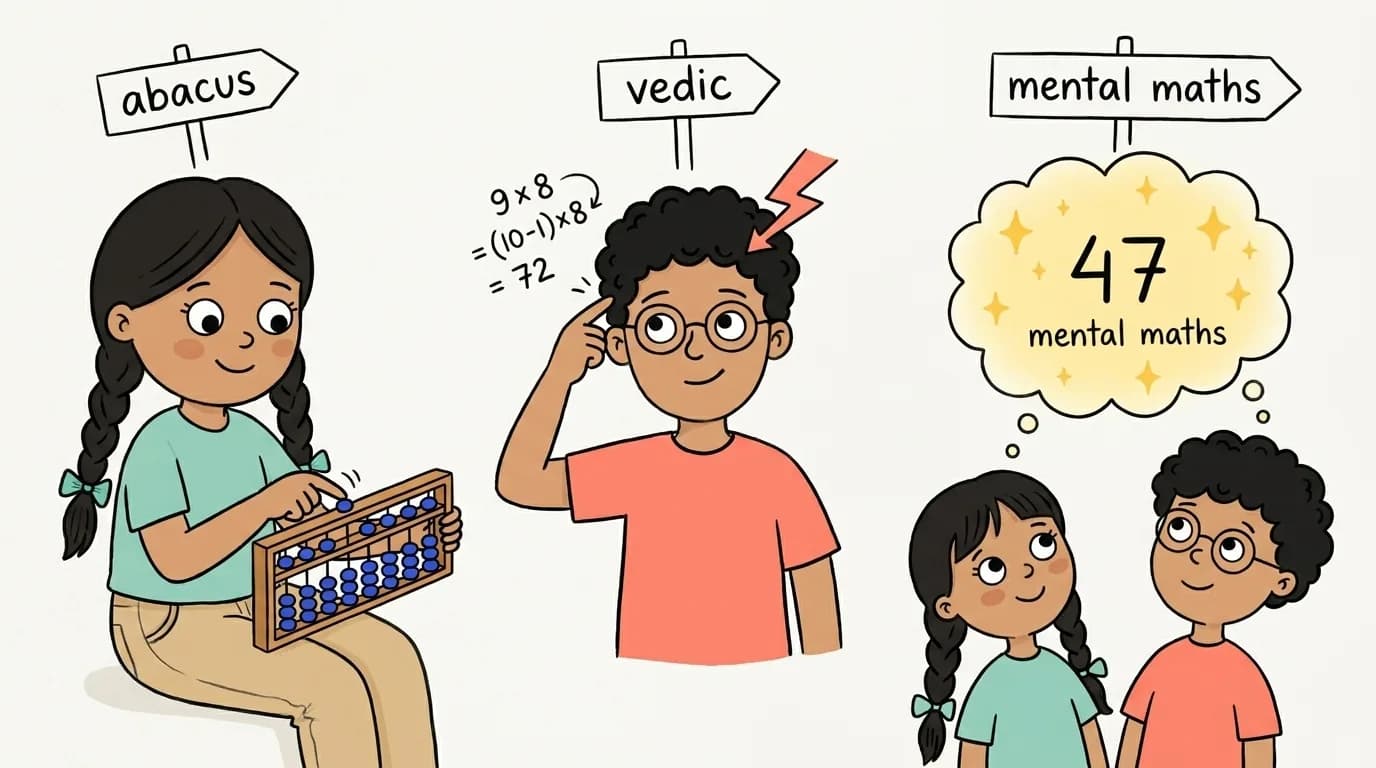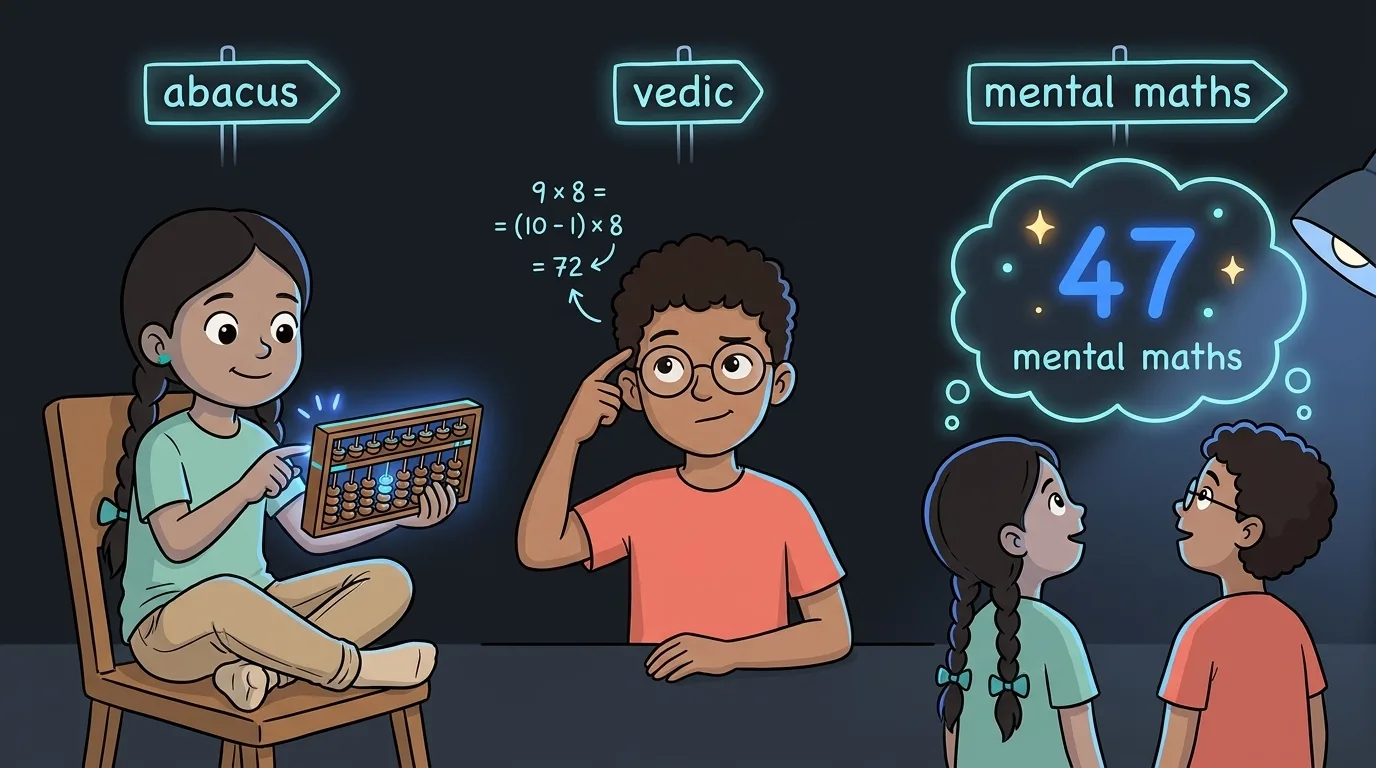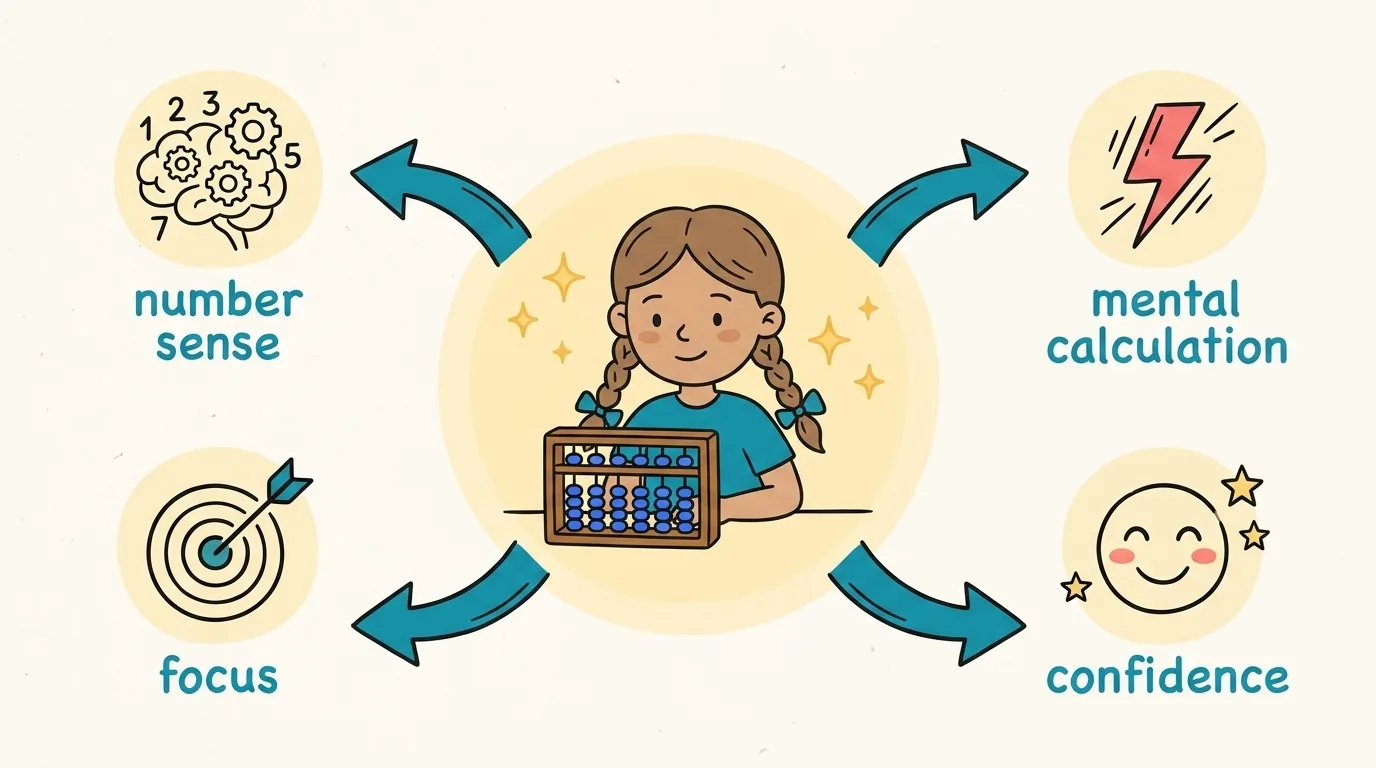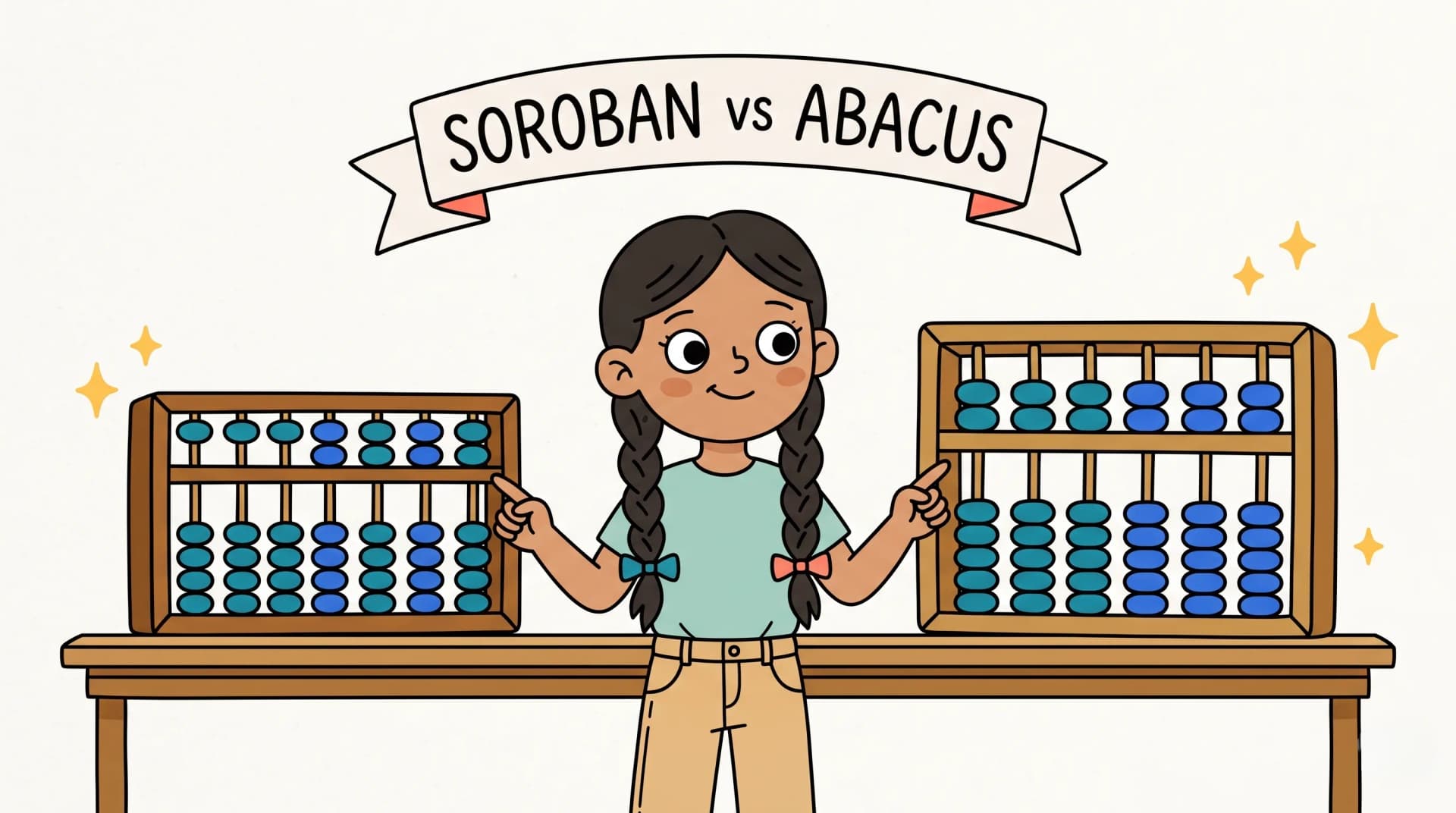
If you have started looking into abacus classes, you have probably seen the words soroban and abacus used as if they mean the same thing, with a suanpan thrown in to confuse things further. They are related but not identical. This short guide clears up the difference in plain English, and shows which one your child will actually learn.
If you have started researching abacus classes, you have probably seen the words “soroban” and “abacus” used as if they mean the same thing. Then someone mentions a “suanpan,” and it gets more confusing.
The short version is simple. An abacus is the whole family of bead counting tools. A soroban is one specific member of that family, the Japanese abacus. This guide explains the difference between the soroban and the other tools parents run into, and which one your child actually learns in class.
Is a soroban the same as an abacus?
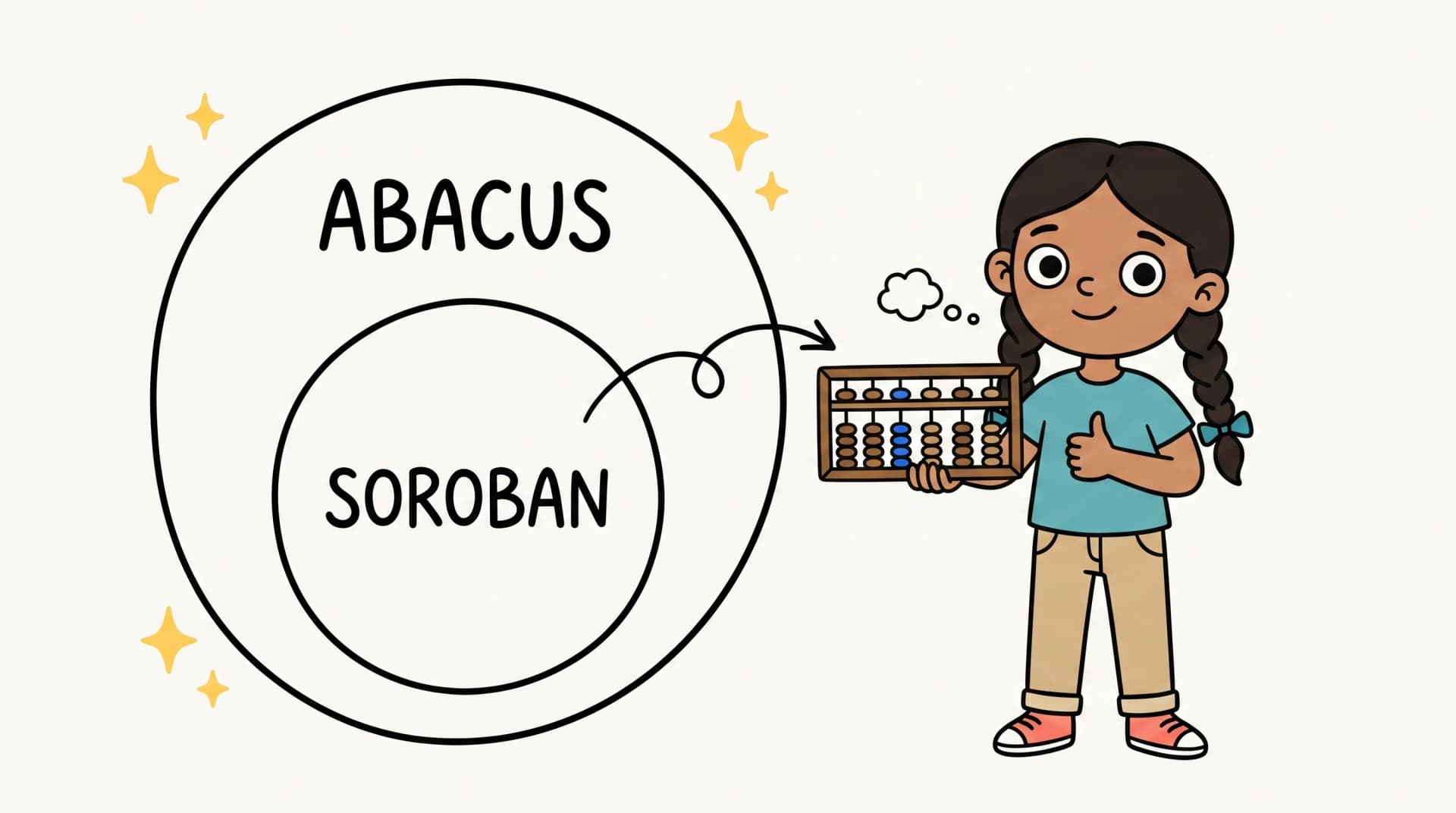
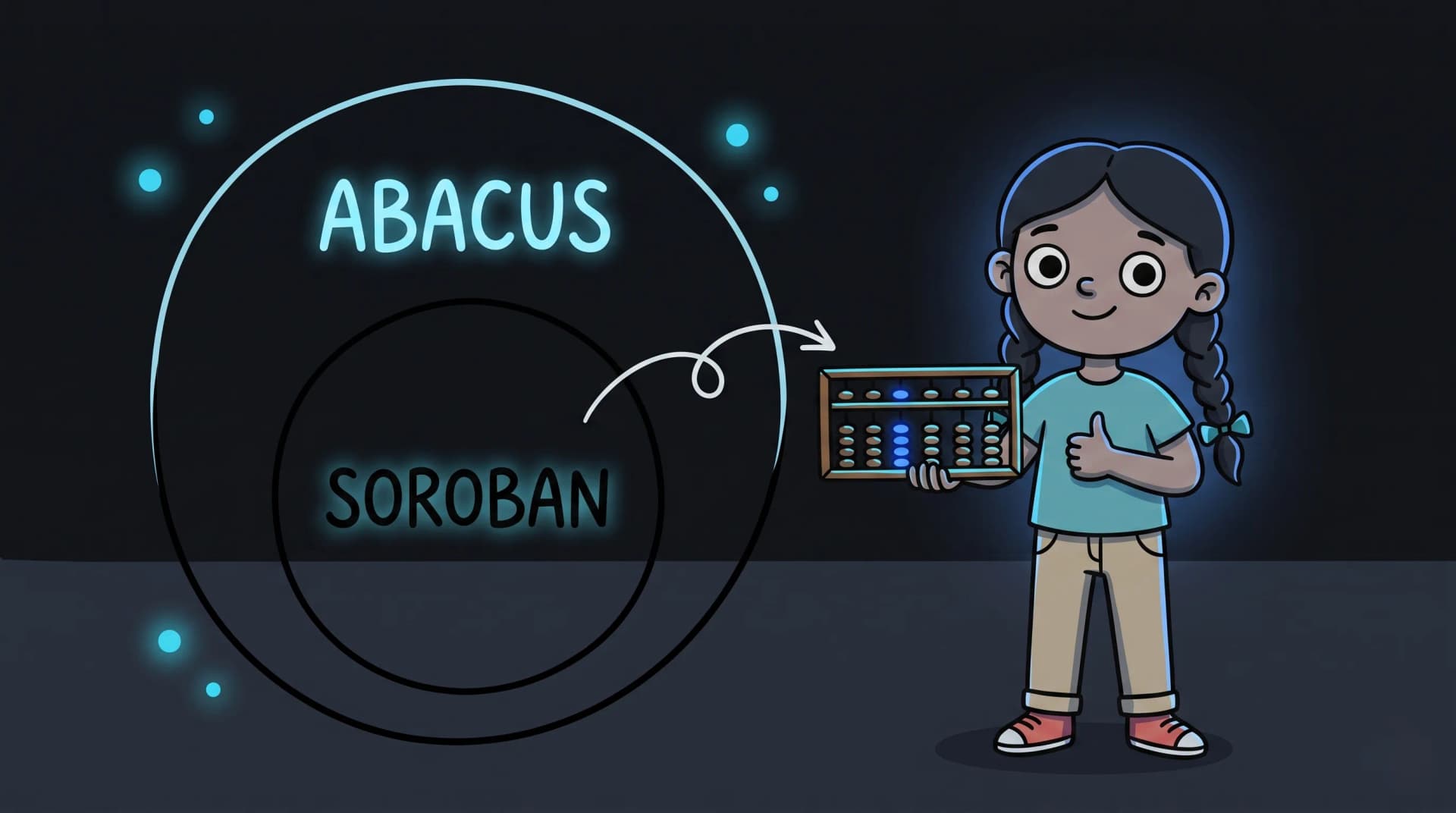
Yes and no. A soroban isan abacus, in the same way a labrador is a dog. “Abacus” is the general word for any frame of beads used to calculate. “Soroban” is the name of the Japanese version. So every soroban is an abacus, but not every abacus is a soroban.
When an academy says it teaches “abacus,” it almost always means the soroban, because the Japanese design is the one built for speed and mental maths.
What makes the soroban different
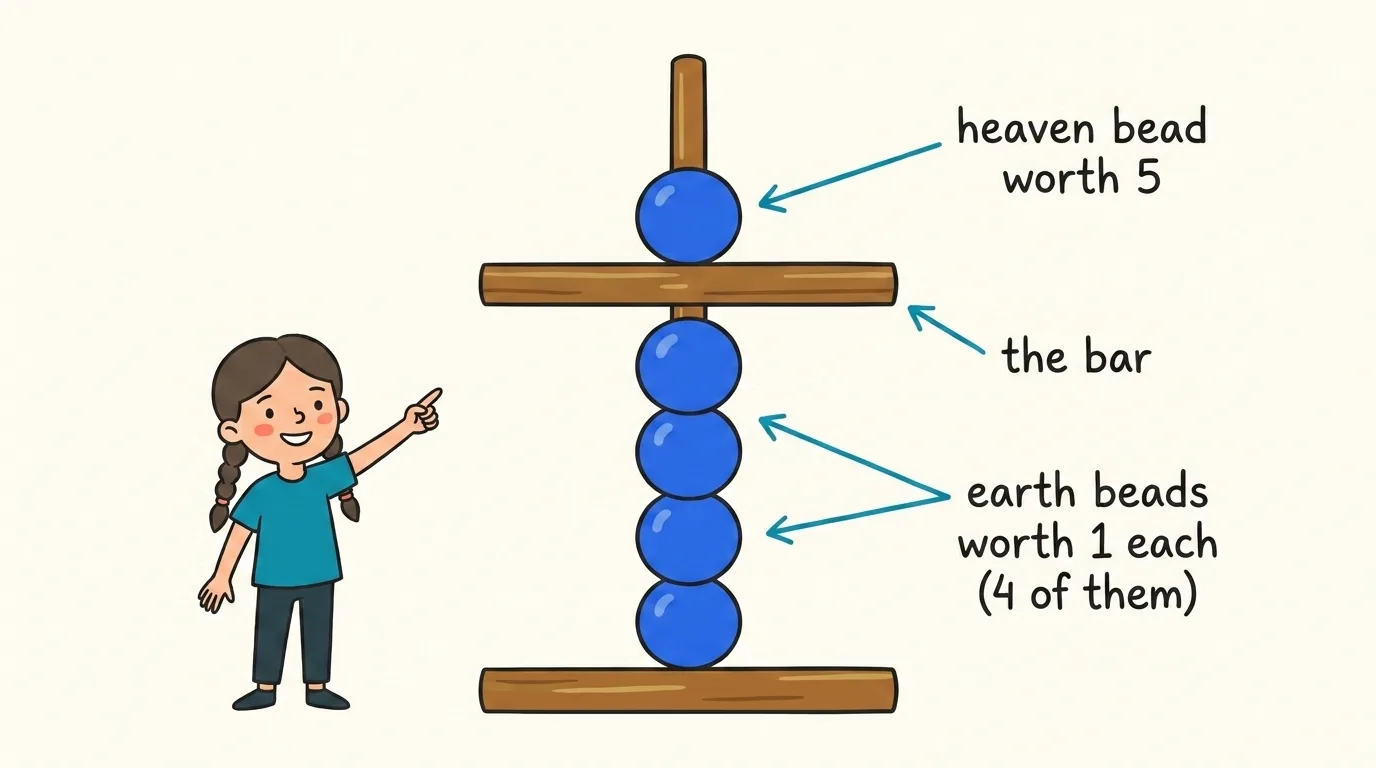
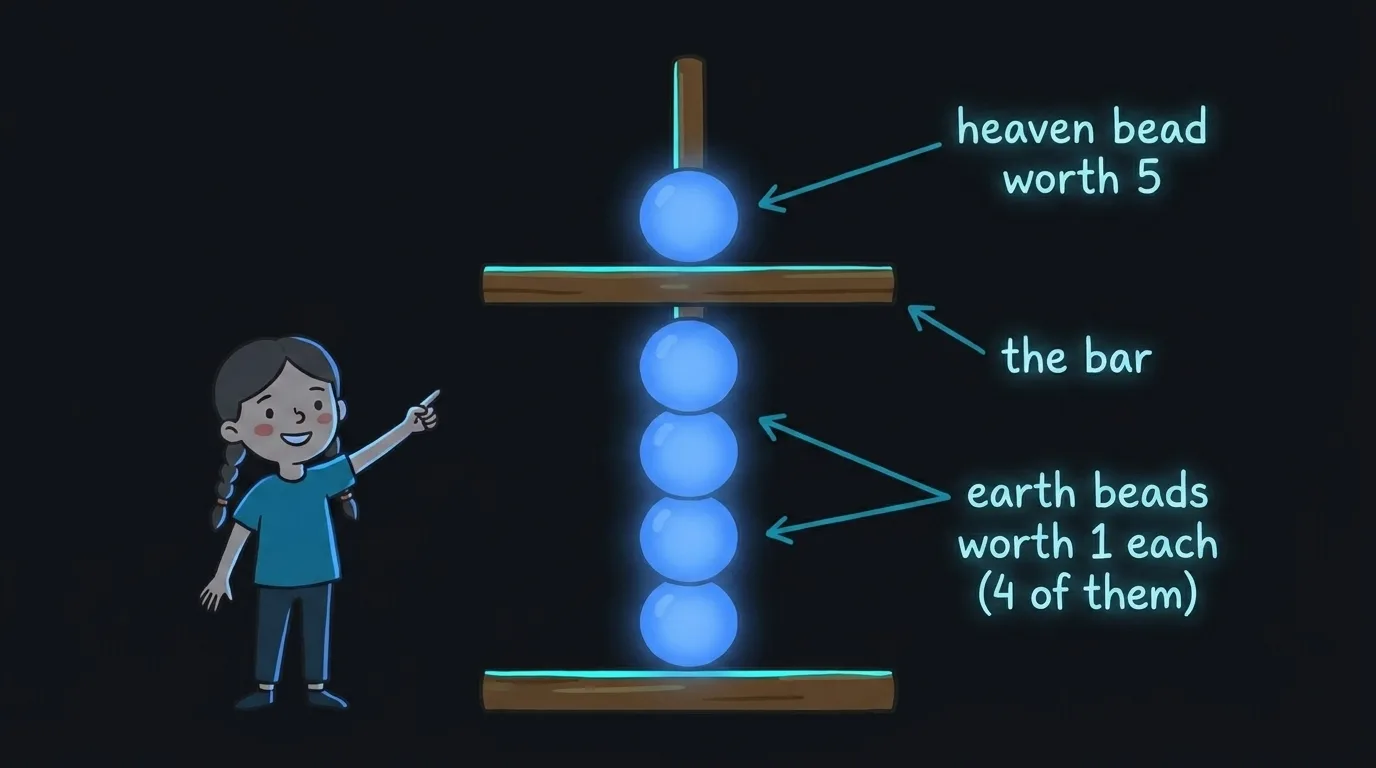
A modern soroban has a row of vertical rods, each holding beads split by a horizontal bar:
- One bead above the bar on each rod, worth 5.
- Four beads below the bar on each rod, each worth 1.
That “1 and 4” layout is the key. It is a lean design with no spare beads, just enough to show every digit from 0 to 9, which is exactly why it is so fast and why it maps so cleanly onto a mental picture. You can try this yourself on our free virtual soroban and watch the beads form any number you type.
Soroban vs the Chinese abacus (suanpan)
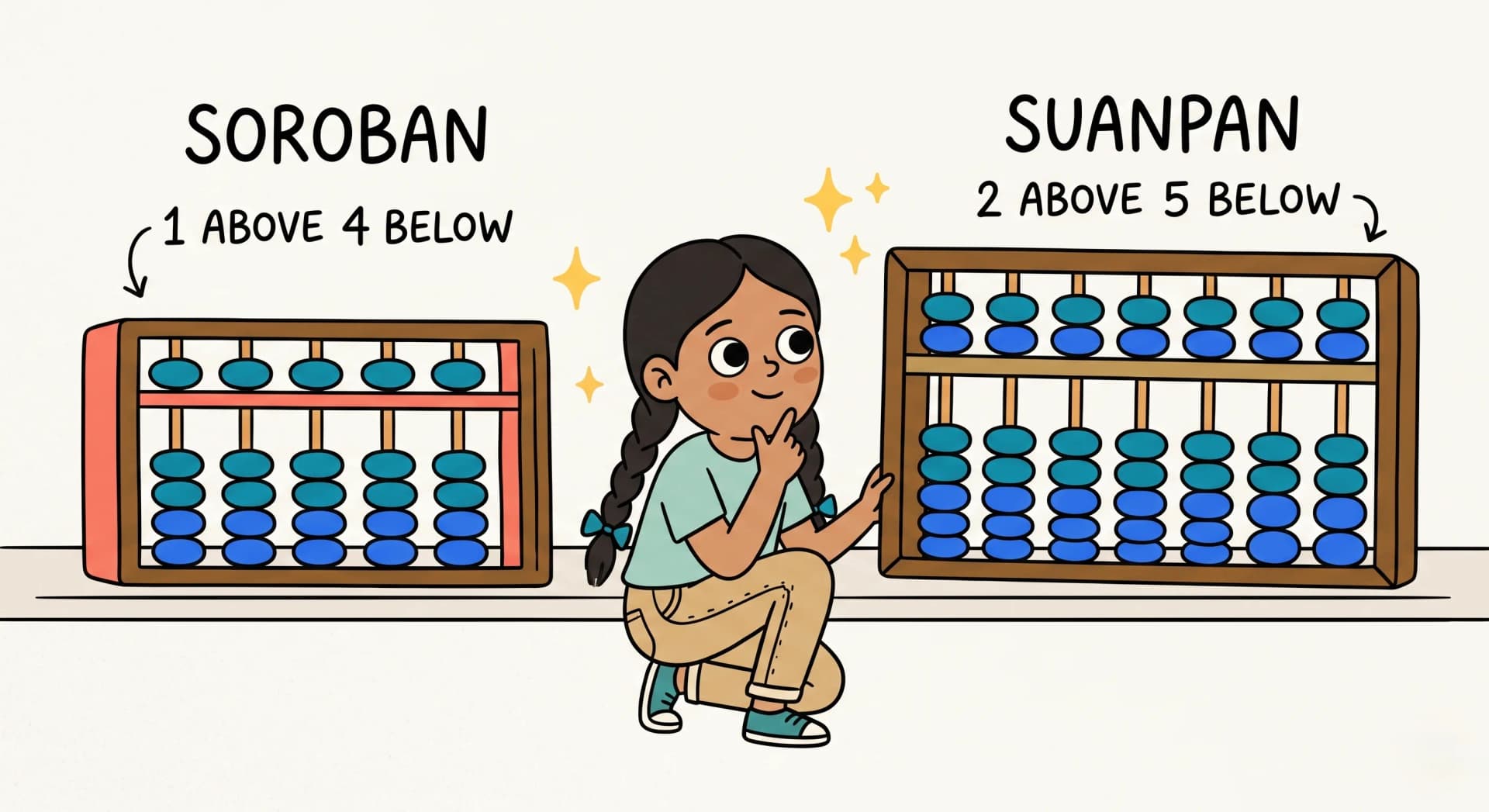
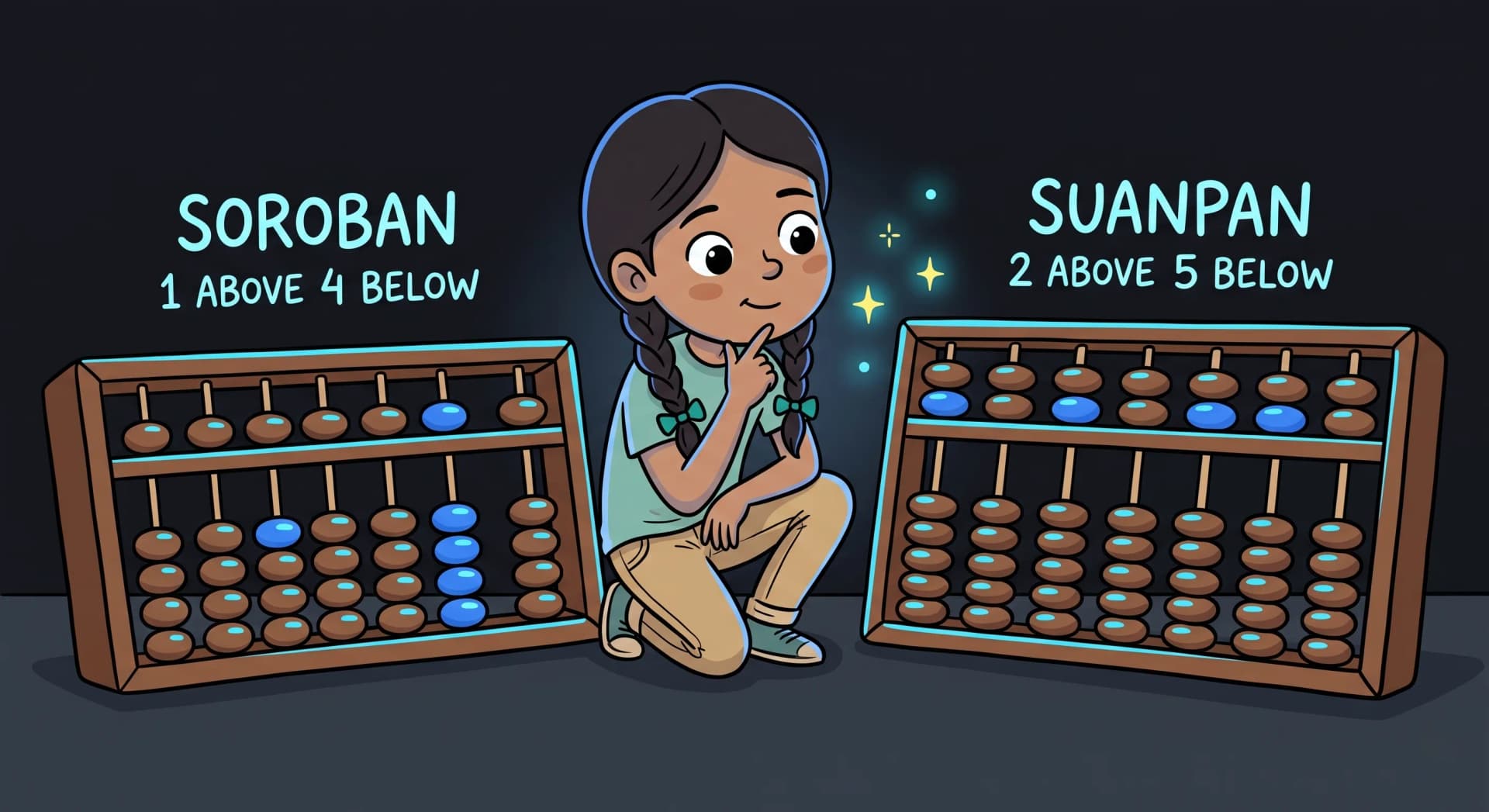
The suanpan is the older Chinese abacus, and it looks busier. Each rod has two beads above the bar and five below. The extra beads let it handle older counting systems, but for everyday base ten arithmetic they are surplus.
The Japanese gradually streamlined the suanpan across the nineteenth and early twentieth centuries down to the 1-and-4 soroban, to make calculation faster. For a child learning mental maths today, the soroban is the more efficient tool, with nothing extra to get in the way.
Soroban vs the counting frame from school
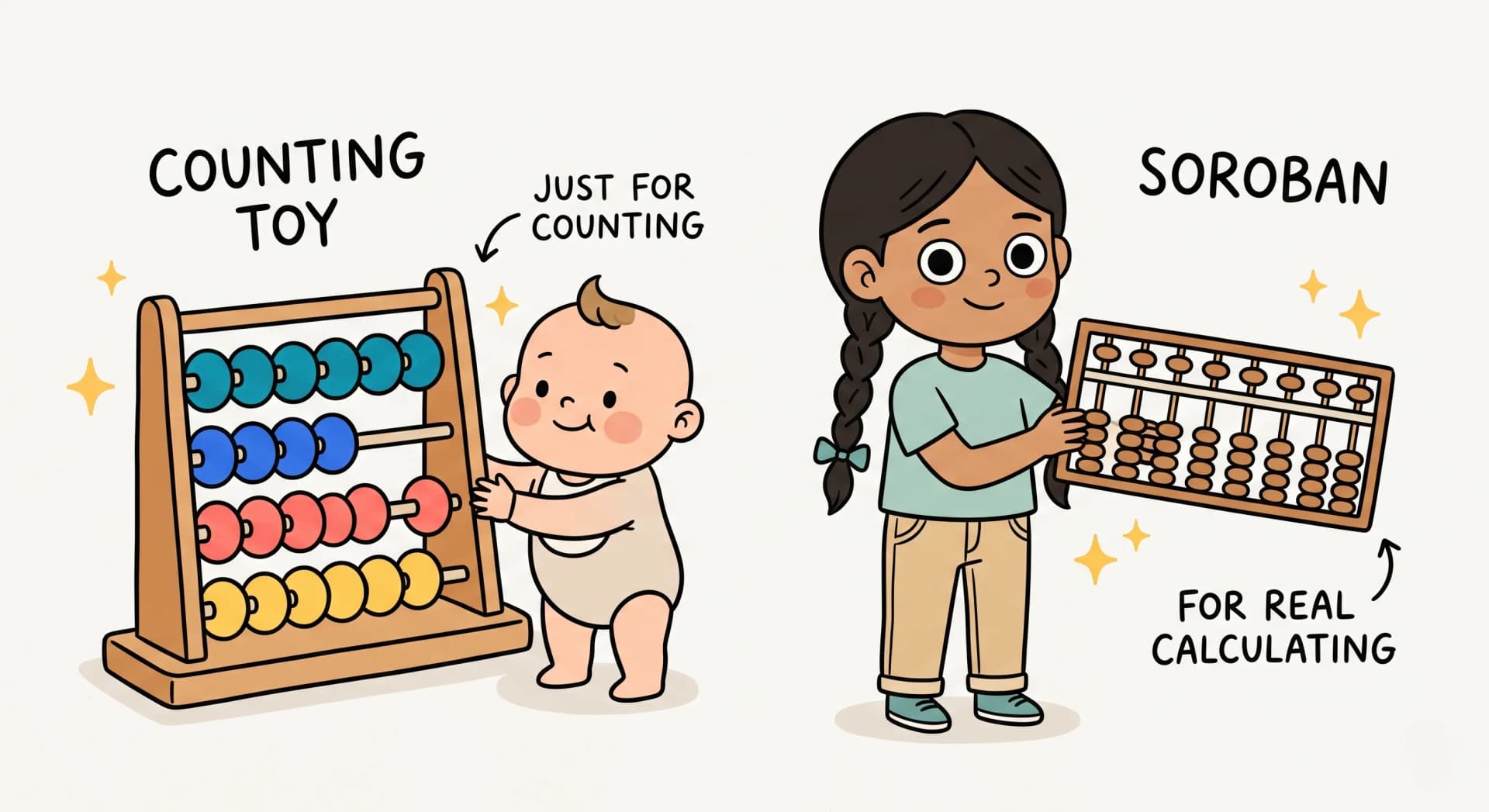
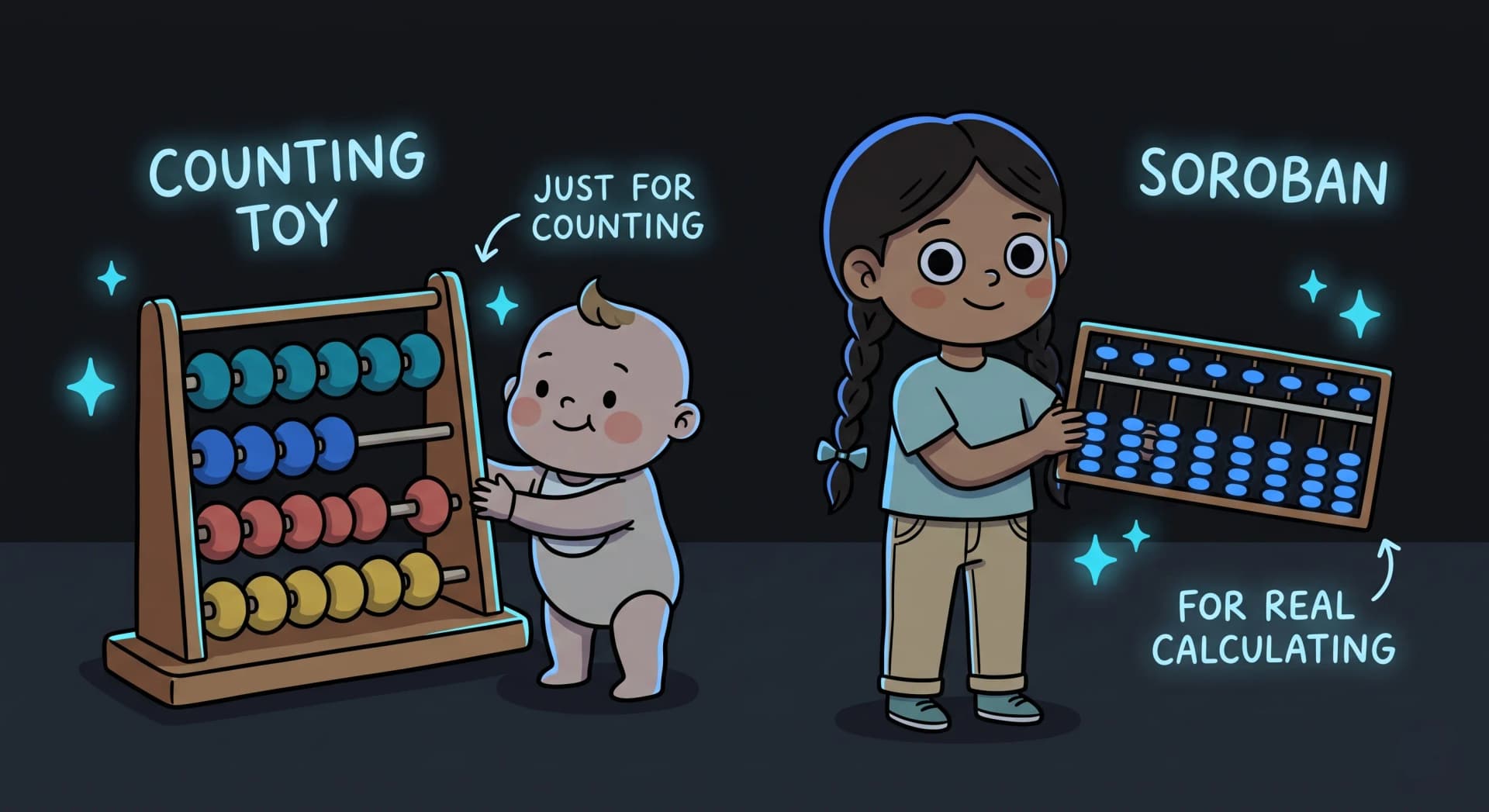
Many parents picture a different object entirely: the colourful frame with ten beads on each row that toddlers push back and forth. That is a counting frame, and it is a lovely first toy for learning to count. It is not a calculating abacus, though. It has no place values and no dividing bar, so it cannot be used for the fast addition, subtraction, multiplication, and division a soroban teaches.
Which one should my child learn?
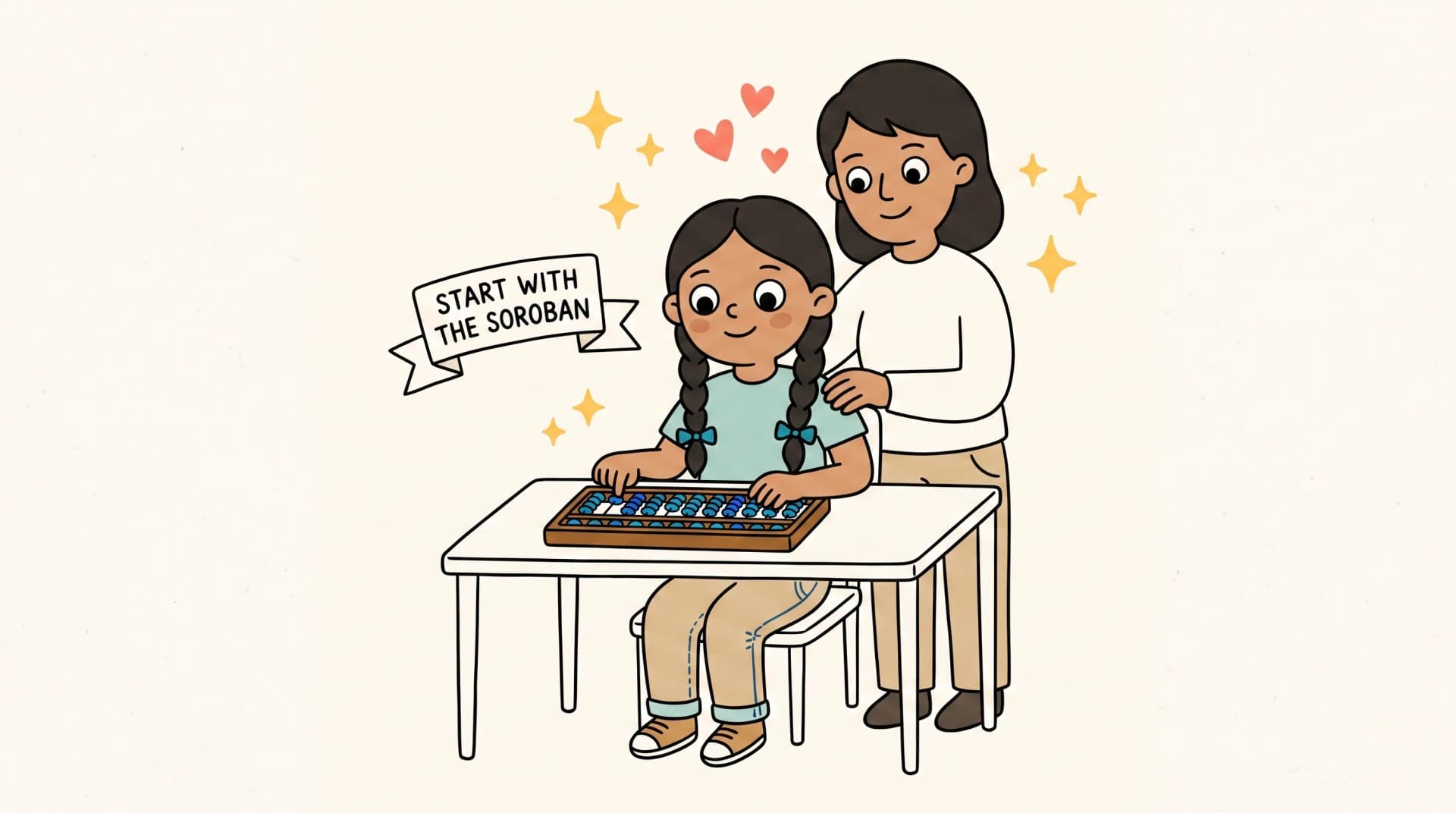
For mental maths training, the answer is the soroban. Its lean design is the reason children can eventually picture the beads in their head and calculate without the physical tool, a skill called anzan. Programmes worldwide, including ours, teach the soroban for this reason. The colourful counting frame is a fine warm-up for a three year old, but the real skill is built on the Japanese soroban.
The best way to see the difference is to watch a child use one. You can apply for a free demo class to see the soroban in action, or read our complete guide to the abacus for a deeper look at how it works.

Frequently asked questions about the soroban and abacus
Is a soroban an abacus?
Yes. A soroban is the Japanese type of abacus. Abacus is the general term for any bead counting frame, and the soroban is the version built for fast mental arithmetic.
What is the difference between a soroban and a suanpan?
A soroban (Japanese) has one bead above the bar and four below on each rod. A suanpan (Chinese) has two above and five below. The soroban is the leaner, faster design for everyday base ten maths.
Why do abacus classes use the soroban?
The soroban’s one and four bead layout is the most efficient for calculation and maps cleanly onto a mental image, which is what lets children eventually calculate in their heads.
Is the colourful school abacus the same thing?
No. The colourful ten bead per row frame is a counting frame for learning to count. It has no place values or dividing bar, so it cannot do the calculations a soroban teaches.
If the Japanese method is the one you want for your child, we teach it live: see our soroban classes for UK families or the equivalent online abacus classes in the USA, both starting with a free demo.