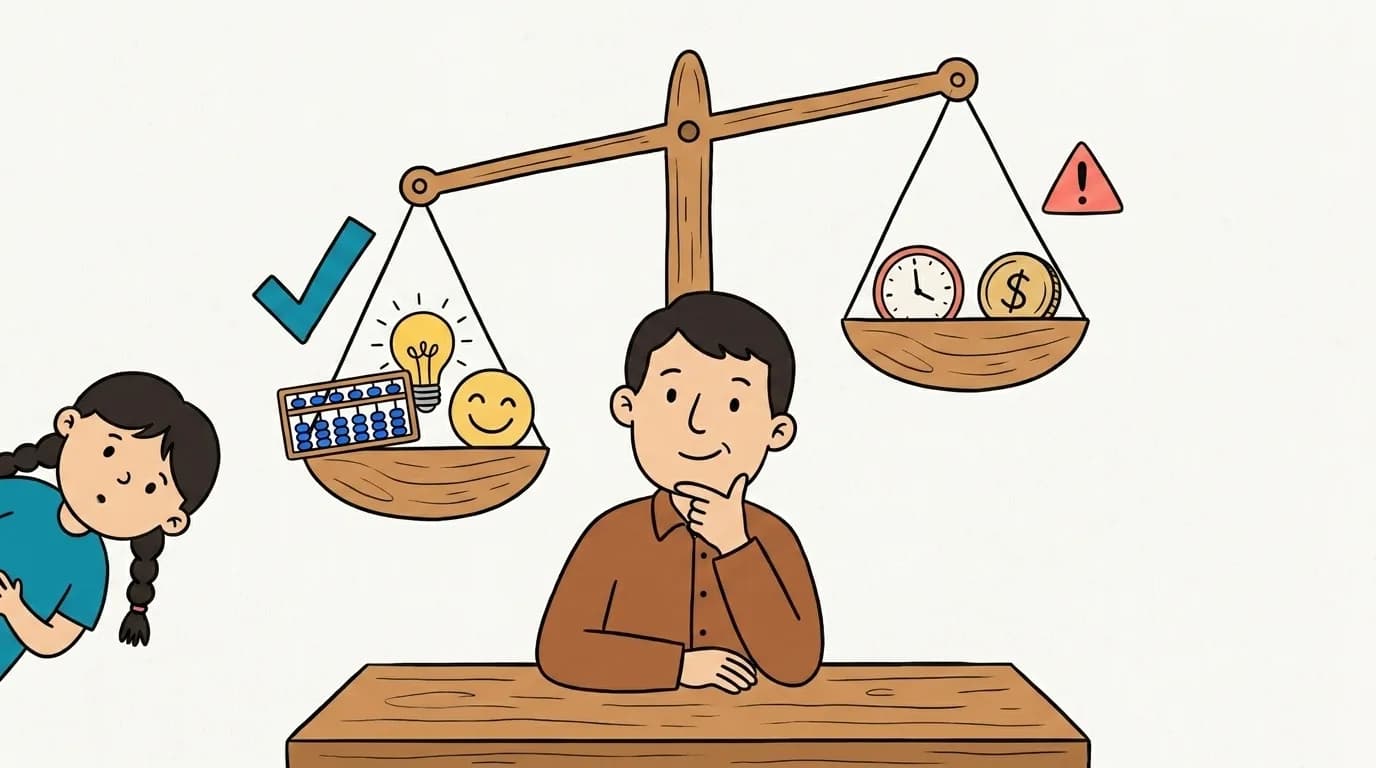
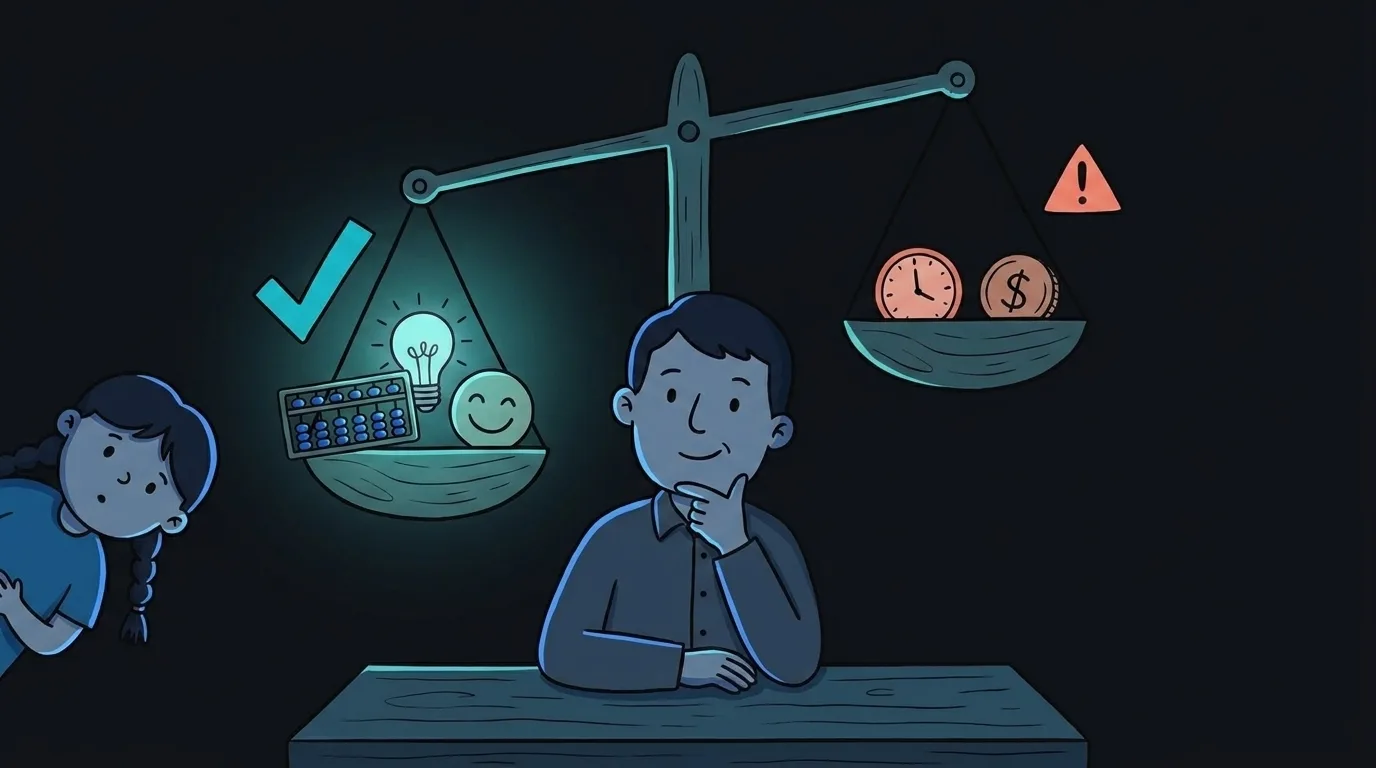
Before you sign your child up for abacus, it is fair to ask whether it is actually worth it, or just another activity that overpromises. This is an honest ledger: the real benefits, the genuine drawbacks, who abacus suits, who can comfortably skip it, and how to get the upside without the common downsides.
Abacus classes are everywhere, and the marketing rarely mentions a single downside. So before you commit, here is the balanced version: what abacus genuinely gives your child, what it costs you in time and effort, and how to decide whether it is right for your family.
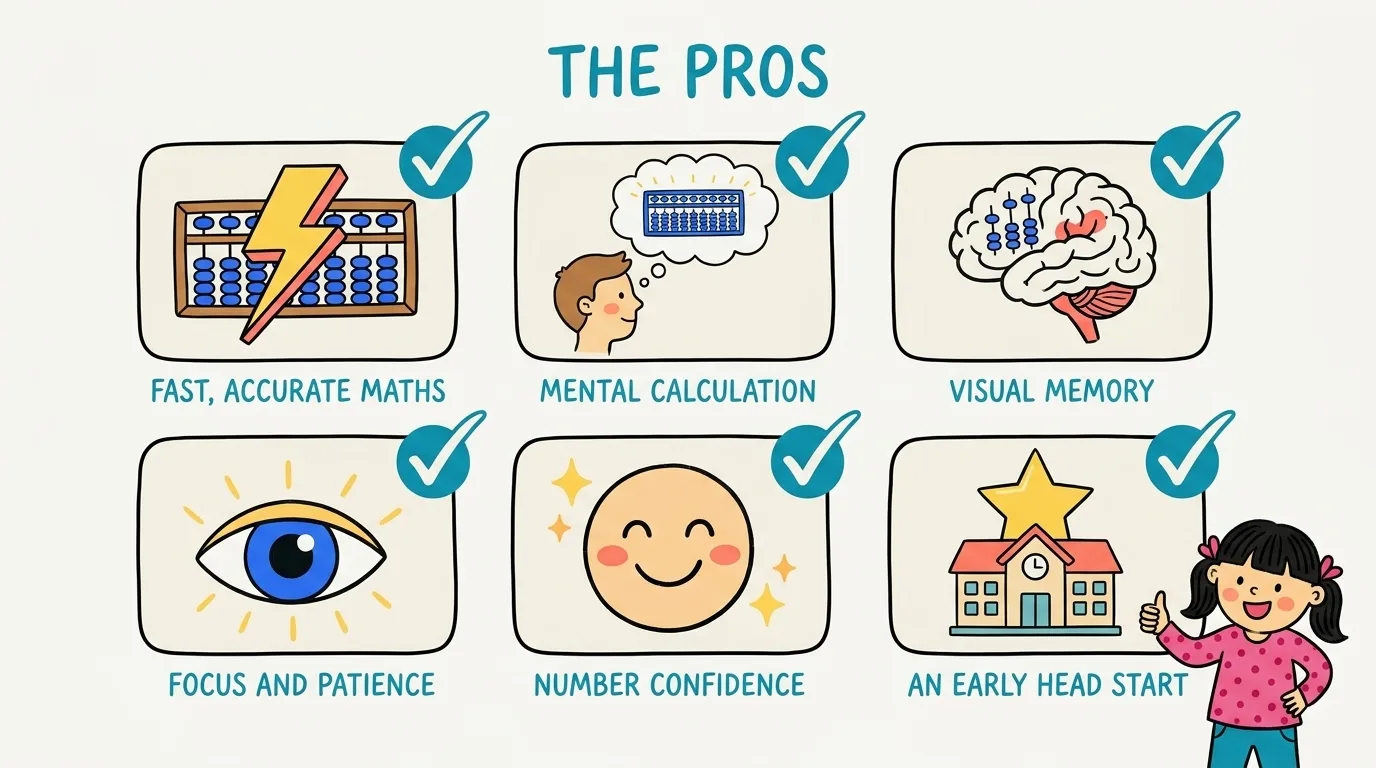
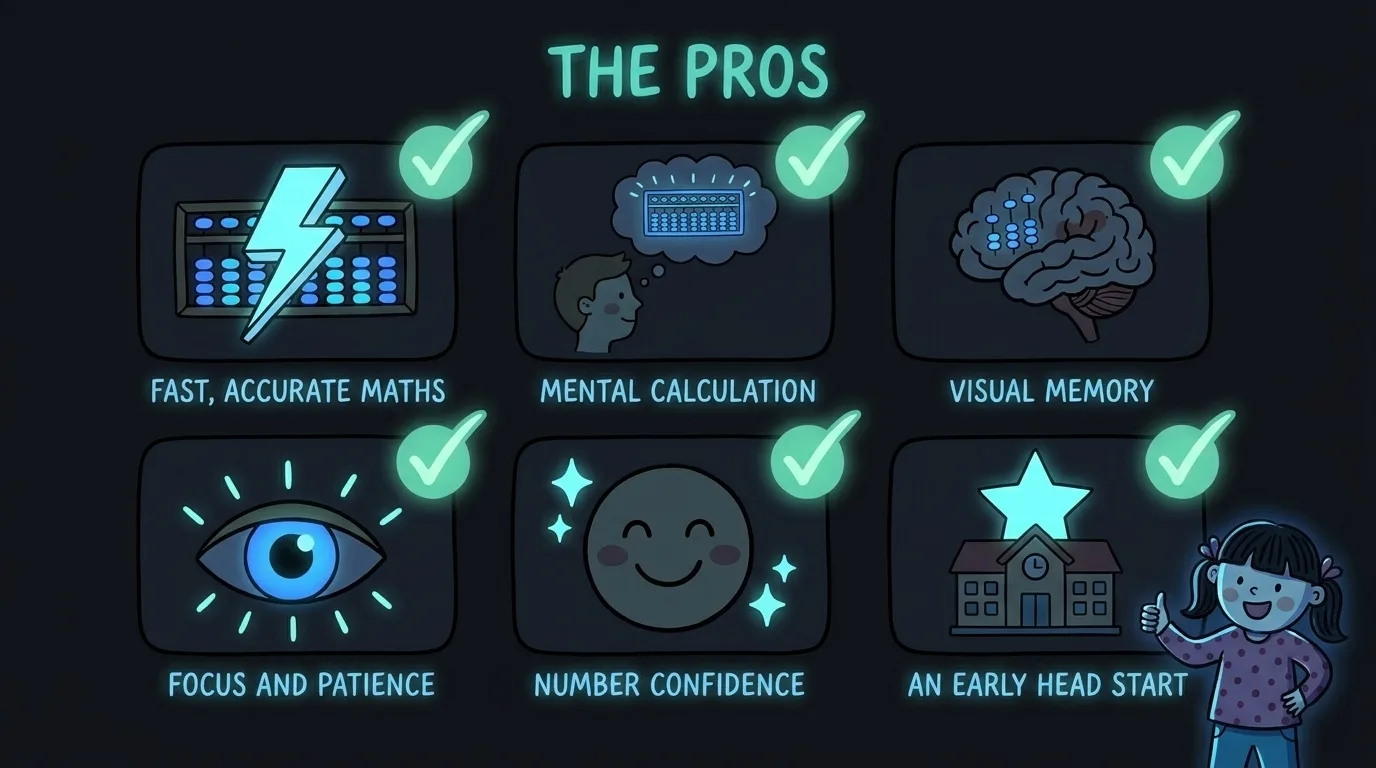
The pros: what abacus genuinely gives your child
These benefits are real and, in several cases, backed by a three-year randomised controlled trial (Barner and colleagues, 2016) rather than by marketing.
- Fast, accurate arithmetic. This is the strongest, best-evidenced benefit. Children become genuinely quick and confident with numbers.
- Real mental calculation. With practice, a child pictures the beads and calculates in their head, a skill called anzan that stays with them.
- Stronger visual working memory. Holding and moving an imagined abacus leans hard on the brain’s visual memory, which is the part of thinking this method works hardest.
- Focus and patience. Each problem needs full attention, and that habit of sitting and concentrating often carries into other work.
- Number confidence. For a child who finds maths scary, becoming the fast one with numbers can change how they feel about the whole subject.
- An early head start. In the primary years, strong mental arithmetic makes a lot of classroom maths feel easier.
The cons: the honest drawbacks
None of these are deal-breakers, but you deserve to know them before you start.
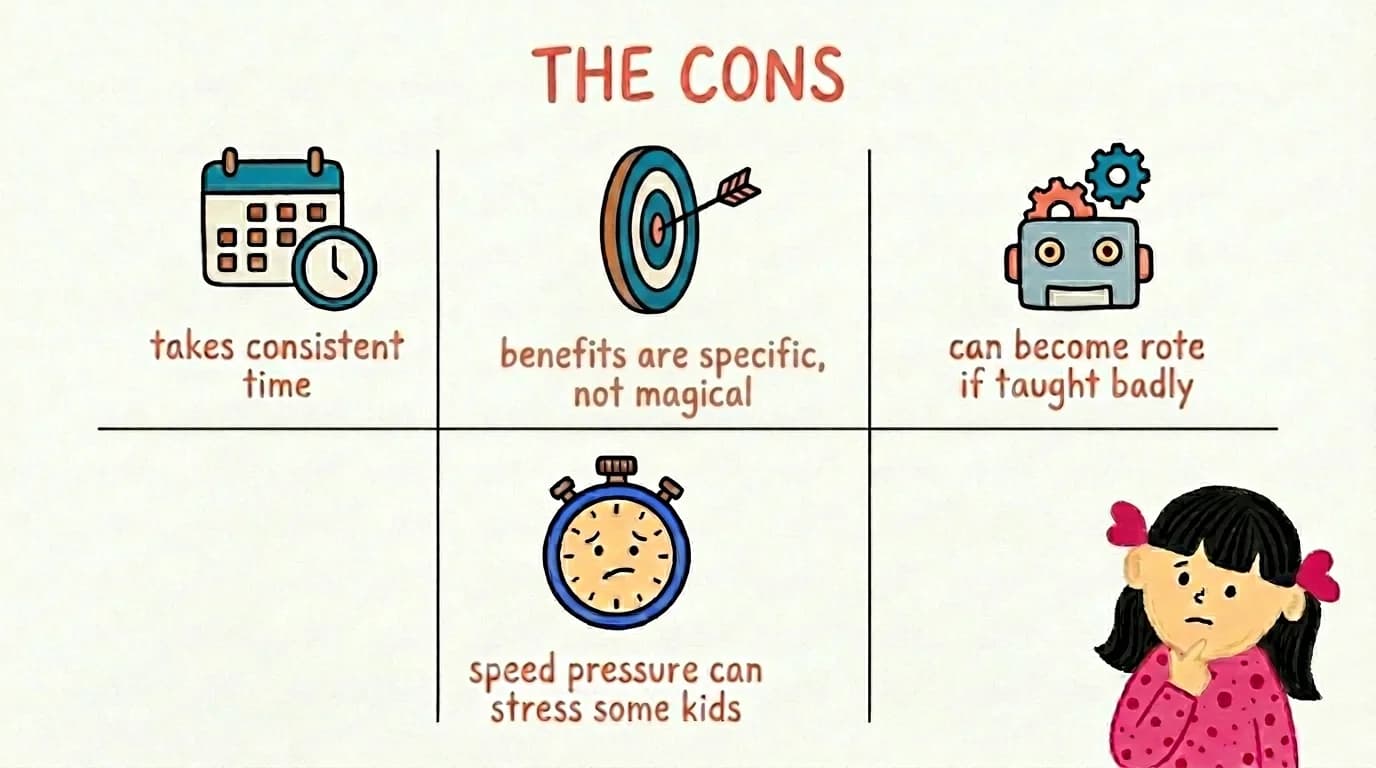
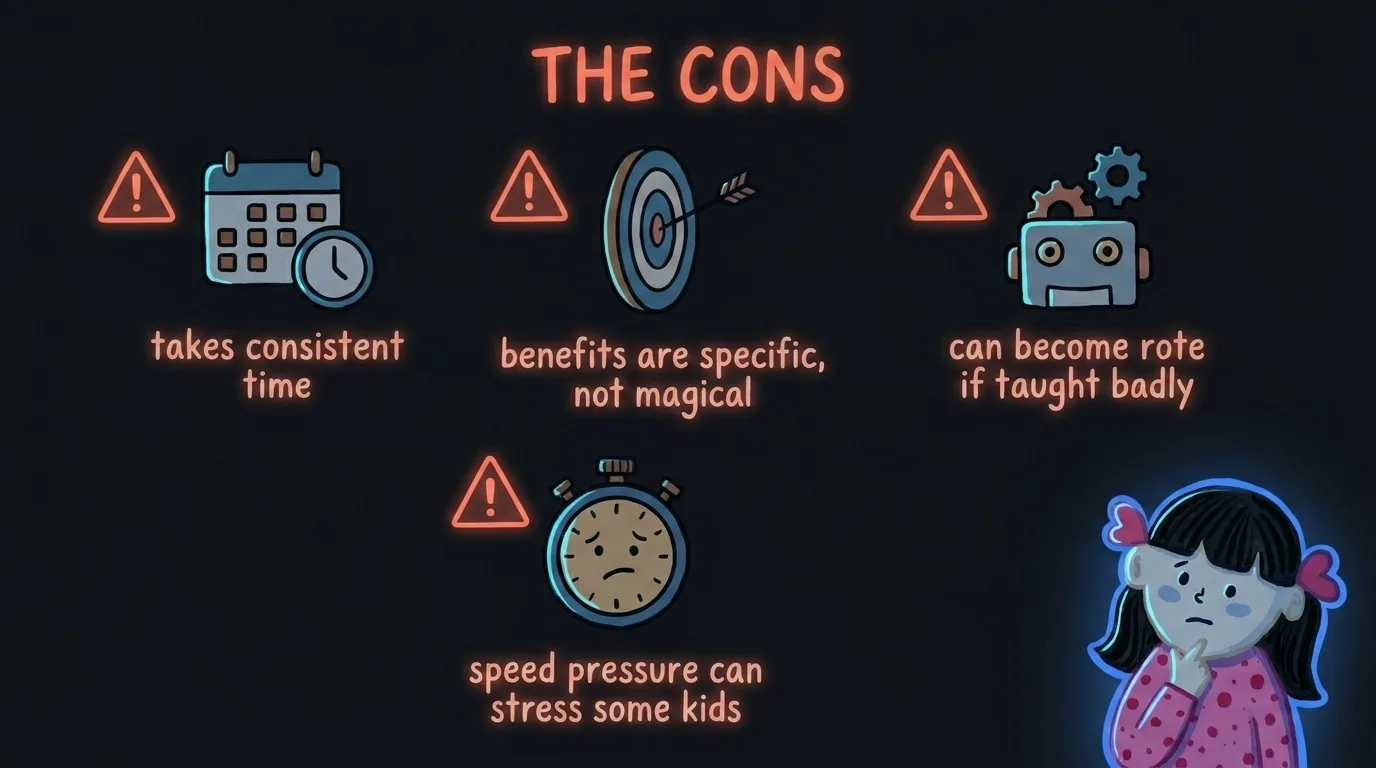
- It takes real, consistent time. Abacus is not a quick fix. Meaningful skill takes months to years of short, regular practice. If your week cannot fit a little practice most days, progress will be slow.
- It can become rote if taught badly. Drilled purely for speed, abacus can turn into mechanical button-pushing with little understanding. The teacher and method matter enormously.
- The benefits are specific, not magical. Abacus builds calculation and visual memory. It does not automatically fix every part of school maths, like word problems or the reasoning behind fractions, and it is a complement to school, not a replacement. (For the bigger myths, see our honest look at whether abacus really makes kids smarter.)
- Speed pressure can stress some children. Heavy competition and timed drills suit some kids and overwhelm others. The right pace matters.
Who abacus is a great fit for
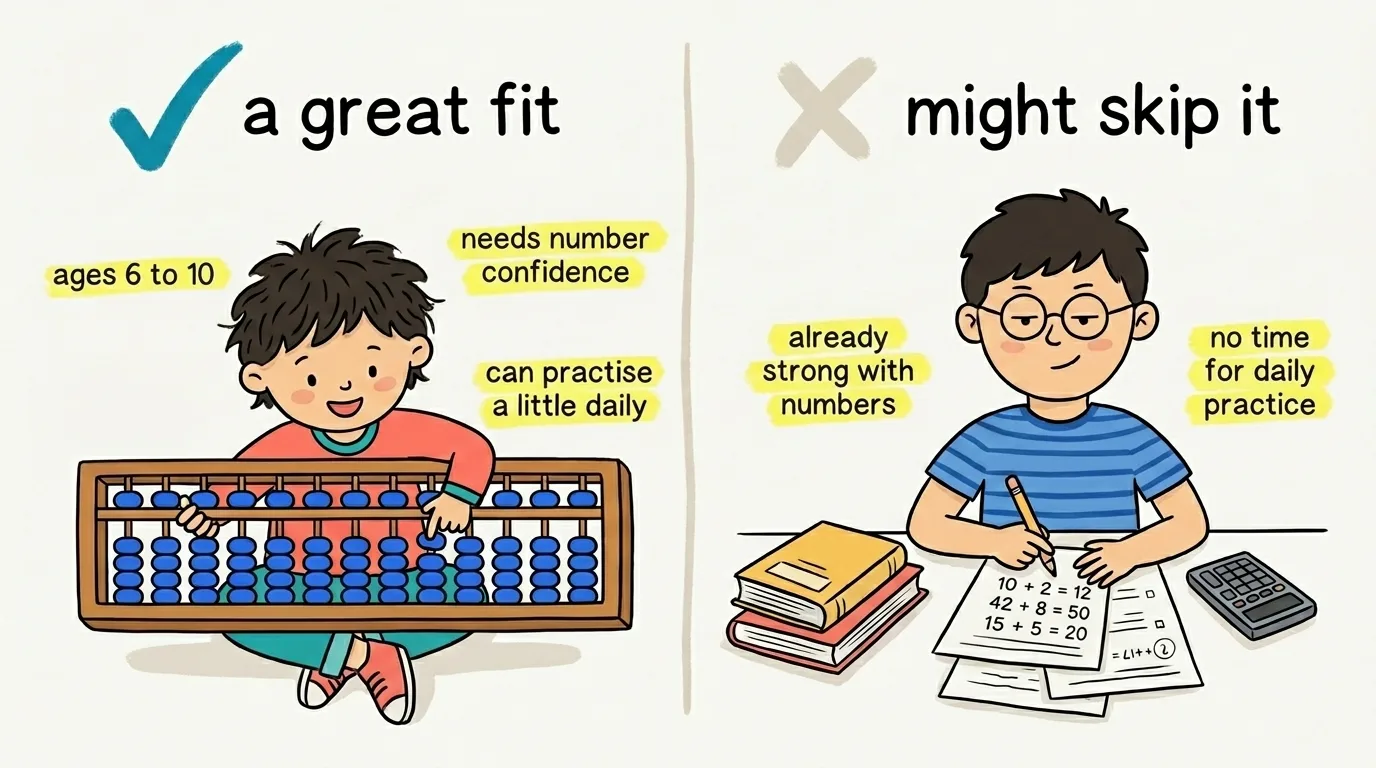
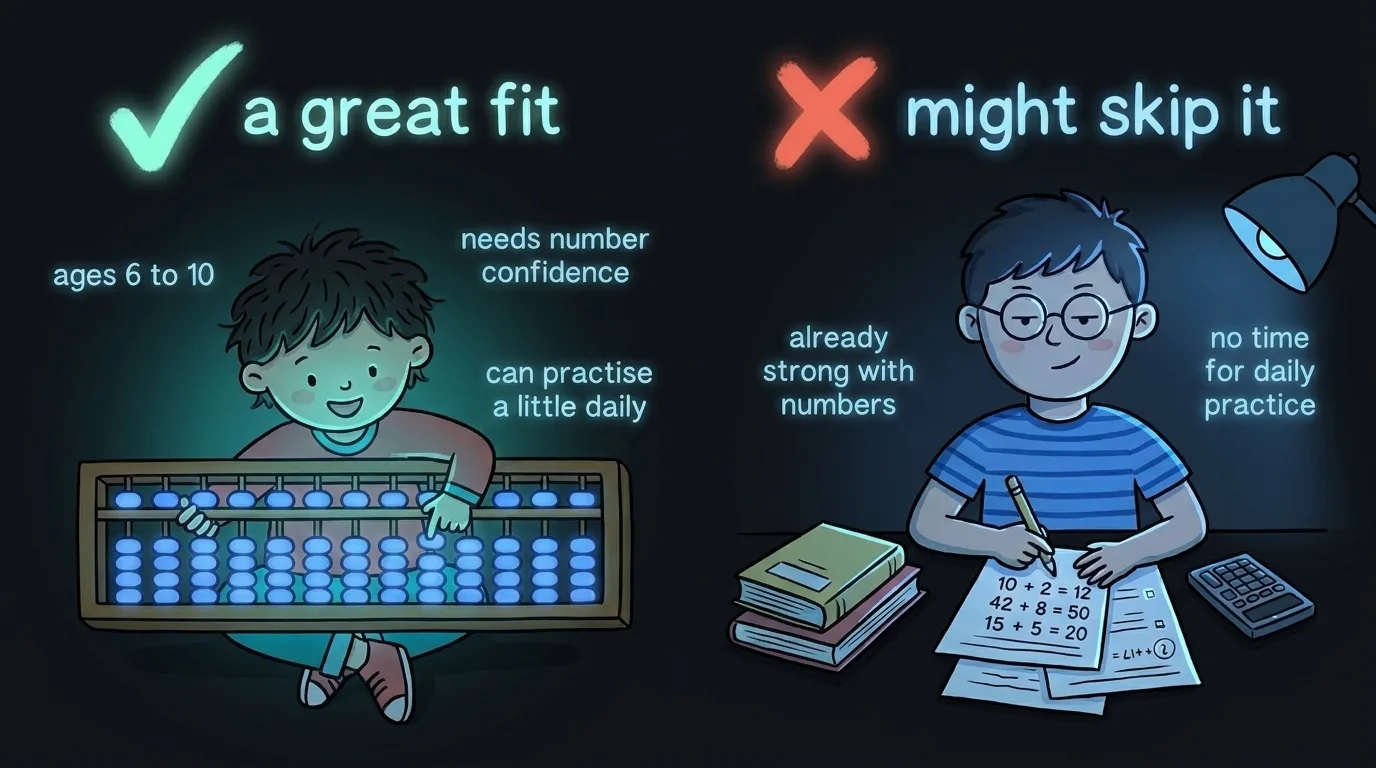
- Younger children, roughly six to ten, who are at the ideal age to build number sense from the ground up.
- Children who lack confidence with numbers and would benefit from an early win.
- Families who can commit to a few minutes of practice most days.
- Children who enjoy the hands-on, visual style of learning.
Who can comfortably skip it
- Much older starters who already have strong number sense and want shortcuts may get more from a method aimed at their age.
- Families who genuinely cannot fit regular practice in, because without it the classes simply do not work.
- Children already confident and happy with maths who would simply rather spend the hours elsewhere.
If you are unsure about timing, our guide to the right age to start abacus can help you decide.
How to get the benefits without the downsides
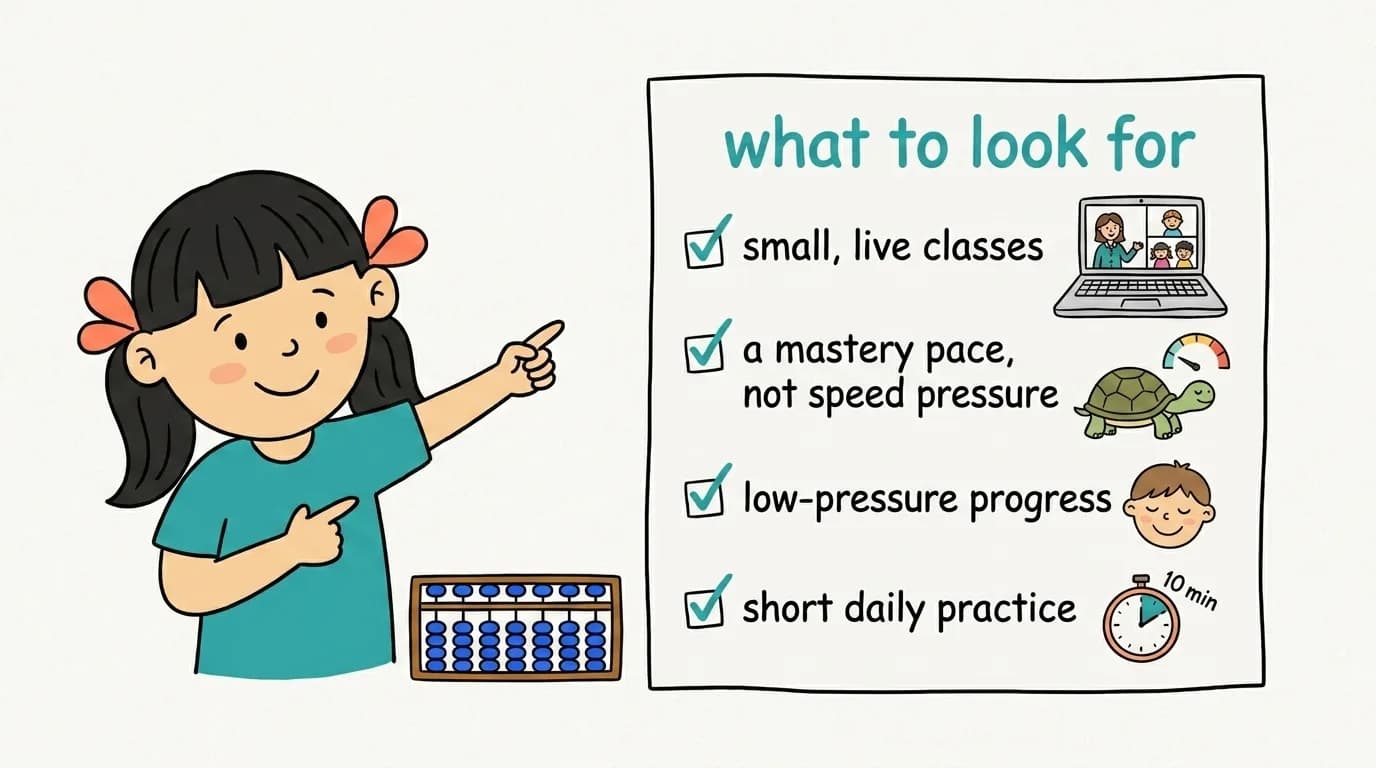
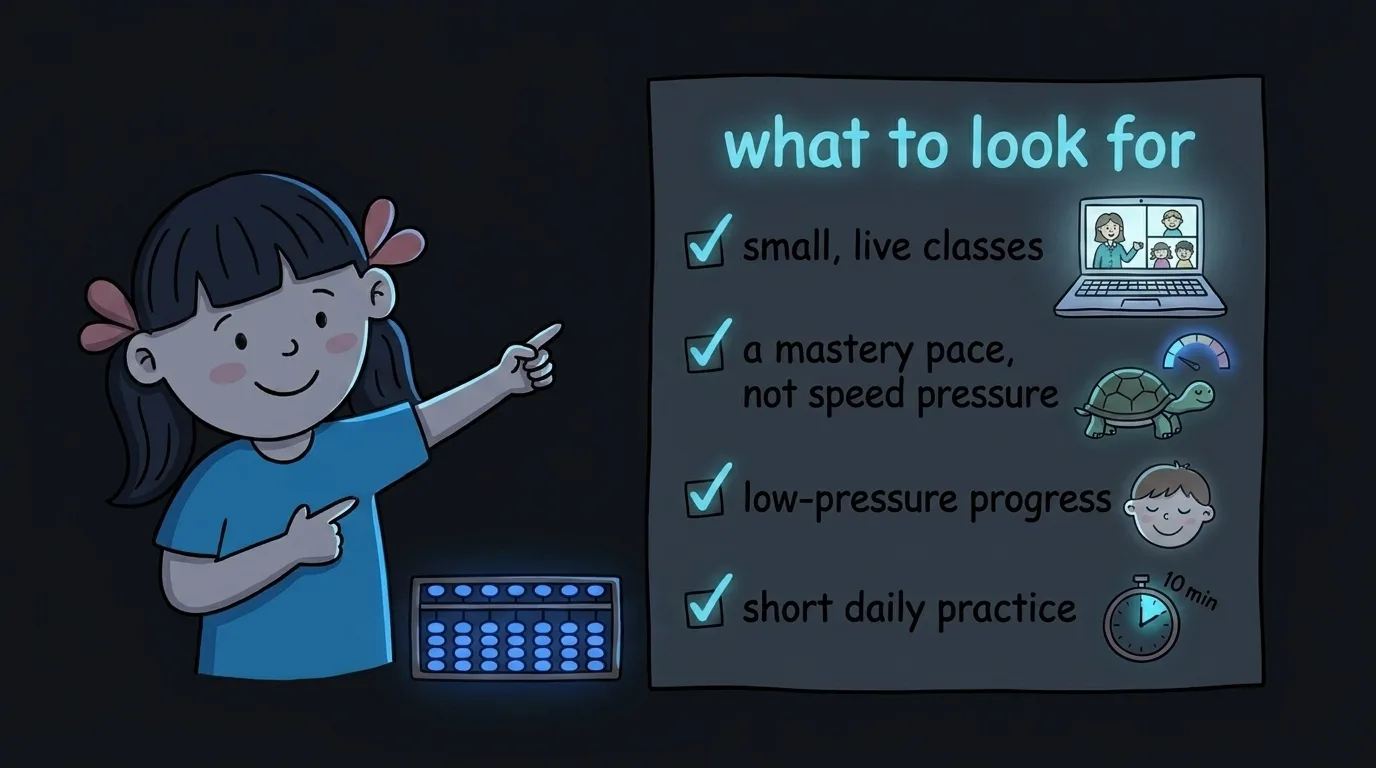
Most of the cons come down to how a class is run, not the abacus itself. To stack the odds in your favour, look for:
- Small, live classes with a real teacher who can adjust to your child, rather than pre-recorded videos.
- A mastery pace that values understanding over raw speed, especially early on.
- Low-pressure progress without forcing competitions on a child who finds them stressful.
- Short daily practice rather than occasional long sessions.
The simplest way to judge a class is to watch one. You can apply for a free demo class and see how your child responds, or try our free virtual abacus together at home first.
Frequently asked questions
Is learning abacus worth it for my child?
For most children aged six to ten, yes, if you want fast, confident arithmetic, stronger visual memory, and number confidence, and you can manage a little regular practice. It is not worth it if you are buying the genius or IQ claims, which the evidence does not support.
What are the disadvantages of abacus?
It needs consistent practice over months to years, it can become rote if drilled only for speed, and its benefits are specific to calculation and visual memory rather than every school subject. Good teaching avoids most of these.
Is abacus a waste of time?
No, provided you want what it actually delivers and you keep up the practice. It becomes a waste only if expectations are set by genius-style marketing, or if a child never practises between lessons.
Does abacus replace school maths?
No. Abacus is a complement that builds calculation and number confidence. Reasoning, word problems, and conceptual topics still come from school maths, and the two work best together.