Live online, ages 6 to 12
Mental maths classes for kids, taught on the abacus
Mental maths (mental math, in North America) is calculating in your head, quickly and accurately, with no paper, fingers or calculator. Our live classes build it the most concrete way we know: on a Japanese soroban first, then on a soroban your child pictures in their head. Batches never go above ten, and the first class is free.
Book a free demo class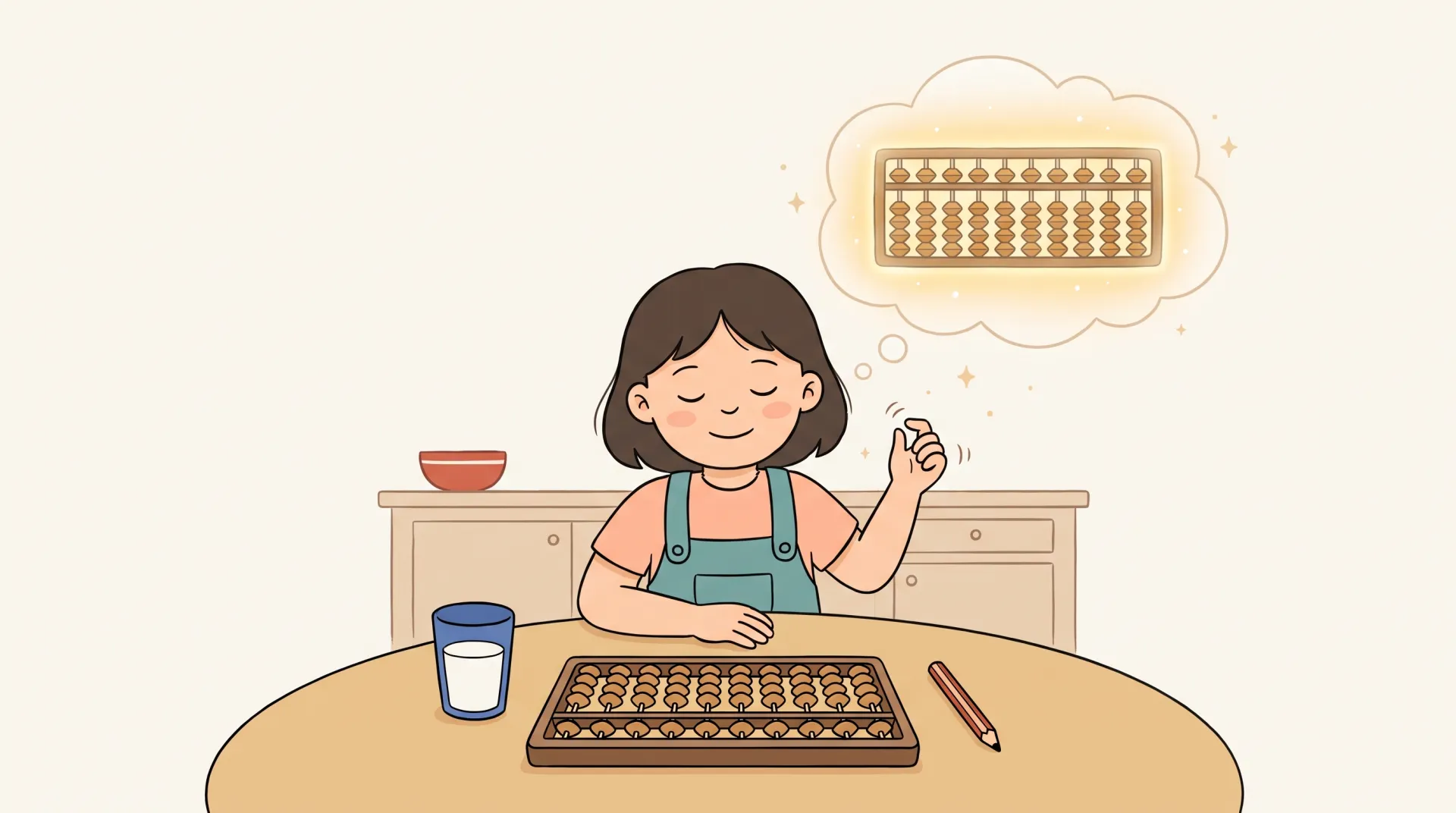
What it is
Why mental maths matters more than speed
A child can only hold so much in mind at once. When every small sum has to be counted out, that space is used up on arithmetic and none is left for the question itself: the word problem, the second step, the check at the end. When the arithmetic is automatic, the thinking has room.
That is also why schools test it. Timed times-tables checks, arithmetic papers and calculator-free exam papers all reward the same skill, and children who have it usually stop dreading maths, which means they practise more.
The method
Why we teach mental maths on an abacus
- Numbers a child can see
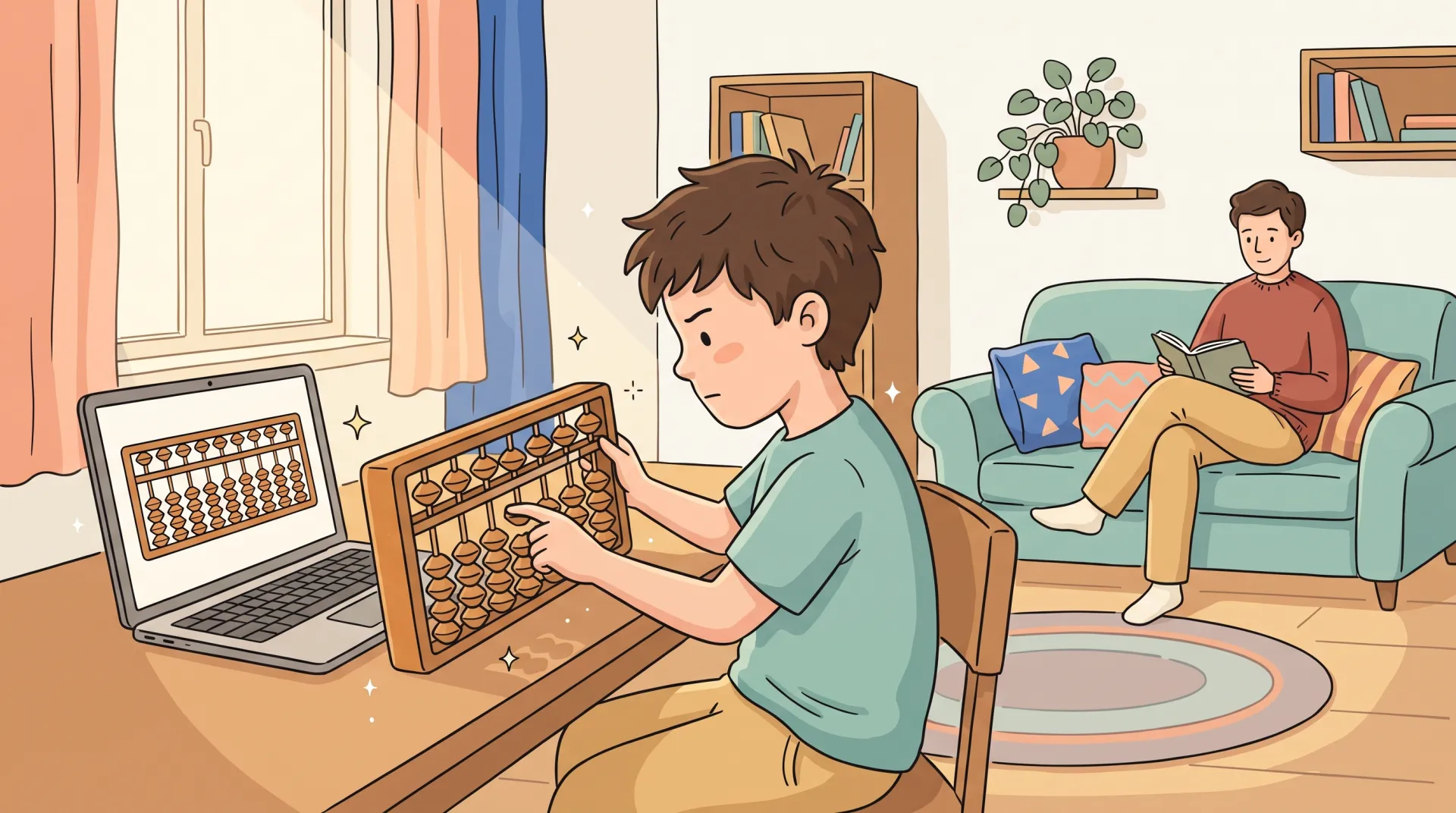
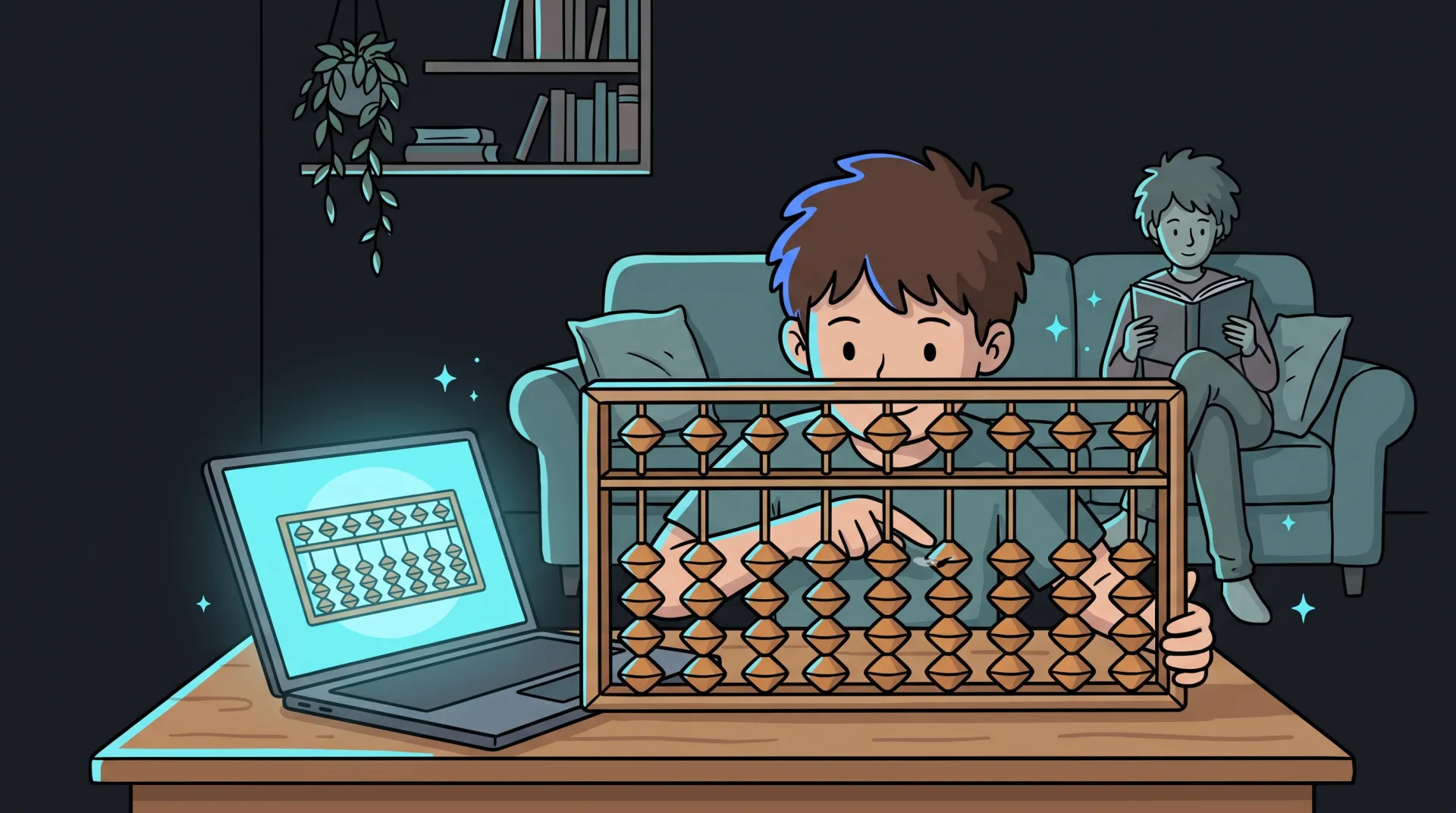
- Every rod of a soroban holds one five-bead and four ones, so 7 is a five and a two, and carrying is a movement rather than a rule to remember. Number sense grows from handling numbers.
- Then a soroban in the head
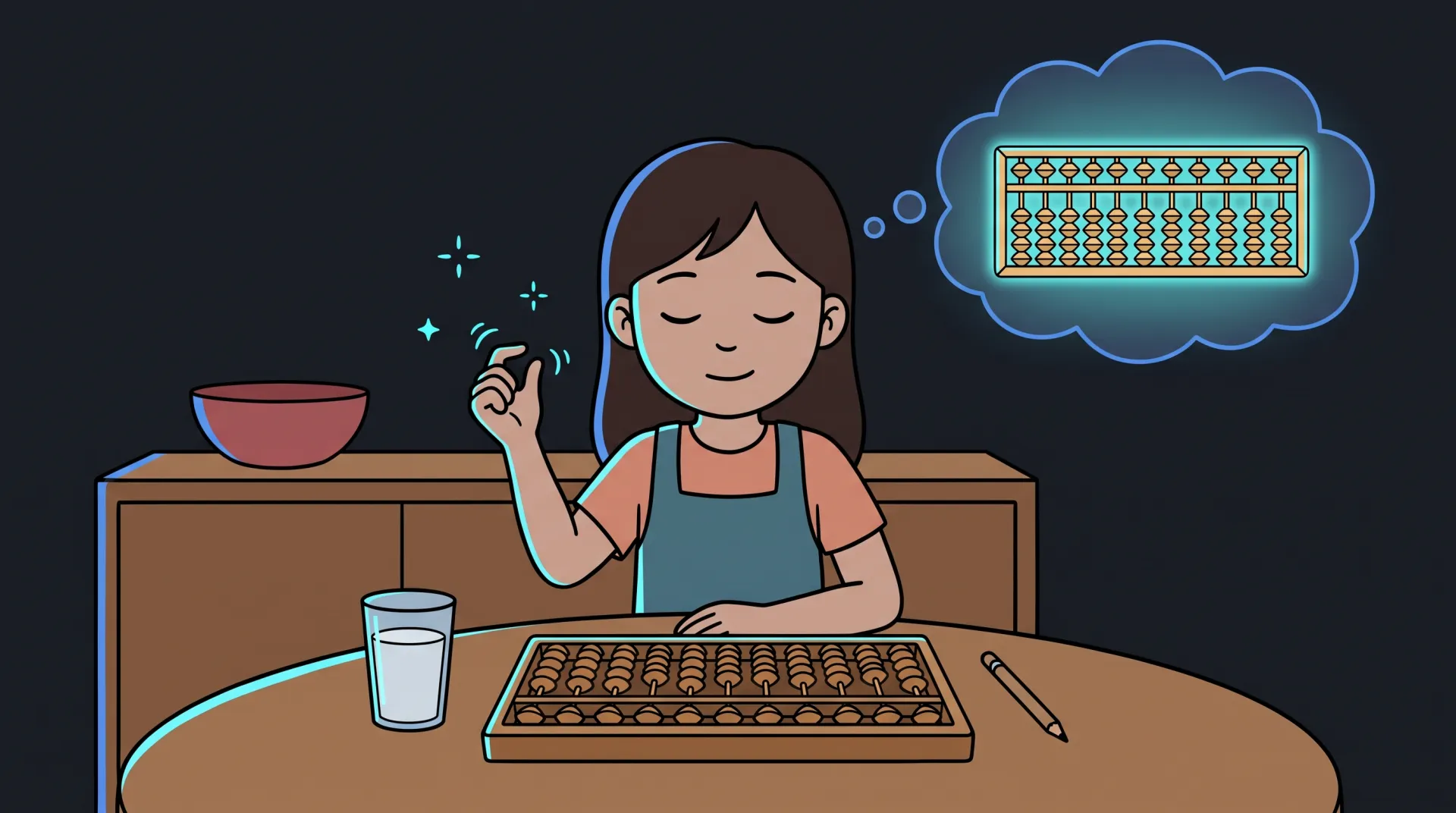
- After about a year of regular practice, most children stop touching the beads and move them in their imagination instead. That pictured soroban is the mental abacus, and it is what they calculate on in class tests and exams.
- An honest limit
- Abacus training makes children faster and more accurate at arithmetic. It is not an intelligence boost and it does not replace school maths; it makes the calculation inside it lighter.
You can feel the idea in a minute on our free online soroban, or follow the free step-by-step lessons with your child.
The class
What a mental maths class with us looks like
A small live group over video. The teacher sets a sequence on the soroban, the children work it, and every answer is seen and corrected in the lesson. As children progress, the same kind of sum is done in the head with the beads put away.
- Live classes
- 2 a week, 1 hour each
- Children in a batch
- 10 at most
- Ages
- 6 to 12
- Levels
- 10, each ending in a graded test
- First graded test
- About month 3
- Practice at home
- About 15 minutes a day
- Soroban and workbook
- Sent to your door
- First class
- Free, 30 minutes, live
The fee is one fee for your country, sent in writing with your demo time.
The path
What your child works on, level by level
Ten levels of about three months each, every one ending in a short graded test.
Levels 1 to 3
Beads, then the first sums in the head
Bead technique and the complements that make carrying work, then single, double and triple-digit addition and subtraction. The first multiplication arrives in level 2, and the first sums done with the beads only pictured, not touched.
Levels 4 to 7
Bigger numbers, all four operations
Four and five-figure calculations, multiplication with two digits on both sides, and decimals. By the end of this stretch most children calculate on the mental abacus as a matter of course.
Levels 8 to 10
Competition standard
Division mastered, then fractions, roots and the order of operations (BODMAS, or PEMDAS in North America). These are the levels where speed and accuracy reach competition standard.
Every level in detail is in our ten-level programme, and the general picture across academies is in the 10 levels of abacus explained.
Choosing
How the abacus compares with other ways to build mental maths
- Worksheet programmes
- Daily worksheets build fluency through repetition at the child's own pace. The abacus builds it through a picture of the number, live with a teacher. Our guide to Kumon alternatives sets the two side by side.
- Vedic maths
- A set of shortcuts for particular kinds of sum, often suited to older children. The abacus is one general method that works for every sum. See abacus vs Vedic maths vs mental maths.
- Apps and games
- Good for practice and motivation, and our own free sorobanis one. What they cannot do is watch your child's hands and correct the technique, which is where a live class earns its place.
Online, in your time zone
Where families join from
Classes are taught live from Goa, India, with batches set for each family's time zone. Each country page explains how the classes sit alongside that country's schools.
- United Kingdom
- GMT and BST, after school and Saturday mornings
- United States
- Eastern to Pacific time
- Canada
- Eastern to Pacific time
- Australia
- AEST, AEDT and AWST
- Singapore
- Singapore time, after school or weekends
- United Arab Emirates
- Gulf Standard Time
- India
- IST
Before you book
Questions parents ask about mental maths
What is mental math for kids?
Working out sums in your head, quickly and accurately, without fingers, paper or a calculator. For a child it starts with number bonds and simple addition, then grows to times tables and multi-digit calculations. The point is not party tricks: when the arithmetic is automatic, a child's attention is free for the problem itself.
How do I improve my child's mental maths?
A few minutes every day works better than one long session a week. Keep the questions slightly easier than your child's limit so they succeed often, mix the order rather than reciting tables, and ask for estimates in everyday life. A structured method such as the abacus adds a picture of the number that a child can calculate on.
What are some mental arithmetic activities to try at home?
Ask for the number that makes 10 with 6, then 7, then 8. Double a number, then halve it back. Count up and down in fives or nines from a random start. Estimate the shopping total before the till does. Two or three minutes a day is enough; stop while it is still fun.
At what age can children start mental maths?
Simple mental addition usually appears around five or six, when children can count on from a number. Our classes take children from age 6 to 12. Calculating on an imagined soroban, rather than one on the table, typically comes after about a year of regular practice, and sooner for older starters.
Is mental maths good for kids?
Yes, as long as it is built on understanding rather than memorised tricks. Fast, reliable mental calculation makes school maths less tiring, helps with timed and calculator-free tests, and builds confidence. It does not replace reasoning, geometry or word-problem skills, which still need their own practice.
Can mental maths be improved, or are some children just good at it?
It can be improved, and quite reliably. Speed with numbers comes from practice on the right foundations, not from a fixed talent. Children who think of themselves as bad at maths are usually missing number sense and quick recall, and both respond well to short, regular practice.
Is mental maths hard for children with ADHD?
It can be, mostly because of working memory and sustained attention rather than understanding. We are teachers, not clinicians, so we do not assess or treat ADHD. Abacus work is short, hands-on and structured, which some children find easier to stay with; tell us about your child on the demo call and we will be honest about whether a batch suits.
Are the classes live or recorded?
Live, every time. Your child joins a small group of no more than ten over video, twice a week, and the teacher sees and corrects their work in the lesson. Nothing is pre-recorded, and the free demo class is a real live lesson too.
How much do the classes cost?
The fee depends on your country and currency, so we send it in writing with your demo time rather than publishing one number for everyone. It covers two live classes a week. Nobody asks you to pay or decide anything on the demo call.
Ten seats per batch, and every child begins with one free class.
- Every field on one page, for parents who would rather just type
- The fee for your country comes in writing with your demo time
Book a free demo class
A live 30-minute lesson with the instructor who would teach your child. You watch the whole class.
500+ students over 7+ years · certified instructor · live, never recorded
Prefer email? Write to us directly
Keep exploring
- Help your child get better at maths
- Why kids struggle with maths, what actually builds the skill, and where the abacus fits in.
- What is an abacus?
- The Japanese soroban explained: its parts, its history, and how it works.
- Types of abacus
- Soroban, suanpan, schoty and the school counting frame, and which one a child should learn on.
- Learn the abacus online
- Free step-by-step lessons: reading numbers, addition, and subtraction.
- Free virtual abacus tool
- Practice on a real 13-column soroban in your browser.
- अबेकस क्या है (abacus in Hindi)
- The same soroban guide, written in Hindi for parents in India.
Read next
Kumon Alternatives: Where Abacus Fits, and Which Child Each Suits
Kumon and abacus both build strong arithmetic, in very different ways. A fair, side-by-side look at how each works and which kind of child each one suits.
Is Your Child Scared of Maths? What Helps, and What Makes It Worse
Maths anxiety is real and common, and it can change. How to spot it, why worry makes sums harder, and what helps a child find their confidence again.